Ex-IDF Officer: Air Strikes Target Iran’s Military Backbone
A former IDF Colonel emphasizes that foreign boots on the ground won't change Iran's regime, but air strikes are crucial for dismantling its military capabilities. The ongoing conflict sees escalating attacks and a broad consensus in Israel supporting defensive measures.

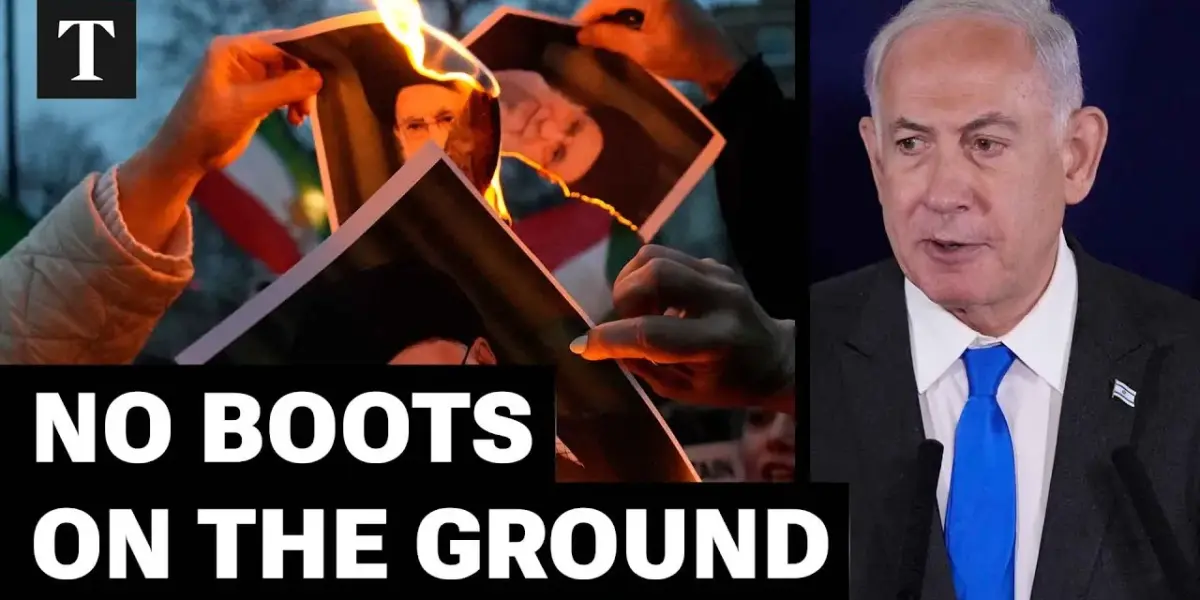
IDF Veteran: “We Cannot Change Regime By Boots on Ground”
In the midst of escalating Middle East tensions, a former Israeli Defense Forces (IDF) Colonel and military intelligence analyst has stated that while air strikes are crucial for degrading Iran’s military capabilities, regime change cannot be achieved through foreign ground troops. “You cannot change the regime by outer forces um troops on the ground,” said Miri E., speaking from Tel Aviv, which has recently experienced direct missile hits. “But what the US and Israeli capabilities are doing now, they are destroying the basic weaponry that upholds this regime.”
Iran’s Escalation and Israeli Response
The comments come as Israeli air strikes continue to target Iran, with the conflict showing no signs of abating. Tel Aviv has endured direct missile attacks, resulting in casualties, including a woman killed and another severely injured. The town of Binesh was particularly hard-hit, with nine Israelis, including teenagers, perishing when a bomb shelter sustained a direct hit from a substantial warhead. Cities like Beer Sheva and Jerusalem have also been targeted. These attacks follow a pattern of escalating aggression, with Iran having recently struck targets in Gulf States and a second drone attack against a British air base in Cyprus being thwarted.
Broad Consensus in Israel Amidst Attacks
Despite the ongoing barrage, Miri E. asserts that there is a broad consensus within Israel supporting the current efforts to counter the threats posed by the Iranian regime. “There’s no question that there’s a very broad consensus in Israel about several of the threats that are being addressed right now,” she explained. “One is the Islamic regime of Iran that continues to call for our annihilation.” Miri E. highlighted the rhetoric from Iranian officials, including the late Hamas official who frequently referred to Israel as a “cancer tumor of the world” that needs to be erased, and similar messages from the Iranian Revolutionary Guard directed at their domestic audience. “For most of us, this is about a a regime that has called for 47 years that the world will be a better place without Israel,” she added.
The Role of Proxies and International Relations
The former IDF Colonel elaborated on Iran’s strategy of supplying proxies with ideology and weapons, which contributes to the regional instability. She noted that while Iranian state media may not always convey the same aggressive messages in English, the intent remains clear to their own population. “They have actively supplied proxies, given them ideology and weapons,” Miri E. stated. She also touched upon the international reaction, observing that over the past two and a half years, the global narrative has, in her view, sided with Iran, portraying the Islamic regime’s calls for Israel’s destruction as a secondary concern compared to Israel’s existence. “That’s Islamic regime propaganda, psychological warfare,” she argued.
Questioning Trump’s Endgame and the Need for Action
The discussion also touched upon the stance of former President Donald Trump, who has reportedly expressed disappointment with UK Prime Minister Rishi Sunak for delays in allowing the US to use British bases for air strikes. Miri E. admitted uncertainty regarding Trump’s specific endgame but emphasized the strategic necessity of degrading Iran’s military capabilities. “They still have lots of capabilities. For example, drones that reach Cyprus and can attack a RAF British base in Cyprus,” she pointed out. She stressed that the objective is to eliminate the military terror challenges posed by the Iranian regime, which actively trains and arms various proxies. Miri E. posed a rhetorical question to those against the current actions: “So, we should just let it go on. We should let Iran, this Islamic regime, be the destabilizer, not just of the Middle East, but of the world?”
No Ground Troops, Focus on Capabilities
Addressing the possibility of ground operations, Miri E. reiterated her firm stance against deploying foreign troops. “You cannot change the regime by outer forces um troops on the ground,” she stated. However, she stressed the importance of destroying Iran’s military capabilities to prevent them from being used against their own people and the region. “If you don’t destroy those capabilities, they’re never going to be able to do it,” she warned. She acknowledged that such actions are not easy and are hard on every individual, including regular Iranians who may oppose or even support the government. “I’m not against civilians. I’m against a regime that openly calls for my destruction,” she clarified.
UK Perspective: Support Allies, Protect Citizens
From the UK’s perspective, Labour MP and former RAF Wing Commander Calvin Bailey offered a different viewpoint on the government’s approach. “No, I think um we’ve we’ve laid out entirely the right approach,” he said regarding the UK’s stance, differentiating it from direct support for US-Israeli actions. Bailey highlighted the complexities of international law and the lessons learned since 2003, suggesting reasons for the UK’s more measured public support. However, he stressed the essential nature of supporting regional partners and protecting British interests and sovereign bases in the Middle East, citing the deployment of Typhoons and F-35s. “It’s critical that they are there to protect those things that are of interest to our nation,” he stated.
Protecting Citizens Abroad
Bailey also addressed concerns about the safety of British citizens in the Middle East, particularly in areas like Dubai. He emphasized that the primary responsibility of the state is to protect its citizens, whether through defensive operations by the Royal Air Force or swift, open, and decisive government action to prevent a repeat of chaotic evacuations seen in the past, such as in Kabul. He dismissed criticisms regarding the cost of repatriating citizens, stating, “The responsibility of uh any nation is to look after um its citizens and you can’t apply the moment we start applying um any any kind of provisos to those things uh then we stop being the um wonderful and inclusive nation that we are.” He advised citizens abroad to stay in touch with their consulates and follow official guidance.
Looking Ahead
As the situation continues to evolve, the focus remains on the strategic necessity of degrading Iran’s military capabilities through air power, while simultaneously avoiding direct ground intervention. The effectiveness of these strikes in altering the Iranian regime’s behavior, the potential for further escalation, and the ongoing efforts to protect citizens and allies in the region will be critical developments to monitor in the coming weeks.
Source: Israel & United States Should Not Put Boots On The Ground, Says Former IDF Officer (YouTube)

Related Articles
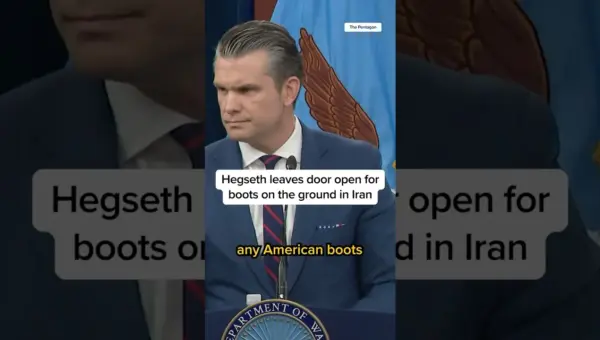
Pentagon Hints at Iran Ground Troops: ‘Go As Far As We Need’
Defense Secretary Pete Hegseth has refused to rule out deploying U.S. ground troops into Iran, stating "We'll go as far as we need to go." The ambiguous comment from the Pentagon raises concerns about potential military escalation in the volatile Middle East region.

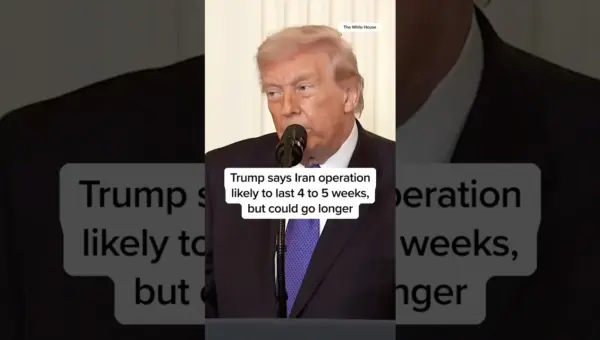
Trump Predicts Iran Operation Lasting Weeks, Cites Rapid Progress
President Donald Trump stated that the U.S. military operation in Iran is progressing ahead of schedule and is likely to conclude within four to five weeks. He emphasized the nation's capability to extend the operation if necessary, signaling flexibility in strategic planning.


Trump’s Mar-a-Lago Gala: A Dance with Death in Iran?
A gala at Mar-a-Lago coincided with a U.S. military strike on Iran, sparking controversy over alleged civilian casualties and leadership detachment. The incident raises questions about the timing of military actions and the ethical considerations of political figures.