Ex-ICE Attorney Reveals Broken Training, Constitutional Concerns
A former ICE attorney has resigned, alleging the agency's training program is "broken" and teaches recruits to violate the Constitution. Ryan Schwank claims essential legal and constitutional training hours were cut, including instruction on the use of force.

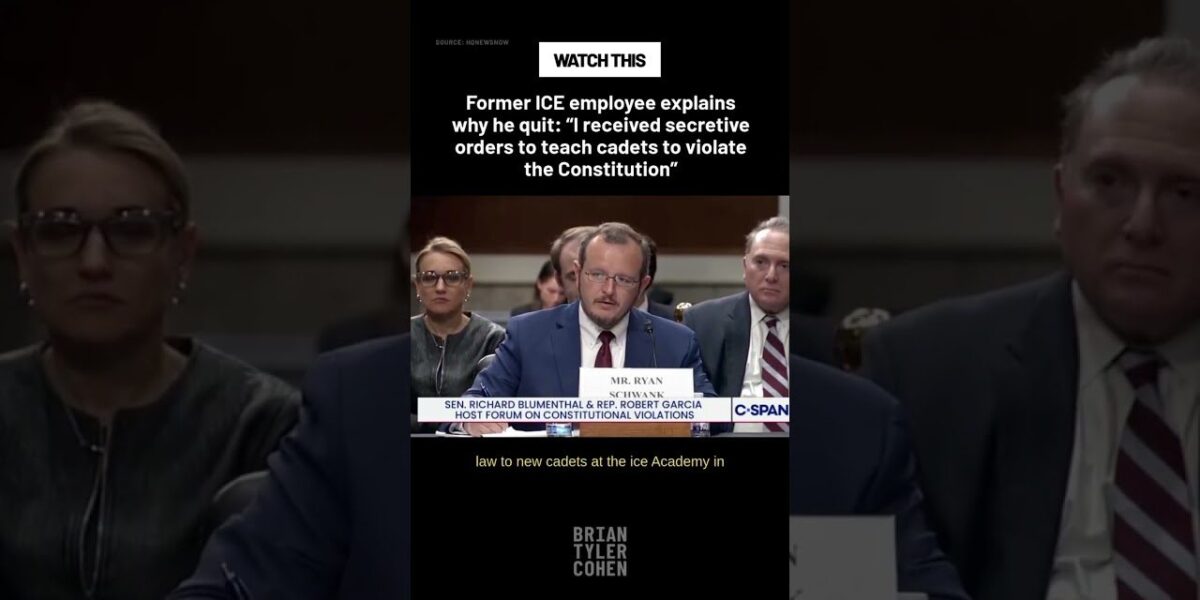
Ex-ICE Attorney Resigns Over Defective Training Program
Ryan Schwank, a former Assistant Chief Counsel at Immigration and Customs Enforcement (ICE), has resigned from his position, citing profound concerns over a “deficient, defective, and broken” training program at the ICE Academy in Gleno, Georgia. Schwank, who swore an oath to uphold the U.S. Constitution upon joining ICE on August 1, 2021, stated that he felt duty-bound to report the issues after serving for over four and a half years. His resignation, effective February 13, 2026, was a direct result of his experiences teaching new cadets and observing the dismantling of crucial training modules.
Concerns Over Constitutional Violations and Reduced Curriculum
Five months prior to his resignation, Schwank was assigned to teach law to new recruits at the ICE Academy. He volunteered for the role, drawing on his prior experience in law enforcement oversight. However, his first day on the job brought immediate alarm when he received what he described as “secretive orders to teach new cadets to violate the Constitution by entering homes without a judicial warrant.” This directive set the stage for a broader pattern of concern regarding the training’s adherence to constitutional principles.
Over the subsequent five months, Schwank witnessed what he characterized as the “dismantling” of the training program. He reported that 240 hours of vital classes were cut from the original 584-hour program. These eliminated or reduced courses covered essential areas such as the Constitution, the U.S. legal system, firearms training, the use of force, lawful arrests, proper detention procedures, and the limitations of officer authority. A particularly alarming omission, according to Schwank, was the cessation of all legal instruction regarding the use of force. This implies that cadets are no longer being taught the legal standard of being “objectively reasonable” when employing force.
“I am here because I am duty bound to report the legally required training program at the ICE Academy is deficient, defective, and broken.”
Ryan Schwank, former ICE Assistant Chief Counsel
Impact on New Recruits and Law Enforcement Standards
The reduction in training hours and the omission of critical legal and constitutional instruction raise serious questions about the preparedness of new ICE officers. Schwank’s account suggests that recruits are not receiving adequate grounding in the legal framework that governs their actions, potentially leading to misunderstandings or violations of civil liberties. The emphasis on constitutional principles and the limits of governmental power is a cornerstone of American law enforcement training, and its apparent degradation within the ICE Academy could have significant repercussions.
The implication that officers might be trained to bypass judicial warrants for home entry, a fundamental protection enshrined in the Fourth Amendment, is particularly troubling. Such practices, if indeed part of the curriculum, not only undermine constitutional rights but also expose the agency to legal challenges and erode public trust. The removal of comprehensive use-of-force training, including the “objectively reasonable” standard, further compounds these concerns, potentially leading to unjustified escalations and misconduct.
Broader Implications for Immigration Enforcement and Civil Liberties
Schwank’s revelations come at a time when immigration policies and enforcement practices are under intense scrutiny. The effectiveness and ethical conduct of agencies like ICE are paramount to the fair administration of immigration law. A training program that appears to sideline constitutional safeguards and essential legal doctrines could reflect broader systemic issues within the agency or its operational priorities.
The training of law enforcement officers is a critical component of ensuring accountability and upholding the rule of law. When training programs are perceived as compromised, it raises questions about the integrity of the entire enforcement apparatus. Schwank’s decision to resign and speak out underscores the gravity of his concerns, suggesting that the issues extend beyond mere procedural shortcomings to fundamental principles of justice and constitutional governance.
Looking Ahead: Accountability and Reform
Ryan Schwank’s testimony provides a critical inside perspective on the challenges facing ICE’s training protocols. The coming weeks and months will likely see further examination of these allegations, with potential calls for independent reviews of the ICE Academy’s curriculum and training practices. Stakeholders, including lawmakers, civil liberties advocates, and the public, will be watching closely to see how ICE and the Department of Homeland Security respond to these serious accusations and what steps, if any, are taken to address the perceived deficiencies in training and ensure adherence to constitutional mandates.
Source: Former ICE employee explains why he quit (YouTube)

Related Articles


DHS Website Listing Immigrant Crimes Called Out for Inaccuracies
A DHS website showcasing "Worst of the Worst" immigrants has been exposed by CNN for listing fabricated crimes, including one individual accused of cannibalism. The department initially blamed a 'glitch' but faces skepticism and accusations of defamation.


Kansas Law Sparks Outrage by Revoking Transgender IDs
Kansas lawmakers have enacted a law retroactively invalidating IDs for approximately 1,700 transgender residents, sparking outrage and concerns over civil rights. The legislation also includes a controversial bathroom ban with citizen enforcement provisions.


ICE Acquires Military-Grade Weapons Amidst Spending Surge
A new report reveals that ICE and CBP have spent at least $144 million on military-grade weapons and ammunition in their first year under the Trump administration. Concerns are mounting over the lack of adequate training for agents handling this advanced arsenal.