Ex-CIA Chief: Trump Ignored Intel, Lied About Iran Threat
Former CIA Director John Brennan stated that President Trump disregarded accurate intelligence, using "obvious lies" to justify military action against Iran. Brennan drew parallels to the flawed intelligence that led to the Iraq War, arguing that Iran posed no imminent nuclear threat. He believes Trump's decisions were driven by narcissism and a dismissal of expert assessments.

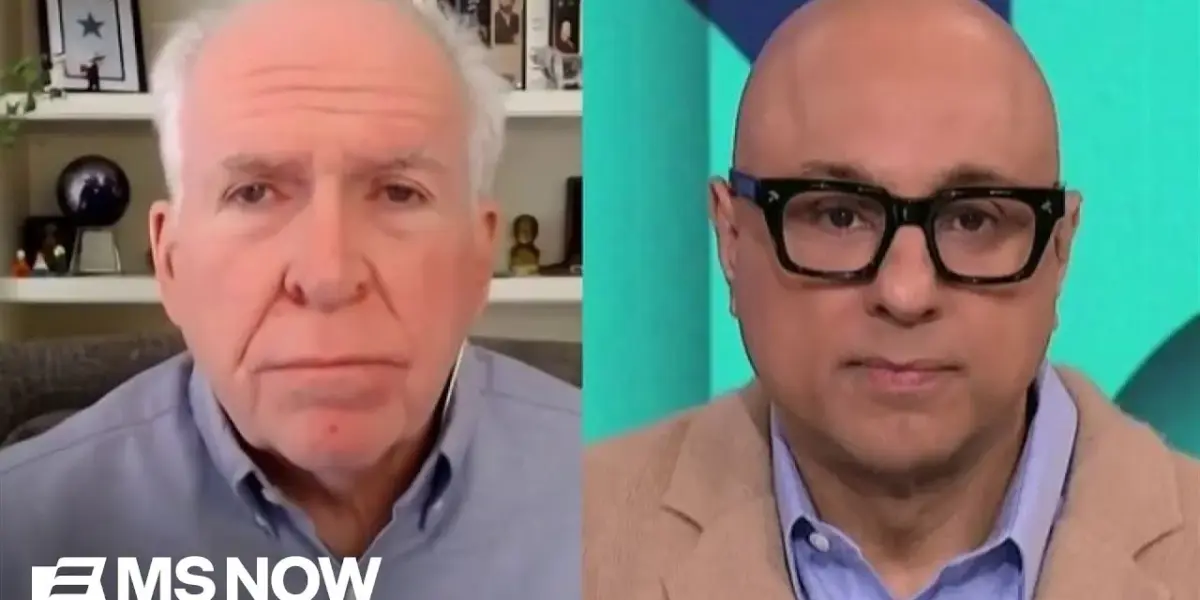
Ex-CIA Director Slams Trump Administration’s ‘Obvious Lies’ on Iran
Former CIA Director John Brennan is sharply criticizing the Trump administration’s justification for military action against Iran, stating that the intelligence clearly showed Iran posed no imminent threat. Brennan argues that President Trump disregarded accurate intelligence, misrepresented facts, and used “obvious lies” to push for conflict, drawing parallels to the flawed intelligence that led to the Iraq War.
Intelligence Was Clear, Trump Chose to Ignore It
The debate over military action against Iran echoes past intelligence failures, but in this case, the intelligence community’s assessments were accurate, according to Brennan. He points to the lead-up to the Iraq War in 2003, where intelligence suggesting Saddam Hussein possessed weapons of mass destruction proved to be entirely wrong. A 2005 commission found the intelligence community was “dead wrong” in its pre-war judgments, leading to an eight-year conflict.
However, Brennan states that the situation with Iran is the inverse. The intelligence community accurately assessed Iran’s capabilities and intentions regarding potential attacks on the United States and its allies. Contrary to President Trump’s claims, the intelligence showed that the Iranian regime was not preparing to use a nuclear weapon and did not possess ballistic missiles capable of reaching the U.S.
Iran Nuclear Deal Withdrawal Fueled Escalation
The current tensions began to escalate on May 8, 2018, when President Trump withdrew the U.S. from the Joint Comprehensive Plan of Action (JCPOA), commonly known as the Iran nuclear deal. This decision was made despite intelligence from the United Nations and even Trump’s own administration certifying that Iran was complying with the deal’s terms. The deal was designed to prevent Iran from developing nuclear weapons.
Following the withdrawal and the re-imposition of harsh economic sanctions, Iran resumed enriching uranium beyond levels needed for civilian use. Brennan argues that this sequence of events, driven by a disregard for intelligence, led to a needless war and a global economic crisis, particularly concerning the potential closure of the Strait of Hormuz.
Intelligence Community’s Role and Trump’s Dismissal
Shane Harris, writing in The Atlantic, is cited by Brennan for his analysis: “The intelligence community was accurate and consistent in its pre-war judgments about Iran’s capabilities and intentions to attack the United States and its allies.” Harris notes that if Trump had accurately presented the intelligence, the facts would have argued against attacking Iran. This may explain why the president allegedly ignored and misrepresented what his advisors told him.
Joe Kent, former director of the National Counterterrorism Center and a Trump loyalist, recently resigned, stating on social media that “Iran posed no imminent threat to our nation.” This aligns with the intelligence community’s assessment that Iran was not on the verge of developing a nuclear weapon or possessing the means to deliver it to the U.S.
Regime Change Goal Questioned by Intel
Another stated goal of the Trump administration, regime change in Iran, was also questioned by intelligence assessments. A classified report from the U.S. National Intelligence Council warned that the Iranian regime was unlikely to be toppled even by a significant assault. Brennan sarcastically notes that unless replacing one hard-line leader with another counts as regime change, the intelligence proved correct once again.
Brennan contrasts the current situation with the lead-up to the Iraq War, stating, “Two decades ago, a president embraced information that turned out to be wrong and disaster followed. Today, a president disregards assessments that prove to be right and the predictable comes to pass.” He emphasizes that this is a different kind of intelligence failure—one where accurate intelligence is ignored.
Brennan: Trump’s Narcissism Drove Decisions
During his interview, Brennan explained that the intelligence community processes were overhauled after the Iraq War, and painful lessons were learned. He believes that intelligence professionals in this case came to a unanimous conclusion: Iran did not have a nuclear weapon and was not close to developing one. The impact of an air campaign on Iran would not lead to regime change.
Brennan attributes President Trump’s actions to his long-standing dismissal of intelligence and disparagement of intelligence professionals. He suggests this behavior stems from Trump’s narcissism and megalomania, believing he is the smartest person in the room and relying on gut instinct over facts.
Congressional Exchange Highlights Discrepancy
A congressional exchange involving Senator John Ossoff and a representative from the intelligence community further illustrated the discrepancy. When asked if Iran’s nuclear enrichment program was “obliterated” by airstrikes and if there had been no effort to rebuild, the intelligence official confirmed this was the assessment. However, when asked if the intelligence community assessed an “imminent nuclear threat,” the response was evasive, stating only the president can determine what is an imminent threat.
Brennan called this response “absurd,” asserting that it is the intelligence community’s obligation to identify threats. He reiterated that for years, the assessment was that Iran was not capable of fabricating a nuclear warhead and delivering it. He called the administration’s rationale for war “foolish” and based on “obvious lies” that undercut their own explanations.
Trump’s Misrepresentation of Facts
Brennan directly addressed President Trump’s statements, calling them “asinine” and intentionally misrepresenting facts. He pointed out Trump’s comments about the price of gas and the threat of nuclear-armed missiles, clarifying that Iran currently lacks both a nuclear warhead and a delivery system capable of reaching the U.S. Brennan believes Trump consistently lies on these issues and uses these falsehoods as a basis for war.
The former CIA director expressed deep concern over the continued rationalization of Trump’s actions by members of his party and base. He suggested that Trump’s behavior, including alluding to eliminating entire civilizations, indicates he is “unhinged” and that the 25th Amendment might have been written with him in mind. Brennan stressed the danger of such an individual controlling the immense capabilities of the U.S. military and nuclear arsenal.
Looking Ahead: Experts Needed in Diplomacy
Brennan concluded by expressing hope that recent reporting indicates a shift towards involving government professionals and experts in diplomatic discussions, such as those in Islamabad, rather than relying on private equity figures. He emphasized the critical need for experts to be involved in complex negotiations.
Source: Fmr. CIA Director John Brennan: 'Iran didn't pose an imminent threat,' admin. 'lies are obvious' (YouTube)

Related Articles


US Warships Clear Mines in Strait of Hormuz Amidst Talks
US Navy destroyers have cleared mines in the Strait of Hormuz, ensuring vital trade routes remain open. Meanwhile, Pakistan hosts critical ceasefire talks, with US Vice President JD Vance playing a key diplomatic role. Significant hurdles remain due to opposing demands from involved parties.

MTG’s GOP Meltdown: Cults, Cash, and Conservative Chaos
Marjorie Taylor Greene's call to "burn the GOP to the ground" and her critique of the Trump "cult" reveal deep divisions within the Republican Party. While her analysis of donor influence is debated, it highlights the significant role of corporate money in politics and the potential fracturing of the conservative movement.


Snyder: Trump’s ‘Genocide’ Talk Sullies US, Leads to Losing
Historian Timothy Snyder warns that Donald Trump's rhetoric about destroying civilizations, regardless of intent, carries grave consequences. He argues such language normalizes dehumanization and echoes tactics used in past genocides, ultimately sullying the nation and leading to strategic failures.