Ex-Biden Official Slams Iran Strikes: ‘No Imminent Threat’
A former Biden White House official has strongly criticized the justifications for recent U.S. strikes on Iran, stating there was 'no imminent threat.' The official highlighted shifting rationales and a lack of a clear endgame, raising concerns about the basis for military action. The discussion also touched on the munitions race and the potential impact on Ukraine.


Ex-Biden Official Criticizes Rationale Behind U.S. Strikes on Iran, Citing Lack of Clear Objectives
WASHINGTON D.C. – A former high-ranking official from the Biden White House has voiced strong criticism regarding the justification for recent U.S. military actions targeting Iran, asserting that there was no “imminent threat” to necessitate the strikes. The official, who was a key negotiator of the 2015 Iran deal, argued that the administration’s rationale has shifted and lacked a clear endgame, raising concerns about the basis for engaging in military conflict.
Shifting Justifications and Unclear Objectives
The former official, speaking on condition of anonymity but identified as a former National Security Advisor, questioned the evolving explanations provided for the U.S. strikes. Initially, the narrative focused on the elimination of Iran’s Supreme Leader, described as a positive development given the regime’s long-standing animosity towards the United States. This was subsequently followed by claims that Iran was on the verge of acquiring a nuclear weapon, and then that the threat was imminent. Most recently, statements from the Secretary of State and the Speaker of the House suggested that Israel desired the war, implying the U.S. was led into the conflict by its ally.
“Well, Willie, a good rule I don’t think we’re taking military action against another country, you probably don’t have a good rationale. It sounds like the administration is just searching to find something to threaten the United States of America,” the former official stated, reflecting on the perceived lack of a solid justification.
The official expressed particular concern over a statement made by Senator Marco Rubio, which suggested that the Israeli Prime Minister had “basically dragged the American President into this conflict.” This, according to the former official, is an “unacceptable basis upon which the United States launches a war.” Furthermore, the lack of a clear endgame or definition of success has left many questioning the long-term strategy. The administration has been unable to articulate what success looks like or when the conflict is intended to end. This has been occurring without the “informed consent of the American people or the authorization of the Congress, which in the case of a war that did not have an imminent threat is necessary on the basis of law and the Constitution.”
Concerns Over War of Choice and Munitions Race
The former official elaborated on the ramifications of this “war of choice,” highlighting that it has placed the U.S. in a complicated position with economic effects impacting Americans and allies, and resulting in the deaths of American service members. The inability of the administration to provide a clear answer to the fundamental question of “why” is deeply troubling.
“I THINK BOTHER IS AN UNDERSTATEMENT, BECAUSE IF YOU DON’T KNOW THE WHY, THEN THERE IS NO CLEAR PATHWAY TO ACHIEVING YOUR OBJECTIVE. YOU DON’T HAVE AN OBJECTIVE TO ACHIEVE,” the official emphasized.
The discussion also touched upon the ongoing munitions race in the conflict. While Iran possesses a finite number of missiles and drones, the U.S. and its allies also have a limited supply of interceptors. Reports indicate that some Gulf countries have only a few days’ worth of interceptors remaining if Iran continues its attacks. This creates a critical race to deplete enemy capabilities before allied defenses are overwhelmed.
“It is a race between the United States and Israel being able to take out and destroy Iranian capabilities on the ground and Iran running out of those capabilities before the U.S. and its allies do, because if Iran can keep shooting and we don’t have interceptors to take down those missiles and drones, THEY WILL DO MUCH MORE DAMAGE.”
The former official noted that while the U.S. military has gamed out such scenarios, the outcome of this race remains uncertain. Iran’s primary goal, it is suggested, is to survive the current storm, believing that the conflict will eventually lead to international pressure on the U.S. to de-escalate.
Ukraine Conflict and Shifting Tides
The conversation then shifted to the war in Ukraine, with observations that Ukrainian forces have had a strong month, retaking nine settlements from Russia. This marks the first time since the summer of 2024 that Ukrainian forces have outpaced Russian territorial gains. Despite previous assessments from Trump administration officials suggesting Ukraine was on the verge of defeat, recent developments indicate a potential turning of the tide.
“Ukraine has capacity, it has technology, and most importantly, it has courage and resolve. And it is true that in the last month, the Ukrainians have been able to push forward, not get pushed backwards, to retake territory just as they did back in 2023,” the official remarked, countering earlier narratives of Ukrainian weakness.
The success is attributed to Ukrainian ingenuity in stabilizing front lines through a combination of technology and tactics, imposing significant costs on Russian forces. However, a concern was raised regarding the U.S. decision to prioritize air defense interceptors for the Middle East, leading to a reduction in supplies to Ukraine. This, the official warned, could leave Ukraine vulnerable to Russian aerial bombardments, even if it doesn’t change the front lines.
Strategic Use of Military Power
Reflecting on the broader implications, the former official addressed the U.S. willingness to use its military power, citing actions in Iran and Venezuela. While acknowledging the “eye-popping” capabilities of the U.S. military, the official cautioned against confusing operational brilliance with a tool that can be used indiscriminately.
“The problem is that if you’re the president and you confuse that operational and tactical brilliance, with a tool you can just use willy-nilly around the world, you’re going to get yourself into trouble,” the official warned.
The use of military force without clear objectives, the official argued, leads to a “muddle, a mess, and no clear answer to what comes next.” This approach, it was concluded, will ultimately not enhance American security or improve the U.S. strategic position globally. The imperative remains to tightly link military means to clear ends, with the informed consent of the American people and congressional authorization.
Source: 'There was no imminent threat': Fmr. Biden WH official on U.S. strikes targeting Iran (YouTube)

Related Articles


Ukraine Backs Israel-US Strikes on Iran, Shifting Global Alliances
Ukraine's decision to back Israeli and US strikes on Iran, despite Iran's role as a key Russian ally supplying drones, has drawn international criticism. This strategic alignment aims to bolster Kyiv's relationship with the US, mirroring past successful diplomatic plays, while Russia's global influence faces further challenges.

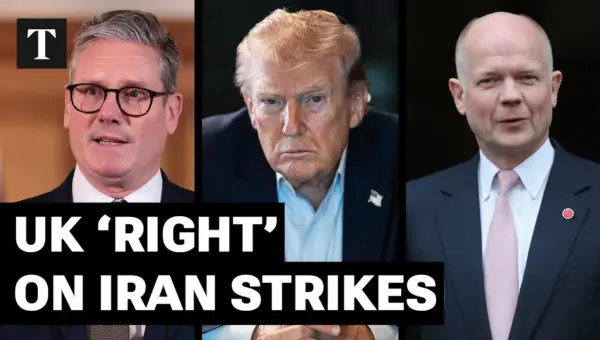
UK’s Iran Stance Defended Amidst Trump Tensions
Former Foreign Secretary William Hague defended the UK's response to US-Israel strikes on Iran, arguing the government's actions were broadly correct despite imperfect presentation. He highlighted historical precedents for US-UK disagreements and questioned current diplomatic strategies.


Trump Not a Russian Asset, Analyst Argues
Despite actions that appear to align with Russian interests, Donald Trump is likely not a Russian asset, according to a new analysis. The argument suggests the current administration's approach to the Ukraine war is driven by a lack of preparedness and a focus on future business opportunities with Russia, rather than direct allegiance.