Ex-Air Force Secretary Warns Trump War in Iran is Strategic Blunder
Former Air Force Secretary warns the ongoing conflict in Iran is an "unprecedented strategic blunder" and that President Trump has "lost control" of the war. The assessment highlights flawed assumptions, unclear objectives, and a lack of public justification for the escalating military actions.


Ex-Air Force Secretary Slams Iran War as ‘Unprecedented Strategic Blunder’
Former Air Force Secretary has issued a stark warning, calling the ongoing conflict in Iran a strategic blunder of unprecedented scope. Speaking on a recent broadcast, the former secretary, who served until January of last year, expressed bewilderment at the continued military operations, stating, “I don’t understand with all of this devastation all of this annihilation what are we still doing in Iran? We should be packing up the ships and the troops and bringing them home.” The assessment comes amidst ongoing military actions that the former secretary described as “annihilation unlike anything that’s ever happened before,” raising serious questions about the administration’s objectives and control over the escalating situation.
Administration’s Strategy in Question
The former secretary detailed how initial assumptions about the conflict appear to have been fundamentally flawed. “There were some expectation for reasons that I cannot understand that the decapitation attack that launched this thing was going to be sufficient to get either a public uprising or somebody in the regime to sue for peace essentially,” he explained. “That is not happening and there’s no reason why one would have expected that. This is a very fanatic regime; it’s very dedicated to its religious military.”
The effectiveness of the initial military strikes is also being called into question. “We have gone in and hit a lot of the targets that were fixed targets that we know where they are before the war started. Now they’re hiding, they’re concealing things, moving things around. They’re presenting us with a much difficult problem and they can keep this up for a long time.” This shift in Iranian tactics, according to the former secretary, makes it significantly harder to achieve decisive military objectives and maintain freedom of navigation in crucial waterways like the Strait of Hormuz.
Trump ‘Lost Control’ of the Conflict
A central and alarming assertion from the former Air Force Secretary is that President Trump has effectively lost control of the conflict. “Donald Trump has lost control of this conflict at this point,” he stated unequivocally. “The Iranians and their willingness to resist, what they will accept for a deal is going to have a lot to do with how this ends up, not what Donald Trump wishes or pretends.” This suggests that the administration’s ability to dictate the terms or outcome of the war is diminishing, with the Iranian regime’s resolve and strategic maneuvering playing a more significant role than anticipated.
Uncertainty Over Objectives and Duration
The discussion also highlighted a significant lack of clarity regarding the specific military objectives and the potential duration of the war. When questioned about the possibility of seizing Iranian uranium stockpiles, a justification previously cited for military action, the former secretary indicated a lack of focus on such operations. “We’re not focused on that, but at some point we might be. Right now we’re focused on knocking the hell out of their missiles and their drones.”
The prospect of further risky military operations, such as attempting to seize Cargill Island or coastal mining sites, was also raised. “Those are all high-risk endeavors. It’s not clear that they would be successful and even if they were, it’s not clear that those would cause the Iranian regime to concede.” This underscores the potential for prolonged engagement with uncertain outcomes and significant risks.
“Donald Trump has lost control of this conflict at this point. The Iranians and their willingness to resist, what they will accept for a deal is going to have a lot to do with how this ends up, not what Donald Trump wishes or pretends.”
Lack of Public Justification Draws Parallels to Iraq War
The former secretary drew a pointed comparison to the lead-up to the 2003 Iraq War, noting that while that administration faced criticism, it at least made a concerted effort to justify its actions to Congress and the American people. “This president and this administration, they’re not even trying to convince us,” he observed. This lack of transparency and public engagement is seen as a significant departure from previous military engagements, raising concerns about democratic accountability.
The administration’s apparent surprise at the conflict’s longevity was also a key point. “I think the president in particular thought they would just do this and as the secretary just said, you know, the regime says—the regime collapses or it gives up in some way.” The former secretary added, “I mean, I keep bringing this up, but Donald Trump kept saying surrender, and I keep saying surrender to whom? There’s nobody actually there to surrender to.”
Looking Ahead: A Call for Clarity
The current situation in Iran presents a complex and potentially volatile scenario. The former Air Force Secretary’s assessment suggests a military conflict that has escalated beyond initial expectations, with unclear objectives and a diminishing level of control by the administration. The lack of a clear public case for the war and the administration’s apparent surprise at its duration are significant concerns. As the conflict continues, the focus will likely remain on whether the administration can articulate a coherent strategy, define achievable objectives, and regain control over the narrative and the military outcome, or if the war will indeed evolve into a protracted and costly engagement dictated by Iranian resistance.
Source: ‘Trump has lost control’: Ex-Air Force secretary warns Iran war is an historic strategic blunder (YouTube)

Related Articles

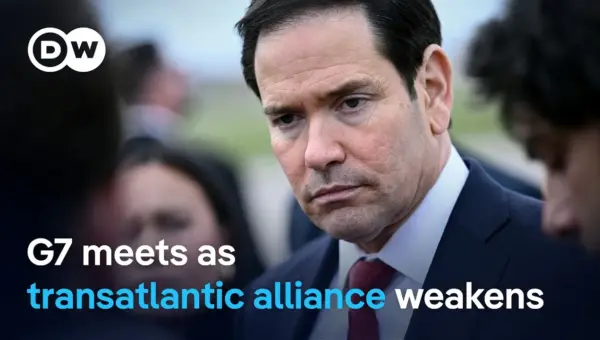
G7 Allies Clash Over Iran War Strategy, Urge Focus on Russia
G7 foreign ministers met in Paris, revealing deep divisions over the U.S. war with Iran. European allies urged the U.S. to pressure Russia, linking its actions to the conflict and fearing support for Ukraine will wane.

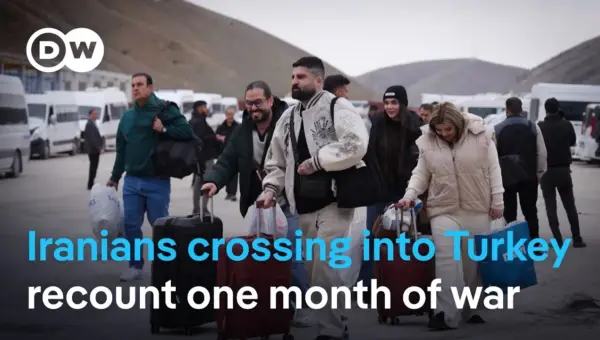
Iran War Exodus: Refugees Flee to Turkey Amidst Bombings
A train from Tehran brings refugees to Turkey, fleeing daily bombings and economic collapse. Many express deep fear for loved ones left behind, while some hold onto national pride and hope for victory. The conflict's impact is also felt economically in Turkey, with rising gas prices.

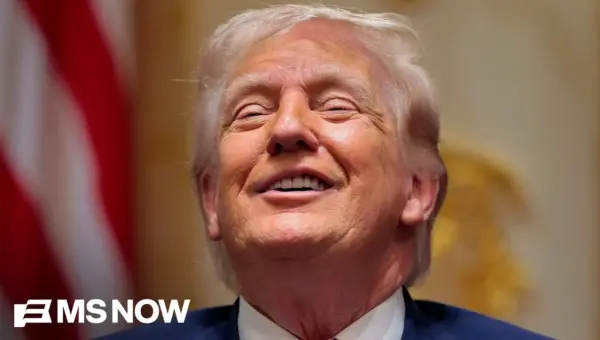
Trump’s Name Everywhere: A ‘Stain’ on GOP Legacy?
Former President Donald Trump's efforts to brand national symbols, including a proposed signature on dollar bills, spark debate. Critics view this as an authoritarian attempt to embed his legacy, potentially staining the Republican Party's history and contrasting with democratic ideals of public ownership.