EU’s Unified Stance on Ukraine Tested Amidst Shifting Global Alliances
As the war in Ukraine enters its fifth year, the European Union faces challenges to its unified support amidst shifting global dynamics and renewed U.S. policy under Donald Trump. While Europe increases its aid, internal divisions and skepticism over peace talks persist.

EU’s Unified Stance on Ukraine Tested Amidst Shifting Global Alliances
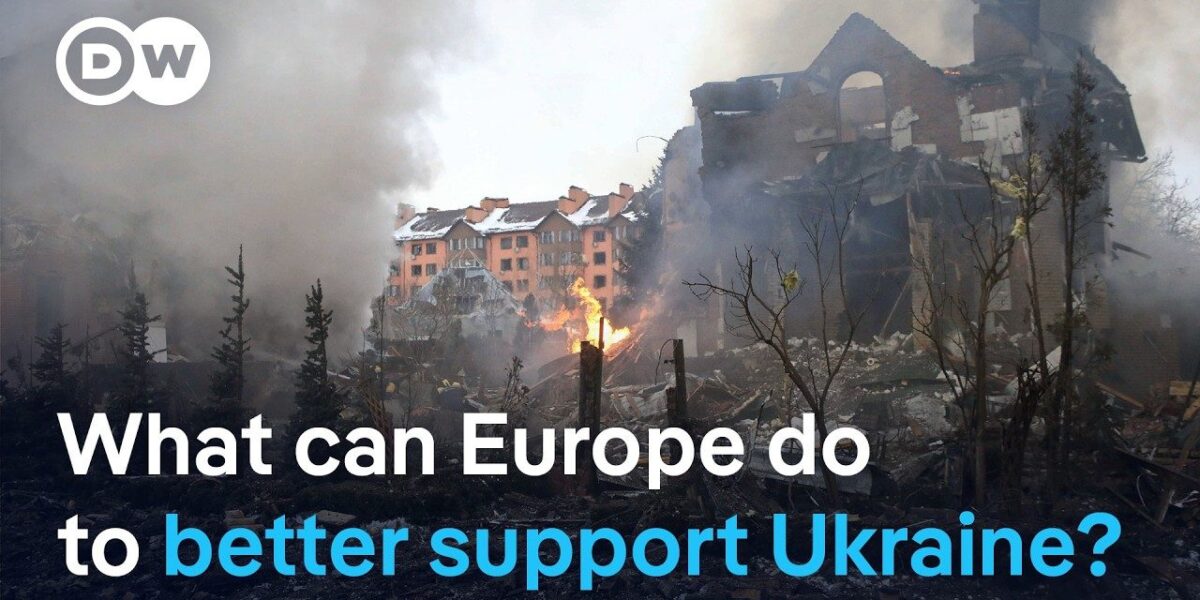
As the fourth anniversary of Russia’s full-scale invasion of Ukraine was marked, European Commission President Ursula von der Leyen arrived in Kyiv to commemorate the moment. Ukrainians observed a minute of silence, honoring the thousands of soldiers and civilians lost in the conflict. The Kremlin’s initial expectation of a swift victory within three days has been thoroughly defied by Ukraine’s resilience and resolve, marking the bloodiest conflict in Europe since World War II.
Territorial Gains and Shifting Frontlines
According to the Institute for the Study of War, Russia occupied 4,831 square kilometers of Ukrainian territory in 2025. While a significant amount, this represents less than 1% of Ukraine’s total sovereign land. At the current pace of advance, it would take Russia an estimated two more years to capture the remaining Ukrainian-held areas of the Donetsk region. The year 2025 saw major geopolitical shifts far from the front lines, with significant developments occurring in the Oval Office, at international summits, and within Ukrainian and Russian cities.
US Policy Under Trump: A Shift in Support
Many Ukrainians had hoped that Donald Trump, despite his open admiration for Vladimir Putin, would adopt a bolder stance in supporting Kyiv and be less apprehensive about escalation. This hope was rooted in his previous term, during which he became the first U.S. president to provide Ukraine with lethal weaponry. However, these expectations were quickly dashed. Shortly after the third anniversary of the invasion, Trump controversially dismissed Ukrainian President Volodymyr Zelensky from the White House, suggesting that Ukraine lacked strong negotiating positions and needed to accept any deal, regardless of its long-term security implications for Ukraine.
In stark contrast, Trump’s meeting with Vladimir Putin in Alaska saw a markedly different approach. Trump extended a red carpet welcome to Putin, yet reportedly secured no tangible concessions. Despite prior claims of pushing for a ceasefire, discussions behind closed doors yielded no such agreement. Experts note that while Trump has shown warmth towards Putin and disdain for Zelensky, he has been unable to coerce Ukraine into accepting a deal on Russia’s terms. This is partly attributed to Europe’s increased commitment to providing weapons and financial aid, rallying around Zelensky after diplomatic setbacks. Furthermore, the U.S. under Trump possesses less leverage over Ukraine than it did previously. Data from the Kiel Institute suggests a 99% drop in U.S. support for Ukraine since Trump’s return to the White House, diminishing his capacity to withhold aid.
Escalation of Long-Range Strikes
The year 2025 also witnessed a significant escalation in long-range strikes, transforming from rare events into near-daily occurrences. Ukrainian drones, capable of reaching targets thousands of kilometers away and carrying substantial payloads, have inflicted considerable damage on Russia’s oil and gas infrastructure. Concurrently, Russia has intensified its pressure on Ukraine’s air defense systems. Attacks on civilian heating and power infrastructure, a tactic employed in previous years, reached unprecedented levels of devastation. In prior years, power and water outages might last for hours; now, they extended for days, or even weeks. Blackouts crippled public transportation, including trams and trolleybuses, and residents in Kyiv were informed that heating repairs might not be completed until the following summer.
Skepticism Towards Negotiations and Europe’s Role
A prevailing sentiment among many Ukrainians is deep skepticism regarding the prospects of peace talks facilitated by figures like Jared Kushner and Steve Witkoff. The belief is that Putin is not interested in any outcome short of Ukraine’s complete capitulation and is engaging in these discussions merely to appease Trump. Many share the view of German Chancellor Olaf Scholz and British Prime Minister Rishi Sunak: this war of attrition will only conclude when one side, either Ukraine or Russia, can no longer sustain the fight. With an economy ten times the size of Russia’s, Ukrainians are increasingly looking to Europe to exert its full influence and ensure that Russia, not Ukraine, is the one to buckle first. The fear persists in Eastern and Central Europe that a Russian victory in Ukraine would embolden Moscow to target neighboring countries next.
“Europe is holding the large part of the support both military and financial support to Ukraine. Europe is actually even able together with Ukraine to push back on Trump latest mood swings on Ukraine and Russia negotiations.”
Fabrice Potez, CEO of Rasmussen Global
Analysis: EU Unity and Transatlantic Relations
Fabrice Potez, CEO of Rasmussen Global and former Director of Policy Planning at NATO, addressed the complexities of EU unity in supporting Ukraine. He acknowledged recent political setbacks, such as Hungary and Slovakia obstructing new sanctions against Russia and a fresh loan for Ukraine, and Belgium’s earlier blocking of frozen Russian assets for Kyiv. However, Potez emphasized that, in the broader picture, Europe now shoulders the primary burden of military and financial support. He noted that Europe, alongside Ukraine, has demonstrated an ability to counter Trump’s shifting stances on negotiations, indicating an overall direction of strength, albeit not always through seamless unity.
Regarding Europe’s ability to influence U.S. policy under Trump, Potez highlighted that even with reduced direct military aid, the U.S. continues to play a critical indirect role. NATO and European allies purchase weapons, including air defense interceptors, from U.S. companies for Ukraine. Moreover, the U.S. provides crucial intelligence capabilities, particularly space-based assets, enabling Ukrainian planning and targeting. Potez described Trump’s position as contradictory: seeking to minimize U.S. spending on Ukraine while simultaneously aiming to broker peace, yet having diminished his leverage over both parties, particularly Russia.
Prospects for Prolonged Conflict
Lieslötte Simone, a research fellow at the Austrian Institute for International Affairs, offered insights into the potential duration of the conflict. She stated, “It’s easy to start a war, but it’s often more complicated to end it.” Russia, she explained, is in a position of strength militarily, capable of sustaining a prolonged conflict, but lacks the capacity for a decisive breakthrough. Given the minimal territorial gains in 2025, conquering the claimed territories in Donbas would take years. Simone argued that the war has become a tool for Russia to preserve its regime, mask economic issues, and maintain population control, indicating Russia is playing for time.
Despite the deteriorating situation, Simone asserted that Ukraine’s army is not on the brink of collapse. “The Ukrainian forces are putting up a fantastic fight against the Russian aggression,” she said, adding that “still being there four years after the aggression is a victory in itself.” She deemed imposing a humiliating peace on an undefeated nation unacceptable. Neither side, she concluded, is currently compelled to submit, but the war cannot continue indefinitely in its current form and intensity.
Strengthening Europe’s Position
Simone advised that for the EU to effectively convince the U.S. to maintain support, it must strengthen its own contributions. Echoing past criticisms, she noted that “They talk but they do not produce.” European nations, she argued, must increase their financial and military burden-sharing, boost direct funding to Ukraine’s defense industry, and adopt a unified, proactive negotiating stance. Key strategies include accelerating Ukraine’s EU integration, providing long-term security commitments, and demonstrating reduced reliance on U.S. security guarantees.
Addressing the recent EU deadlock on sanctions and loans, Simone called Hungary’s veto a significant setback. She emphasized that sanctioning Russia’s banking and energy sectors would have been crucial, especially as Russia’s economy faces a slowdown. The EU’s disunity, she warned, plays directly into the strategies of both Putin and Trump. She stressed the importance of avoiding uncoordinated bilateral negotiations, which Moscow and Washington would exploit. EU unity, she concluded, will be paramount when considering Ukraine’s potential accession to the Union.
Germany’s Evolving Role and Public Opinion
DW political correspondent Ben Tröger reported on Germany’s position. Since the U.S. ceased financial and military aid under Trump, Germany has become Ukraine’s largest bilateral supporter, providing €25 billion annually and contributing significantly to the EU’s aid package. This demonstrates Ukraine’s capacity to persevere even without direct American assistance, although European nations now purchase U.S. weapons for Ukraine. Despite challenges in securing unified funding, exemplified by the Hungarian and Slovakian vetoes, the German government remains committed to increasing its support for as long as necessary.
Public support in Germany for military aid to Ukraine stands at 67%, according to a recent poll. However, 75% of Germans anticipate the war continuing throughout the year. The far-right AfD party strongly opposes military aid and is gaining traction. Germany also hosts 1.2 million Ukrainian refugees, incurring significant costs for housing, integration, and employment over the past four years.
The German government maintains a skeptical outlook on meaningful peace negotiations. Chancellor Scholz believes Russia’s military and economic struggles may eventually lead Putin to withdraw, but acknowledges this could be a lengthy process. Germany views U.S.-orchestrated peace talks with skepticism, seeing little diplomatic progress. Without pressure from the U.S. president on Putin, significant breakthroughs remain unlikely, potentially leading to a fifth year of war. Germany is preparing for this possibility.
Source: How unified is the EU when it comes to supporting Kyiv | DW News (YouTube)

Related Articles


US Regime Change Efforts: A History of Tactical Wins, Strategic Losses
A comprehensive review of U.S. interventions reveals a consistent pattern: while the United States is adept at tactically removing foreign governments, achieving strategic success—the establishment of stable, legitimate political orders—has proven exceedingly difficult. Historical analysis points to unintended consequences and long-term instability as common outcomes.


Thousands Mourn Khamenei, Chant ‘Death to America’ in Iran
Thousands gathered in Yazd, Iran, to mourn Supreme Leader Ayatollah Ali Khamenei following reported U.S. and Israeli strikes. The mourning ceremony was marked by chants of "Death to America," highlighting deep-seated anti-American sentiment amid geopolitical tensions.

Middle East Crisis Triggers Global Chaos: Flights, Oil Prices Hit
A major global crisis has erupted following coordinated strikes on Iran, triggering a massive retaliatory response that has impacted multiple countries across the Middle East. The large-scale attacks have caused widespread aviation chaos and pose significant risks to global energy markets and financial stability.