EU’s ‘Trade Bazooka’: A Powerful Threat, But Will It Ever Fire?
The EU's 'Trade Bazooka,' an anti-coercion instrument, remains largely a threat due to the potential economic fallout of using it against major powers like the U.S. While possessing broad powers, its deployment is complex, involving qualified majority votes and the risk of retaliation.

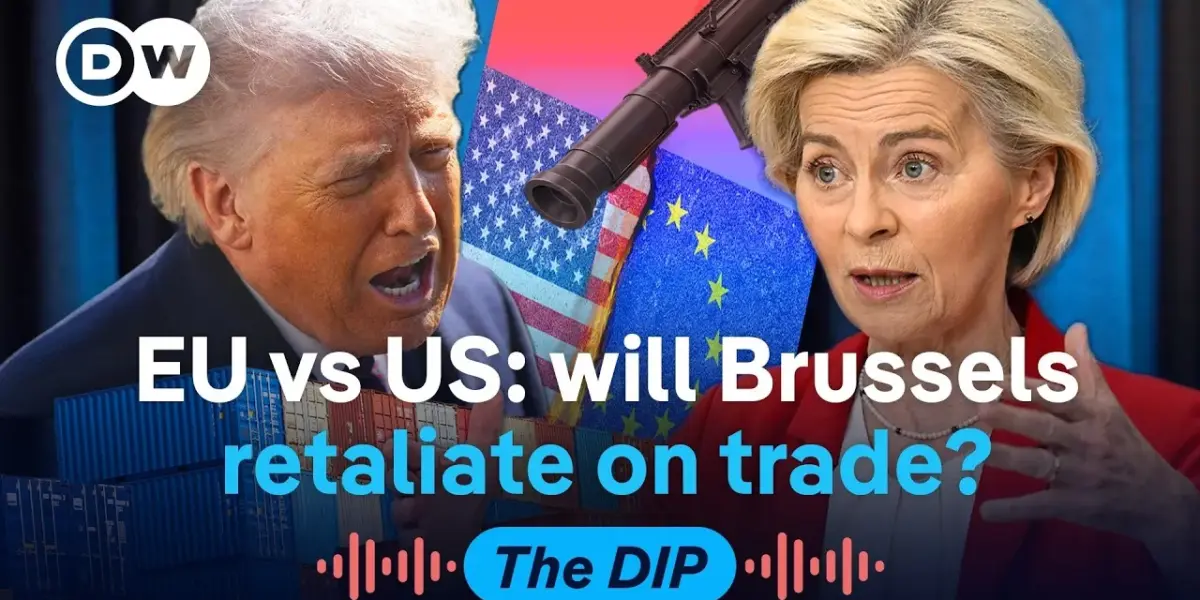
EU’s ‘Trade Bazooka’: A Powerful Threat, But Will It Ever Fire?
The European Union possesses a potent, albeit largely untested, economic weapon known as the “anti-coercion instrument,” colloquially dubbed the ‘Trade Bazooka.’ Developed in 2023, this tool is designed to shield the EU from economic pressure exerted by third countries. However, despite its formidable potential, the ‘Trade Bazooka’ has yet to be deployed, with significant questions surrounding its actual usability, particularly against major economic powers like the United States.
Understanding the ‘Trade Bazooka’
The ‘Trade Bazooka’ represents a significant evolution in the EU’s trade defense mechanisms. Unlike traditional sanctions that often require unanimous consent among member states, this instrument can be activated with a qualified majority of 15 out of 27 member states. This streamlined decision-making process allows for quicker responses to perceived economic coercion.
The scope of the ‘Trade Bazooka’ is considerably broader than standard sanctions. It encompasses measures such as:
- Excluding foreign companies from public procurement contracts within the EU.
- Restricting the import of services, including vital financial services originating from the United States.
- Implementing targeted tariffs or other trade barriers.
This variety of options allows the EU to fine-tune its response to specific economic threats, making it a more flexible and potentially more impactful tool.
The Greenland Case: A Near Miss?
The ‘Trade Bazooka’ gained significant public attention during a trade dispute involving Greenland. French President Emmanuel Macron publicly called for the EU to utilize this instrument. Had it been invoked, the process would have involved the European Commission launching an investigation to determine if the situation warranted the ‘Bazooka’s’ deployment. This investigation, along with the necessary paperwork, was estimated to take approximately two weeks, culminating in a vote by member states.
However, the situation de-escalated before reaching this critical stage. EU leaders convened shortly after Macron’s suggestion and decided against proceeding, primarily because the United States, the other party involved in the dispute, quickly backed down. This outcome left unresolved the crucial question of whether the EU could have mustered the required qualified majority among its member states.
The US Dimension: A Drastic Move?
The prospect of using the ‘Trade Bazooka’ against the United States presents a unique and significant challenge. As one commentator noted, deploying this weapon against a smaller trading partner, one whose economy is less intertwined with the EU’s, is one matter. However, targeting the U.S., an economic powerhouse with the potential to significantly disrupt the European economy, is an entirely different proposition.
This inherent risk is a key reason why, despite frequent rhetoric and threats, concrete steps toward implementing the ‘Trade Bazooka’ against the U.S. have not materialized. The potential for severe economic repercussions on both sides of the Atlantic acts as a powerful deterrent, leading to a situation where the ‘Bazooka’ is often brandished as a threat rather than prepared for actual use.
EU’s Economic Arsenal Beyond the ‘Bazooka’
While the ‘Trade Bazooka’ garners headlines, the EU possesses other potent economic levers. The transcript highlights the EU’s significant regulatory power as a key asset. The European Commission has a track record of enforcing its regulations, as evidenced by a €120 million fine levied against an unnamed entity in December for breaching the Digital Services Act.
Furthermore, the EU holds strategic choke points in certain high-tech sectors. ASML, a Dutch company, dominates the market for chip lithography machines, producing equipment essential for manufacturing advanced semiconductors, including those used in AI. This technological dominance gives the EU significant leverage.
Challenges and Dependencies
Despite these strengths, the EU faces considerable challenges in wielding its economic power effectively, especially against the U.S. A primary concern is the potential for retaliation. The EU is acutely aware that aggressive trade actions could provoke countermeasures from the United States, leading to damaging trade wars.
Moreover, the EU relies heavily on American technology. The widespread use of U.S. tech products and services, from operating systems like Microsoft Windows to AI platforms like OpenAI’s ChatGPT, means that a complete unilateral pull-out of U.S. tech is currently not feasible. While some member states, like France, are exploring alternatives such as open-source software to reduce dependency, this is a complex and long-term endeavor.
The EU’s economic relationship with the U.S. is also shaped by broader geopolitical dependencies. The transcript points to a significant reliance on the United States for military security, particularly concerning the ongoing conflict in Ukraine and NATO’s role. This military dependence arguably limits the EU’s willingness to engage in aggressive economic confrontation with Washington, as demonstrated by past lopsided trade deals that favored the U.S.
The Path Forward: Striving for Independence
The recent geopolitical and economic landscape has underscored the EU’s vulnerabilities and the need for greater strategic autonomy. Discussions within Brussels are increasingly focused on how the EU can enhance its competitiveness, strengthen its economy, and achieve greater independence across various domains, including military security, economic resilience, and supply chain robustness.
The ‘Trade Bazooka,’ while a powerful symbol of intent, remains largely a threat. Its actual deployment hinges on a complex interplay of economic interests, political will, and geopolitical realities. The EU’s ability to leverage its economic firepower effectively will depend on its capacity to overcome internal divisions, mitigate the risks of retaliation, and progressively reduce its strategic dependencies, particularly on the United States.
Source: EU's economic firepower: What can the 'Trade Bazooka' really do? | The Dip Podcast (YouTube)

Related Articles


IRGC’s Grip: Is Defeating Iran’s Guard Key to Regime Change?
The Islamic Revolutionary Guard Corps (IRGC) is identified as a primary obstacle to regime change in Iran. Its deep integration into the nation's military, economy, and infrastructure, coupled with its ideological resolve, makes it a formidable 'pritorian guard' of the current leadership. Experts suggest its defeat may be necessary to alter Iran's political future.

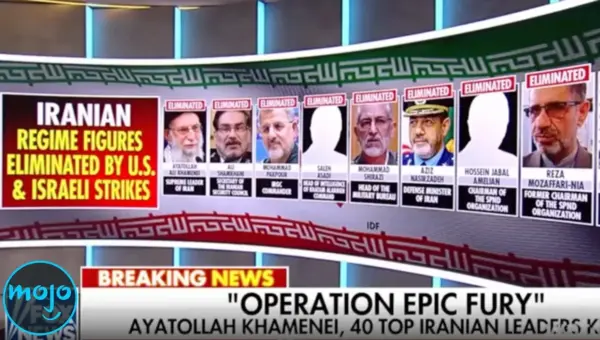
Iran’s Supreme Leader Eliminated in Bold US-Israel Strike
The world was shaken on February 28th, 2026, as Iran's Supreme Leader, Ayatollah Ali Khamenei, was reportedly killed in a joint US-Israeli strike. This event marks the end of an era defined by ideological warfare and proxy conflicts, leaving the future of the Middle East in a state of profound uncertainty.

US Launches Airstrikes on Iran Amidst Global Alert
The United States has initiated a significant aerial campaign against Iran, marking the largest U.S. naval and air superiority operation in 25 years. The move follows assurances from the President that war would be avoided, raising questions about strategy and transparency.