Europe’s Jets May Rely on Russian Oil Amid Sanctions Evasion
Europe's push to cut off Russian oil is being complicated by international trade dynamics. A US waiver allowing India to buy Russian crude, coupled with global refining limitations, suggests European jets may still rely on Russian-derived fuel despite EU sanctions.


Europe Faces Dilemma as Russian Oil Re-enters Supply Chains
BRUSSELS – Europe’s efforts to isolate Russia economically are facing a significant challenge as Russian crude oil appears to be finding its way back into the continent’s energy supply, potentially fueling its aircraft. Despite stringent EU sanctions aimed at cutting off revenue for Moscow, a complex web of international trade, refining, and temporary waivers is creating loopholes that could see European jets flying on Russian-derived fuel.
Shifting Oil Landscape and EU Sanctions
Until recently, Europe relied heavily on India for a substantial portion of its jet fuel, importing over 15% of its total supply, valued at approximately $14 billion last year. A significant amount of this oil refined and exported by India originated from Russia. However, the European Union, determined to close this perceived loophole and increase pressure on Russia following its invasion of Ukraine, implemented a new round of sanctions earlier this year. These sanctions effectively prohibited the import of Russian oil, even if refined in third countries like India.
In response to the EU’s directive, Indian refiners attempted to pivot, sourcing crude oil from Middle Eastern nations such as Iraq, Saudi Arabia, and the United Arab Emirates. These countries are strategically important as their oil can be transported to India without navigating the sensitive Strait of Hormuz, a critical chokepoint for global oil shipments.
US Waiver Creates New Avenues for Russian Oil
The situation took a complex turn when the United States granted India a 30-day waiver, allowing it to purchase Russian oil despite ongoing sanctions. India has significantly capitalized on this waiver, reportedly ordering 30 million barrels of Russian crude within days of the agreement. This move by the US, intended to stabilize global energy markets amidst broader geopolitical tensions, has inadvertently opened a new pathway for Russian oil to enter international trade flows.
Analysts suggest that it is highly probable that some of this Russian energy is quietly re-entering European supply chains, despite the EU’s sanctions regime. The intricate nature of global oil trading means that while India could technically keep Russian oil separate from fuel destined for the EU, the economic realities and the sheer volume of trade make such segregation challenging.
The Reality of Refining Capacity and Market Balance
The core of the challenge lies in the global refining capacity. “The reality of the situation is that without the Middle Eastern refining capacity, there is just no way the European gas and jet balances could be uh balanced,” a source familiar with the energy market stated. Europe’s internal refining capabilities, particularly for specialized products like jet fuel, are insufficient to meet demand without recourse to international markets. This dependence on global supply chains, even those indirectly linked to sanctioned nations, highlights the interconnectedness and vulnerabilities of the current energy infrastructure.
US Loosens Sanctions, Angering EU Officials
Adding another layer of complexity, the United States recently announced it would temporarily loosen sanctions on Russian oil. This decision has reportedly angered EU officials, who view it as undermining their unified stance against Russia. The US move further strengthens the possibility that more Russian oil will find its way into Europe’s energy mix, particularly for aviation fuel, creating a significant political and strategic quandary for the EU.
Broader Implications and Future Outlook
The unfolding situation raises critical questions about the effectiveness of sanctions when faced with global energy demands and the intricate workings of international trade. It underscores the difficulty Europe faces in completely decoupling from Russian energy resources without risking severe economic disruption. The reliance on oil originating from Russia, even if processed through third countries, highlights the strategic leverage Moscow retains in the global energy market.
As the situation evolves, European policymakers face the difficult task of balancing their commitment to sanctioning Russia with the practical necessity of maintaining energy security and economic stability. The coming weeks will be crucial in observing whether further diplomatic efforts or market adjustments can mitigate the flow of Russian oil into European energy supplies, or if the continent will indeed continue to rely, perhaps unknowingly, on Russian resources to keep its skies open.
Source: Will Europe need Russia to keep its planes in the sky? | DW News (YouTube)

Related Articles

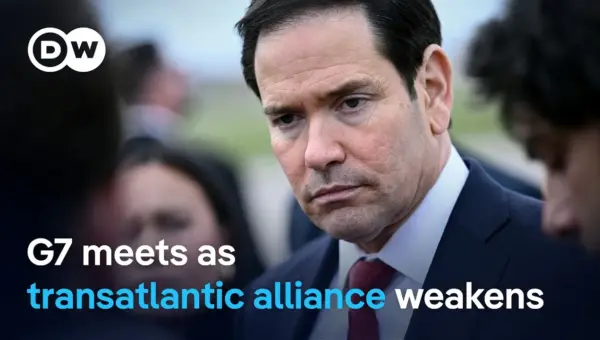
G7 Allies Clash Over Iran War Strategy, Urge Focus on Russia
G7 foreign ministers met in Paris, revealing deep divisions over the U.S. war with Iran. European allies urged the U.S. to pressure Russia, linking its actions to the conflict and fearing support for Ukraine will wane.
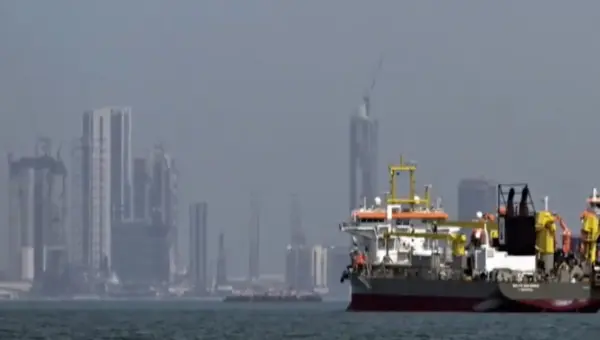
Iran Blocks China Ships, Exposing Beijing’s Weak Grip
Iran's recent decision to block Chinese ships at the Strait of Hormuz is exposing the limits of Beijing's influence in the Middle East. This action is causing delays and cancellations for Chinese manufacturers, turning a perceived geopolitical win into an economic strain.
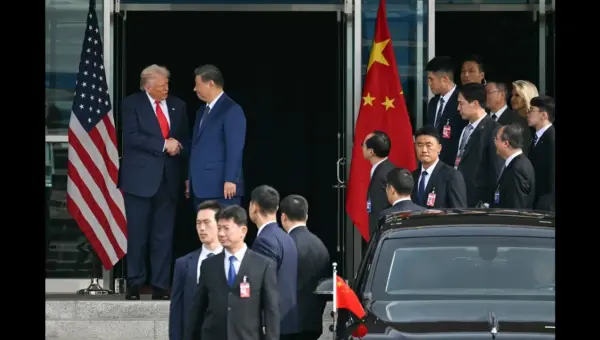
Trump’s “Walk Away” Tactic Signals Tougher Stance on China
Retired Air Force Brigadier General David Stillwell believes President Trump's strategy of being willing to walk away from negotiations puts pressure on China. This tactic, combined with US global actions and strengthened alliances, signals a more assertive American foreign policy.