Europe’s ‘Financial Nuclear Option’: A New Era of Transatlantic Brinkmanship and Strategic Autonomy

Europe’s ‘Financial Nuclear Option’: A New Era of Transatlantic Brinkmanship and Strategic Autonomy
The hallowed halls of Davos, typically a stage for quiet diplomacy and global consensus-building, were, in a hypothetical 2026, transformed into an arena of stark geopolitical brinksmanship. The conclusion of the World Economic Forum, rather than signaling a return to collaborative engagement, was marked by a tactical retreat from immediate tariff threats by a prominent global leader, yet simultaneously, by an audacious territorial demand that sent shockwaves through the transatlantic alliance. This fictionalized scenario serves as a chillingly plausible reflection of contemporary geopolitical anxieties, where long-held assumptions about international cooperation are giving way to transactional relationships and the specter of economic coercion.
The imagined address by President Trump, an eighty-minute monologue devoid of diplomatic niceties, explicitly demanded the acquisition of Greenland, stating, “I want to get Greenland, including right, title, and ownership.” For European capitals, this was no armistice. Instead, it was perceived as a tactical withdrawal by a leader who views alliances as mere transactions and sovereign territory as real estate to be acquired. The territorial scuffle, which emerged and subsided with startling speed – a weekend of maximalist threats against eight NATO allies leading to a global $1 trillion market selloff, followed by a framework deal – left Europe in a state of profound unease, wondering if or when such a claim would resurface.
The Unraveling of Transatlantic Trust: From Faith to Transaction
This crisis, albeit hypothetical, starkly illuminates a fundamental breach of trust that, once exposed, cannot be unseen. For decades, the transatlantic alliance, forged in the crucible of two world wars and the Cold War, was an article of faith – an unshakeable bedrock of shared values, mutual security, and economic interdependence. Today, there is a pervasive worry that this alliance is increasingly being treated as a bilateral transaction, where security is a commodity to be bought and sold, and allies are merely sponges to be squeezed for advantage.
This breakdown in trust is particularly jarring because, on paper, a conflict or even severe economic coercion between such deeply integrated partners appears utterly irrational. It evokes the central argument of Norman Angell’s seminal 1909 book, The Great Illusion. Angell, writing on the eve of World War I, correctly identified that the world had entered an era of unprecedented globalization, where economic interdependence made large-scale war amongst great powers fundamentally illogical. He famously illustrated the absurdity of modern conflict by pointing out that Lloyds of London insured the German merchant marine. Should war erupt, the British Navy would effectively be sinking ships that British insurers would then be compelled to pay for. Angell argued that in a credit-based global economy, an invader could not seize a neighbor’s wealth without simultaneously destroying the foundational systems of exchange that underpinned their own prosperity. While his logic was indeed indisputable, and his conclusions widely agreed upon by state leaders, history demonstrated just five years later that economic self-defeat does not inherently prevent conflict.
We find ourselves grappling with a similar paradox today. While our current era feels significantly more nervous and volatile than the world of 1909, the lesson remains acutely relevant: economic logic is no longer a reliable guardrail when trust is systematically replaced by coercion. In a mere twelve months, the nervous energy that once characterized European capitals has transmuted into a profound strategic recalculation. As The Economist has acutely observed, the continent has rapidly progressed through a terrifying sequence of questions: from wondering if it can defend alongside America, to questioning if it can defend without America, and finally, to asking what it must do to defend itself from America.
The Greenland crisis, in this hypothetical framework, served as the stark catalyst for this unsettling realization. To risk the stability of the entire Western Alliance over the ownership of an island to which the US already enjoys unparalleled military access, and where US companies are already actively exploring mineral potential, suggests a shift beyond mere policy disagreements into the dangerous realm of overt coercion. Beyond this specific dispute, the broader geopolitical landscape appears to have decisively shifted towards a state of profound anxiety. It was once unthinkable to imagine Canada, traditionally the United States’ most steadfast partner and closest neighbor, wargaming a defensive strategy against its southern neighbor. Yet, the current climate of unpredictability and transactional diplomacy has forced such once-inconceivable contingencies into the war rooms of even the most amicable allies.
The Urgent Imperative of Strategic Autonomy
For Europe, accepting this unsettling new reality translates into acknowledging that strategic autonomy is no longer a distant, aspirational ideal, but an urgent, existential necessity for survival. However, the path to building this autonomy will be an arduous and monumental undertaking, requiring years, if not decades, of sustained effort. Both Europe and the United States, in this scenario of fraying trust, are compelled to plug critical gaps in their military capabilities and supply chains, often in duplication of efforts. The transition from the efficiencies of global integration, which characterized the post-Cold War era, towards a world of autarky – a self-sufficiency driven by mutual fear and suspicion – will inevitably impose heavy costs. While the fiscal strain on national budgets will be immense, the burden will ultimately be borne by every consumer through higher prices, and by every business through a fragmented, more expensive, and less predictable landscape for global trade.
While the Davos climbdown in this hypothetical scenario may have temporarily lowered the immediate temperature, it has not erased the underlying need for European capitals to refine the war room plans drafted when the threat of economic warfare and even annexation first hit the wires. Europe’s defensive arsenal against potential American economic coercion is being constructed on a stark realization: if trust is no longer the reliable currency of the alliance, then hard financial leverage must reluctantly take its place. This is not conceived as an act of aggression but rather as a reluctant, yet essential, strategic recalculation. It is a means for the European Union to assert its status as a peer-level economy, rather than a collection of expendable vassals. The understanding has firmly set in that relying solely on shared history and values is no longer a viable risk management strategy. If the US is going to treat the alliance as a series of transactional shakedowns, Europe has concluded that it is in everyone’s interest to ensure that the costs of those transactions are prohibitively high for the initiator.
Weaponizing Finance: The ‘Financial Nuclear Option’
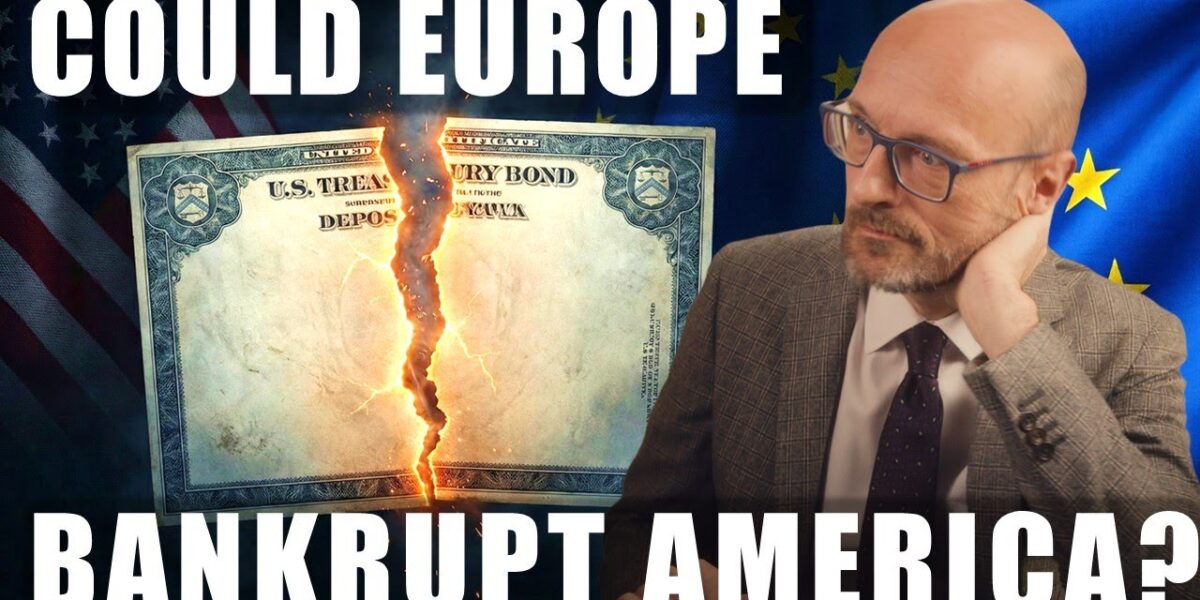
The phrase “financial nuclear option” has dominated headlines in this imagined future, though it is crucial to note that it was not a policy proposal put forth by any European head of state. Instead, the provocative idea of weaponizing Europe’s formidable $2.84 trillion in US Treasury holdings originated in the research departments of the very institutions that manage them. George Saravellas, the global head of FX research at Deutsche Bank, ignited the debate with a blunt memo titled “Europe owns Greenland, it also owns a lot of treasuries.” His argument was direct and unvarnished: the US’s heavy reliance on foreign creditors to finance its vast public debt is its ultimate geopolitical weakness. This sentiment found an echo with Rebecca Patterson of the Council on Foreign Relations, who suggested that even if a total sell-off was unrealistic, Europe could send a devastating signal by simply scaling back exposure through government-affiliated investors like public pension funds.
This argument gained sufficient traction that Treasury Secretary Scott Bassand, in a hypothetical appearance at Davos, felt compelled to address it directly, dismissing the talk as “media hysteria” and a “false narrative that defied logic.” Yet, for all the talk of hysteria, some investors were not just listening; they were acting. In the frantic week of the Greenland crisis, a Danish pension fund announced its divestment of its entire $100 million portfolio of US government bonds, explicitly citing the poor health of US public finances and the unpredictability of the administration. More significantly, the Swedish pension giant Electa confirmed that it had trimmed its holdings by roughly $7 billion to $9 billion, explicitly citing the “reduced predictability in American policymaking” as a growing risk factor. The question, therefore, is no longer just whether the idea is on the table, but whether it is actually a viable weapon or a perilous path to self-destruction.
Europe’s Anti-Coercion Arsenal: Beyond Bonds
Beyond the high-stakes bond market, Europe has been diligently readying a broader array of anti-coercion instruments. The most notable among these is a “trade bazooka” – a powerful new legal framework specifically designed to counter economic blackmail. It is a stark reflection of the current state of affairs that this formidable tool was originally conceived to defend the bloc against authoritarian pressure from China and Russia. Its first proposal came after Beijing’s attempt to economically blackmail Lithuania by cutting off trade over its ties with Taiwan. Seeing it now discussed as a primary defense against the United States, traditionally Europe’s closest ally, represents a surprising and historic shift in the transatlantic relationship.
What makes the Anti-Coercion Instrument (ACI) so potent is its ability to bypass the usual veto power that often paralyzes European foreign policy decisions. Unlike most security decisions that require unanimous consent, the ACI operates through qualified majority voting. This means that while 55% of member states representing 65% of the total population must agree, a single dissenting capital can no longer unilaterally block a unified response. It effectively transforms European trade policy into a centralized, “one-for-all, all-for-one” defense system. This tool allows Brussels to move past simple tit-for-tat tariffs and unleash a far broader menu of countermeasures. For instance, the EU could legally bar US tech firms from bidding on massive public procurement contracts for hospitals, schools, and digital infrastructure – markets where American vendors currently enjoy a substantial share. They could also choose to restrict or outright close access to the EU’s 450 million-consumer market for US financial services, hitting Wall Street banks and venture capital funds where it hurts most. In perhaps the most radical move available, the ACI even allows Europe to revoke the intellectual property rights of companies from the coercing country. This would effectively “jailbreak” American software and hardware, allowing European firms to legally ignore US patents and commercial protections within the single market, a truly revolutionary and disruptive capability.
While the trade bazooka targets the digital and financial “software” of the modern economy, Europe has also been meticulously identifying industrial hardware bottlenecks where the US remains critically dependent on European technological leadership. The centerpiece of this strategy is the Dutch firm ASML, which holds a global monopoly on the EUV lithography machines needed to manufacture the world’s most advanced computer chips. Analysts are increasingly describing ASML as Europe’s version of rare earths – a unique technological gatekeeper that gives Brussels a massive say in the global AI race. If Europe were to restrict the export or, even more subtly, the servicing of these machines, it would strike a direct blow to the Silicon Valley innovation engine that the White House views as its primary strategic asset.
However, as with many of these solutions, the ASML chokehold is more akin to a “mutual leash.” While the machines are designed and built in the Netherlands, they are filled with American-made components, such as the high-powered Cymer lasers from San Diego. Under the foreign direct product rule, Washington could theoretically veto the export of any product that contains a significant amount of US technology. So, if Brussels were to attempt to use ASML as a weapon, the US could essentially “brick” the production line by cutting off the American parts and software updates that keep those machines operational. Leverage, it turns out, isn’t just found in high-end silicon. It also exists in more basic industrial feedstocks that keep American manufacturing humming. The EU has already been treating aluminum and steel scrap as a critical secondary raw material, moving to restrict its export. This would directly impact US steelmakers who rely on using recycled materials to keep their energy costs down. By cutting off the flow of specialized chemicals and industrial products, Europe is signaling that it can clog the arteries of American industry just as effectively as any digital lockout.
Finally, there’s the most conventional part of the arsenal: the $93 billion euro (approximately $108 billion USD) retaliatory list of tariffs, originally drafted after the “Liberation Day shock” of the previous year (a tongue-in-cheek reference to April 1st). These aren’t just randomly applied to drive up costs on European consumers; they are carefully calibrated to maximize political pain in America while minimizing the price tag for European voters. By targeting soybeans, for example, the EU is sending a direct message to the agricultural heartland that supports Republican leaders. The list also features classic targets: iconic American products like Harley-Davidson motorcycles, Levi’s jeans, and American whiskey. These were chosen precisely because they are easily replaced by European, Japanese, or South American alternatives. The overarching goal is to make the trade war feel expensive and politically damaging to the average American voter, while ensuring that the European side of the ledger remains balanced and palatable to its own populace.
The Illusions of Economic Warfare: A Sobering Reality Check
As effective as this arsenal of trade weapons might appear at first glance, much of it, upon closer scrutiny, is built on a series of macroeconomic myths. In the high-stakes theater of Davos, the threat of a Treasury dump or a tariff wall makes for compelling headlines. But as the dust settles, the economic reality is far more sobering. The argument that a massive selloff of US debt by European bondholders would spike interest rates and bankrupt the US – a nation already highly indebted and attempting to reduce the interest rate on its massive deficit spending – simply does not hold up to scrutiny.
For starters, the act of dumping bonds on such a scale is inherently self-defeating. By flooding the market with trillions of dollars in US debt, you inevitably drive down the price of the very assets you are trying to exit, essentially setting fire to your own portfolio to spite your neighbor. Furthermore, once you’ve dumped the bonds, you are left with trillions of US dollars. You then need to find another currency and economy liquid enough to store such immense wealth. There simply aren’t many economies with open capital accounts liquid enough to absorb trillions in savings. Large alternatives like China or India have strict capital controls in place, making them unsuitable. Even if you pivoted to trillions in Japanese bonds, Tokyo would likely just recycle those funds back into US Treasuries, leaving you indirectly exposed. It simply wouldn’t work as an effective weapon.
The economist Michael Pettis makes a more sophisticated argument about why this wouldn’t work, contending that the threat to weaponize Treasuries is a “dud” because foreign capital inflows are not a gift to the US but rather a burden. These inflows, he argues, force the US to run massive trade deficits and pile up debt simply to balance the global ledger. He explains that you cannot change your capital account without simultaneously changing the trade account, and you cannot change external imbalances without also changing internal imbalances. According to Pettis, the suppression of consumption in China and other export-driven countries leads to huge trade surpluses in their economies and, consequently, to large deficits abroad. His argument is that when capital is not being drawn into a country by the need for investment, but instead is being pushed in to compensate for imbalances abroad (like China exporting far more than it imports), the foreign capital doesn’t fund productive investment in the recipient country. Instead, it indirectly funds consumer or fiscal borrowing. He argues that if export-driven economies stopped storing their excess savings in American bonds, it would likely help the US by forcing its trade deficit to shrink and its domestic savings to rise, leading to a healthier economic balance.
This leads directly into what Martin Wolf of the Financial Times describes as the “lunacy of the current tariff obsession.” Wolf argues that Trump’s tariffs, or any similar protectionist measures, cannot actually “save” American industry in a meaningful way. They will simply shift domestic production away from the efficient production of exportable goods towards the less efficient production of import substitutes. You might protect a few specific factories this way, but you do so at the cost of making the rest of the country poorer and less competitive. Richard Sammons of the Brookings Institute takes this idea further, arguing that the fundamental problem is that world leaders are attempting to use microeconomic tools, such as tariffs under Trump or subsidies under Biden, to fight a macroeconomic war. These trade tools are blunt instruments being used to address a system that is actually suffering from a massive imbalance between what different nations save and what they invest – an imbalance mostly driven by consumption suppression abroad. He argues that these tools treat the superficial symptoms of the underlying problem with an overprescription of an outmoded medicine that runs the grave risk of precipitating a cascading failure of the patient’s vital functions.
Sammons argues that the time is ripe for a “new deal,” not unlike the Plaza and Louvre Accords of the 1980s, to be struck among the major economic powers, which would strengthen the growth and stability of the world economy – an outcome that would be greatly in the national interests of Europe, China, and the United States. The US genuinely wants to see trade rebalanced. Europe is prepared to do its part, and China does seem to have recognized, after wave upon wave of supply-side investment stimulus, that it has no choice but to boost domestic consumption in order to maintain sufficient growth in output and employment. The critical worry, however, is that people in positions to make these necessary changes do not fully understand the true nature of the problem and mistakenly believe that tariffs or subsidies alone will fix everything.
As Martin Wolf points out, the interaction of US trade policy with its fiscal policy often offsets each other. Tariffs are supposed to reduce, if not eliminate, trade deficits, while large external deficits mean, by definition, that the country is spending more than its income, necessitating imports from abroad. With the US economy running close to its potential with very low unemployment, no further quick way to raise incomes exists. Therefore, reducing the external deficit would require significant reductions in national spending. Ultimately, the attacks and counterattacks – meaning the US tariffs and the European retaliations – simply make everyone poorer, shrinking the global economic pie.
The True Danger: The End of ‘Efficiency First’ and the New Illusion
The true danger, as The Economist notes, isn’t just the shrinking GDP or the immediate economic costs. It is the permanent evaporation of trust between historically friendly nations. If we enter an era of autarky, where every nation feels compelled to build its own redundant, expensive, and fragile “fortress economy,” the consequences extend far beyond more expensive soy or motorcycles. It heralds the end of the “efficiency first” era, where the gains of global trade were prioritized, replaced by the expensive, redundant safety of the bunker. As capital is increasingly diverted in both the US and Europe to military spending and the duplication of supply chains, we find ourselves moving from a world of “the great illusion” – where we believed that economic ties made war impossible – to a world where the new illusion is that anyone can actually “win” in this scenario of growing hostility between formerly friendly nations.
The Economist warns that while President Trump, in this hypothetical scenario, backed down at Davos, Europeans should still heed the language in his speech, which betrayed an ominous contempt for Europe and for the value to America of the transatlantic alliance as it currently operates. They caution that if the rest of the world decides that they can no longer trust America, nations like Germany, Japan, Poland, and South Korea would rush to rearm and possibly seek nuclear weapons. Such proliferation, they argue, would curb the value of America’s own arsenal and inhibit its statecraft. Furthermore, they contend that China and Russia won’t necessarily agree with a transactional US on where America’s influence ends and theirs begins, a dangerous divergence that might lead to a war so devastating that America could not possibly stay out of it. The hypothetical Greenland crisis and Europe’s subsequent strategic recalculation serve as a powerful warning of the profound and potentially catastrophic consequences of a world where trust, once the bedrock of alliances, has eroded into a landscape of transactional coercion and mutual suspicion.
Source: Does Europe Have a Financial Nuclear Option? (YouTube)

Related Articles
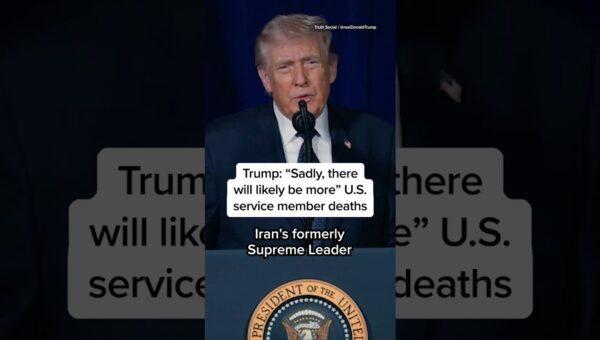
Trump Warns of More US Deaths in Escalating Conflict
Former President Donald Trump issued a somber warning on Truth Social, stating that further U.S. service member deaths are "likely" as geopolitical tensions escalate. He condemned Iran's former supreme leader, Ayatollah Ali Khamenei, and vowed retribution for fallen soldiers.

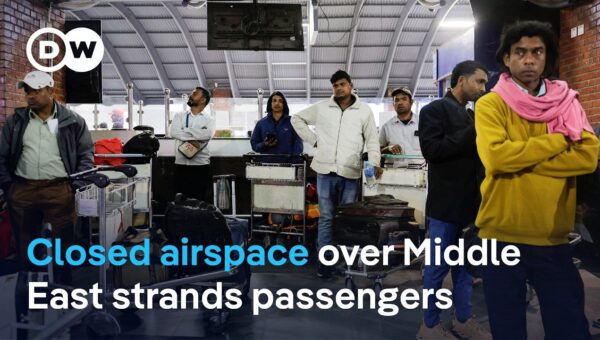
Air Travel Chaos Erupts as Gulf Conflict Shuts Skies
Tens of thousands of passengers are stranded as the conflict in the Persian Gulf forces widespread airspace closures, disrupting global air travel. A tourist in Israel described witnessing air strikes and the desperate search for escape routes amidst rapidly changing travel options.


Gulf States Caught in US-Iran Crossfire, Seek Stability
Gulf states are caught in the escalating US-Iran conflict, facing violations of sovereignty and national security threats. Leaders express a strong desire for stability and economic prosperity, contrasting with the unfolding scenes of regional instability.