Europe’s Digital Sovereignty Push: A Strategic Shift Away from US Tech Dominance

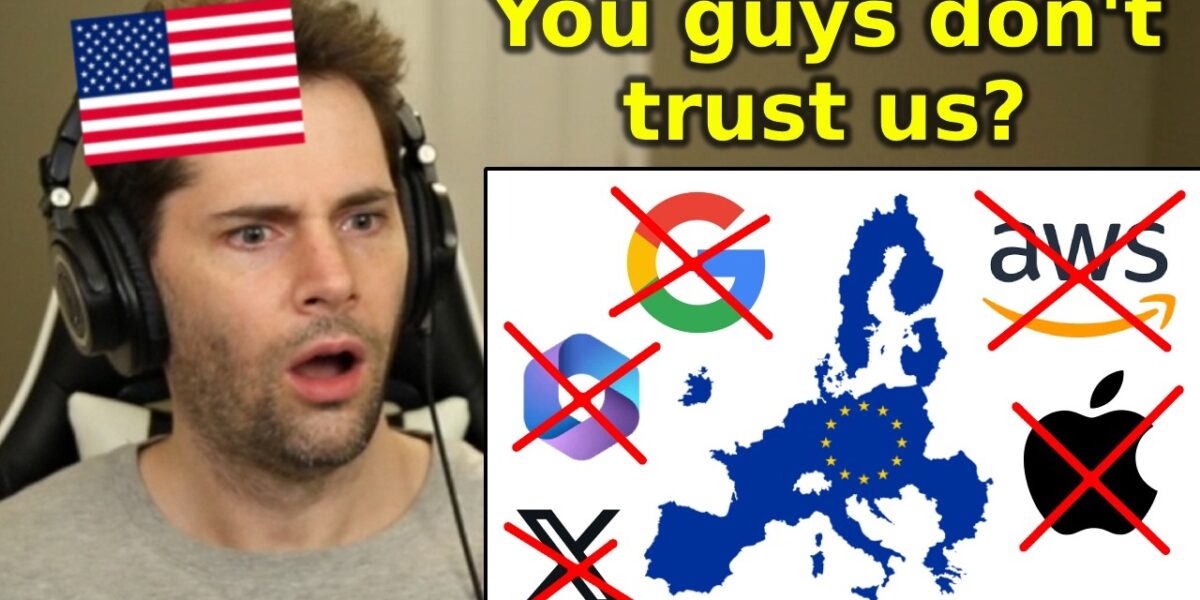
Europe’s Digital Sovereignty Push: A Strategic Shift Away from US Tech Dominance
A significant geopolitical and economic realignment is unfolding across Europe, as nations increasingly signal their intent to reduce their reliance on American technology. This strategic pivot, driven by a growing imperative for digital sovereignty and a perceived erosion of trust, marks a profound challenge to the long-standing dominance of US tech giants in the European market. Recent actions, particularly in France, illustrate a tangible movement towards building homegrown digital independence, with implications that could reshape the global technological landscape.
For decades, the United States has held an undeniable lead in the development and deployment of crucial digital infrastructure and consumer-facing technologies. From cloud computing services to social media platforms and operating systems, American companies have become deeply integrated into the fabric of European economies and daily life. However, a series of events and evolving geopolitical dynamics have spurred European leaders to question the wisdom of this profound dependency, leading to a concerted effort to foster indigenous alternatives and regain control over their digital future.
France Leads the Charge: Raids, Bans, and National Alternatives
The urgency of Europe’s digital autonomy quest has been starkly demonstrated by recent actions taken by French authorities. In a move that sent ripples through the tech world, French cybercrime authorities reportedly raided the Paris offices of X (formerly Twitter). The investigation centers on allegations of unlawful data extraction and suspected abuse of algorithms, with prosecutors reportedly summoning X owner Elon Musk and former chief executive Linda Yaccarino for questioning. The incident, described by Musk as a "political attack," was swiftly rebuffed by France’s Ministry for Europe and Foreign Affairs, underscoring the seriousness with which European nations are approaching issues of data governance and accountability.
This high-profile investigation is not an isolated incident but rather part of a broader French strategy to reduce reliance on foreign tech. Just days prior to the X raid, France’s Prime Minister reportedly instructed French ministries to abandon the US video conferencing platform Zoom in favor of Vizio, a French alternative. This directive, aimed at guaranteeing the security, confidentiality, and resilience of public electronic communications, highlights a practical step towards replacing widely used American services with secure, nationally developed options. The Vizio project, moreover, is envisioned as a precursor to creating a comprehensive French alternative to ubiquitous US platforms like Microsoft Office or Google Suites.
Further demonstrating this commitment, the French government also intervened to block the sale of ground antenna from its satellite operator, Eutelsat, to a private equity firm. This decision was explicitly made to protect European digital autonomy, recognizing Eutelsat’s strategic importance as the only European competitor to Elon Musk’s Starlink, a US-based satellite internet constellation. These actions collectively paint a clear picture of France’s proactive stance in safeguarding its digital infrastructure and data from foreign control.
A Continent-Wide Imperative: Building Digital Sovereignty
The push for digital autonomy extends far beyond France’s borders, reflecting a growing consensus across the European Union. The European Parliament recently passed a resolution advocating for member states to "strengthen European technological sovereignty by facilitating the procurement of European digital products and services where possible." This echoes calls from prominent European figures, including French President Emmanuel Macron, former European Central Bank head Mario Draghi, and European Commission President Ursula von der Leyen, all of whom have emphasized the critical need for increased European investment in key technologies like AI, quantum computing, and defense and security, alongside developing indigenous cloud infrastructure.
At its core, European digital sovereignty is about increasing the continent’s ability to develop, control, and govern its own digital services and infrastructure without being overly dependent on foreign providers. A report by the Bertelsmann Stiftung underscores the urgency: the EU currently relies on non-EU countries, predominantly the US and China, for over 80% of its digital technologies and infrastructure. This dependency is particularly pronounced in critical areas like cloud computing, where US giants Amazon, Microsoft, and Google collectively command nearly 70% of the European market, while the largest EU cloud provider holds a mere 2%.
Such a lopsided reliance creates significant strategic risks. Unlike physical goods, where alternative suppliers can be found if one becomes unreliable (as seen with Russia’s energy supply), digital services represent ongoing relationships. Foreign providers retain continuous control, able to unilaterally alter terms, prices, features, or access, potentially impacting European businesses and citizens without negotiation. An example cited is Facebook’s algorithm changes, which drastically reduced organic reach for European businesses, effectively forcing them towards paid advertising.
Erosion of Trust and US Actions Fuel the Shift
Underpinning Europe’s drive for digital independence is a palpable erosion of trust in the United States, particularly over recent years. Concerns about data privacy, unlawful data collection, and the potential for foreign surveillance have grown. The commentator in the original transcript noted the irony, comparing Europe’s current concerns about US tech to America’s own anxieties regarding Chinese technology, such as TikTok, and its strict policies against foreign surveillance.
Adding to this complex dynamic are perceived attempts by the US to actively counter Europe’s regulatory efforts. The previous US administration, for instance, reportedly imposed travel bans on Europeans involved in digital safety, including former EU Commissioner Thierry Breton, who played a key role in establishing the EU’s digital rules. Threats of tariffs on countries that "discriminate" against American tech firms, coupled with diplomatic pressure and aggressive rhetoric, have further solidified the perception of the US as an unpredictable partner, thereby strengthening Europe’s resolve to control its own digital destiny.
While EU regulatory policies are primarily motivated by concerns for user welfare and online safety, this ongoing friction with US big tech firms unequivocally highlights the deep-seated anxiety within Europe about its extensive reliance on American technology.
Challenges and the Path Forward
Despite the strong political will, achieving full digital sovereignty will be a formidable task. The global reach and entrenched dominance of US tech giants mean that a total decoupling is likely impossible and certainly not easy. American technologies are deeply entwined in everyday life, from web hosting to search engines and communication platforms, making a complete break incredibly challenging for individuals and businesses alike.
However, the goal is not necessarily total decoupling but rather "de-risking" – a matter of degree. By nurturing homegrown alternatives and investing in its own digital infrastructure, Europe aims to break the monopolistic hold currently enjoyed by US tech and foster a more competitive and secure digital ecosystem. One significant proposal to achieve this is the creation of a European sovereign tech fund, modeled after Germany’s initiative. This fund, comprising EU funds, member state contributions, and private sector investment, would provide crucial financing for critical open-source software infrastructure across the continent.
While such initiatives may involve heated debates over joint financing and potential short-term economic adjustments, proponents argue that the long-term cost of inaction – particularly as the US is perceived to become an increasingly unpredictable partner – could be far higher. The current trajectory suggests that Europe is committed to this path, recognizing that digital autonomy is not just an economic aspiration but a strategic imperative for its future security and prosperity.
Implications for the Global Tech Landscape
For the United States, this European shift represents a significant challenge to its long-held technological leadership and economic influence. The commentator in the transcript highlighted that the US "makes a lot of money and revenue and a lot frankly a lot of leverage" from its technology operating in Europe and worldwide. A reduction in this reliance means a potential loss of significant revenue, power, and wealth for American companies and, by extension, the US economy. While acknowledging the "right thing" for Europe to do, the commentator also admitted it would be "terrible for the US."
This strategic pivot by Europe could catalyze similar movements in other regions of the world, fostering a more fragmented global tech landscape. It underscores a growing global trend where nations prioritize national security, data privacy, and economic control over the convenience and cost-effectiveness offered by dominant foreign tech providers. The coming years will likely witness a fierce competition for digital independence, with Europe’s bold steps potentially setting a precedent for a new era of technological sovereignty.
Source: American Reacts to Europe Ditching US Tech (YouTube)

Related Articles


Iran Strikes Spark Oil Price Surge, Threatening Affordability
Iran's recent strikes around the Strait of Hormuz have sent oil prices soaring, reversing consumer affordability gains and threatening broader inflation. The disruption to a vital global shipping lane could push gasoline prices significantly higher, complicating the Federal Reserve's inflation targets and creating market uncertainty.


Trump Addresses Iranians Amid Escalating Regional Conflict
President Trump addressed the citizens of Iran directly amidst escalating conflict, urging them to seize the moment for freedom following the death of Supreme Leader Ayatollah Ali Khamenei. The move comes as the region grapples with intense airstrikes, retaliatory attacks, and the first U.S. casualties of the ongoing military campaign.


Rep. Luna Argues “Strategic Strikes” Aren’t War
Representative Luna has differentiated "strategic strikes" from "war," arguing they are fundamentally different types of military actions. This distinction carries significant weight in how military engagements are perceived and responded to internationally.