European Leaders Plan Coordinated Response as Trump Escalates Trade Tariff Wars
European leaders are coordinating a response to President Trump's new 15% tariffs, imposed after a Supreme Court ruling. Experts warn of continued economic uncertainty, higher consumer prices, and potential manufacturing job losses in the U.S. The legality of the new tariffs is also being questioned.

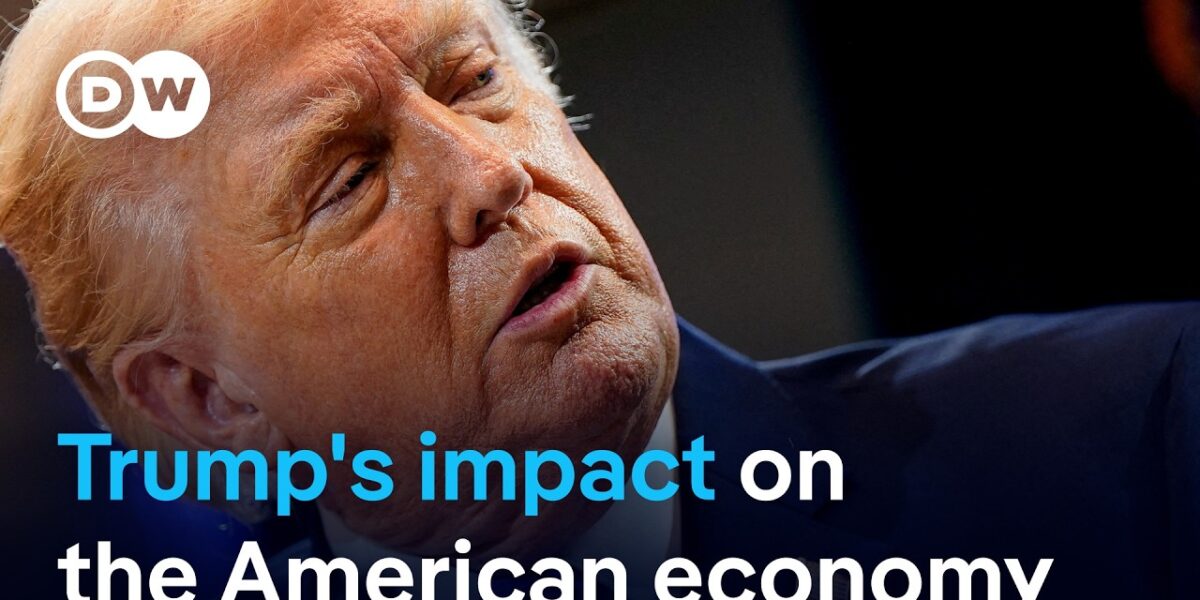
EU Nations Prepare United Front Amidst New US Tariff Imposition
European leaders are actively coordinating a unified response to a significant escalation in trade tariffs announced by U.S. President Donald Trump. This move follows a recent U.S. Supreme Court ruling that invalidated many of the president’s previous tariff measures. In response to the court’s decision, the Trump administration has moved to implement a new, across-the-board 15% levy on a wide range of imported goods, signaling a continued commitment to protectionist trade policies.
Economic Uncertainty Looms as Tariffs Disrupt Global Markets
The reintroduction of substantial tariffs by the United States has sent ripples through the global economy, creating a climate of uncertainty for businesses and consumers alike. Germany’s Chancellor Friedrich Matz has publicly voiced concerns, warning that the persistent unpredictability surrounding tariff policies is detrimental to both European and American economies. This ongoing trade friction threatens to undermine economic stability and hinder growth on both sides of the Atlantic.
Expert Analysis: Impact on the U.S. Economy
Kimberly Clausing, a distinguished professor of tax law and policy at UCLA School of Law, offered critical insights into the economic ramifications of these developments. Professor Clausing highlighted the Supreme Court’s ruling as a victory for institutional strength and the separation of powers, affirming that the president does not possess unilateral authority to impose such tariffs. However, she cautioned that the economic fallout from the ensuing chaos and uncertainty remains significant.
“For the economy though, while this is all being sorted out whether these new tariffs are even permanent or not, um we’re still left with a lot of chaos and uncertainty for consumers. Prices are still going to be high. The new levels of tariffs look very similar to what they were prior to the ruling. Uh so there’s going to be very little change in the consumer pain,” Professor Clausing stated. She further elaborated that businesses are likely to pass these increased costs onto consumers, especially if the situation persists. This translates into higher costs and potential reductions in manufacturing employment, creating a challenging environment for the U.S. business community.
Potential for Tariff Refunds and Legal Challenges
Professor Clausing also addressed the possibility of companies seeking refunds for tariffs that were deemed unlawfully imposed. She described such refunds as a “sensible response” and expressed hope that lower courts would issue rulings mandating their return. While the U.S. government, through the Internal Revenue Service (IRS), has the capacity to process such refunds, Professor Clausing noted that the process could be protracted by litigation if the administration resists. “But they they will be due,” she affirmed.
European Response: A Need for Predictability and Unity
Regarding the European reaction, Professor Clausing pointed to a silver lining in the form of potentially improved predictability in U.S. tariff policy. Unlike the previous regime, where the president could alter tariffs abruptly, often via social media, the new authority mandates an across-the-board 15% maximum rate. This offers trading partners a degree of assurance that the tariffs are applied more uniformly and are capped at a specific level.
Crucially, the current authority is set to expire in 150 days unless Congress intervenes. Professor Clausing considers it highly unlikely that Congress will extend these tariffs, given its previous expressions of disapproval. This limited timeframe offers a potential reprieve from the ongoing trade tensions.
Economist’s Perspective: The Double-Edged Sword of Tariffs
Abigail Hall, an associate professor of economics at the University of Tampa, echoed the sentiment of persistent uncertainty. “All we can really say at this point is here we go again,” she remarked, anticipating continued disruption for businesses of all sizes.
Professor Hall also raised doubts about the legal standing of the latest tariffs, stating, “it seems very unlikely that this most recent round will hold.” She specifically referenced the legislation the administration is using, which pertains to “balance of payments.” According to Hall, this type of tariff is only permissible during a balance of payments crisis, a condition the U.S. is currently far from experiencing given current exchange rates. “So, we’re far from a crisis. So, it’s seems very difficult to see how this would hold legal water,” she concluded.
Evaluating the Efficacy of Tariffs for American Workers
The core question of whether tariffs have delivered on their promises for American workers remains a contentious one. Both Professor Clausing and Professor Hall presented evidence suggesting that the promised benefits have not materialized. Instead, the U.S. has witnessed a contraction in manufacturing in many sectors.
“If we’re using the yard stick laid out by the administration for what tariffs were supposed to accomplish, the answer to that question is clearly no. We were promised a boon in manufacturing. We’ve certainly not seen that. In many cases, we’ve seen a contraction in manufacturing,” stated Professor Hall. She elaborated on how tariffs increase the cost of imported components for U.S. manufacturers and make finished goods more expensive for consumers, leading to outcomes contrary to the stated goals.
The Prospect of a Prolonged Trade War
The recurring imposition of tariffs raises concerns about the potential for a protracted trade war, which could leave both the U.S. and its international partners in a worse economic position. The constant back-and-forth on trade policy creates an unstable global economic environment, potentially deterring investment and slowing down international trade flows. European nations, facing the brunt of these new levies, are thus compelled to consider their strategic options, ranging from appeasement to retaliatory measures. However, as Professor Hall cautioned, any counter-response also carries economic costs for the nation implementing it, highlighting the complex and often detrimental nature of tariff-driven trade disputes.
Source: European leaders coordinate response to Trump's new tariff escalation | DW News (YouTube)

Related Articles
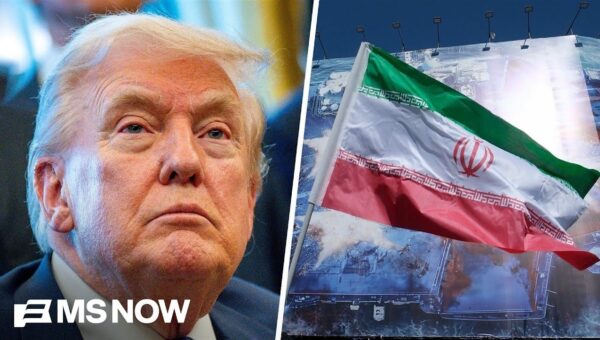
Trump Open to Iran Talks After Attacks, Shifts on Regime Change
President Trump has agreed to negotiate with Iran's new leadership following recent U.S. and Israeli attacks, signaling a potential shift from his regime change objective. The move has drawn scrutiny from former officials who question the strategic coherence of U.S. policy.

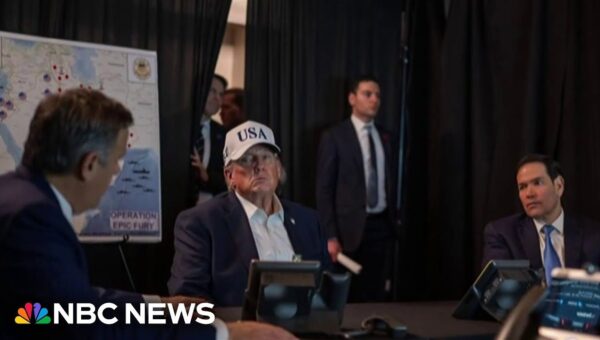
Trump: Iran Strikes Ahead of Schedule, Expects ‘Great Deal for World’
Three U.S. service members have been killed amid escalating conflict with Iran, President Trump confirmed. He stated that strikes are ahead of schedule, with senior Iranian leaders killed, and expressed optimism for a "great deal for the world" despite ongoing talks with Iranian officials.
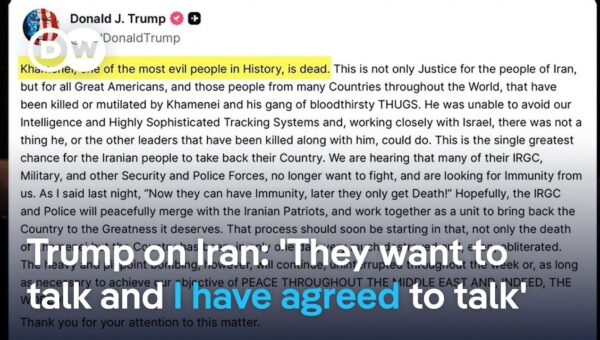
Trump Agrees to Talks with Iran After Major Strikes
President Donald Trump has agreed to talks with Iran's leadership following coordinated strikes that reportedly killed key figures, including the Supreme Leader. While Trump claims significant military successes, U.S. strategy remains unclear, and public opinion shows limited support for the actions amid rising American casualties.