Europe Sees Surge in Anti-Semitic Attacks, Experts Warn
Jewish communities in Europe and North America are facing a surge in anti-Semitic attacks, fueled by global tensions and extremist narratives. Experts warn that recruitment methods are evolving, with state actors potentially playing a role in funding and coordinating attacks. Authorities are struggling to adapt their counter-extremism strategies to this new hybrid threat.

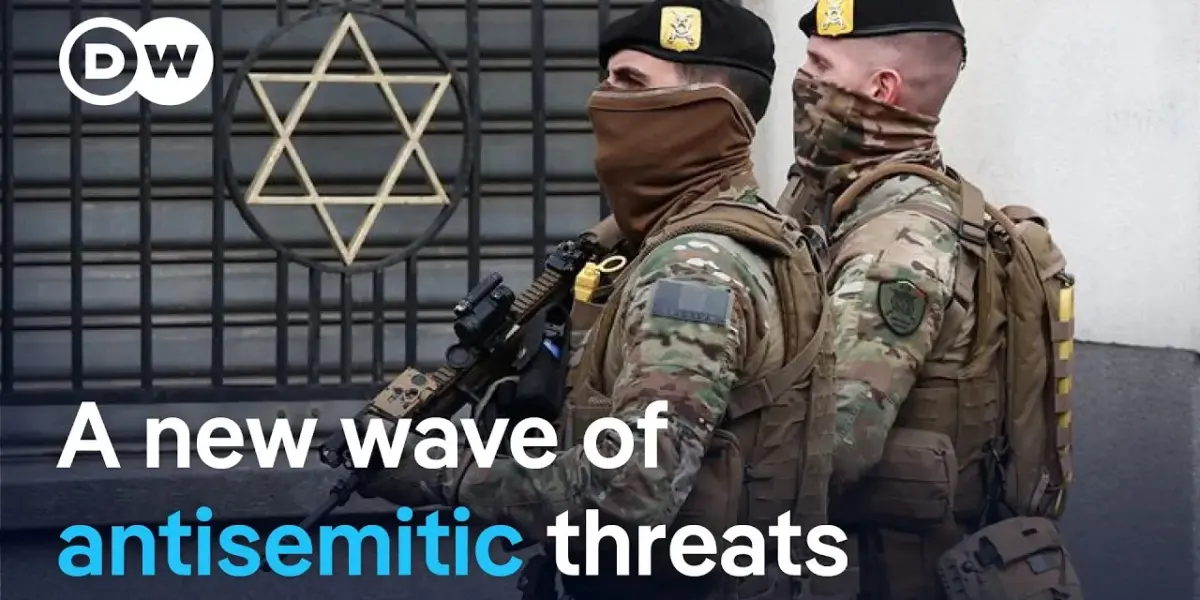
Europe Faces Escalating Anti-Semitic Violence
Across Europe and North America, Jewish communities are grappling with a disturbing rise in anti-Semitic incidents. Recent weeks have seen a wave of attacks, including explosions at synagogues, arson, shootings, and the firebombing of ambulances. These acts of violence are occurring amid heightened global tensions, with experts noting a dangerous spillover of extreme narratives into real-world hate crimes.
“We’ve been monitoring, you know, a raised threat profile, particularly against Jewish communities in Europe and North America for some time and really pretty consistently since the October 7th attack,” stated Milo Commer from the Institute for Strategic Dialogue, a leading expert on extremism. “We’ve really been tracking, you know, this kind of escalated set of threats.”
The current conflict in the Middle East is seen as a significant factor fueling this surge. “Whenever there is a flare up of violence in the Middle East and rising conflict, we unfortunately see a downstream effect on communities beyond the region,” Commer explained. “And unfortunately, the latest conflict is only fitting that pattern.” This raises critical questions about why distant conflicts lead to attacks on Jewish communities in the West and what drives this extremism.
The Link Between Israel and Global Anti-Semitism
A key element fueling modern anti-Semitism, according to Commer, is the tendency to closely associate the actions of the Israeli state with Jewish communities worldwide. “This is really that close association of the actions of the Israeli state with Jewish communities at large and really associating Jews with the actions of a state actor,” he said. Propaganda surrounding recent attacks often blurs the lines between Israel and Judaism, using this connection to justify violence.
Data from the Community Security Trust in the UK highlights this trend, showing historically high levels of anti-Semitic incidents in the past three years, particularly since October 7th. The last few weeks have been exceptionally acute, causing significant concern for the security of Jewish institutions like synagogues and schools.
While targeting of Jewish institutions has been a concern for years, with some appearing state-backed, the level of coordination seen recently is new. “The level of coordination that we’ve seen in the last couple of weeks is new and I think suggests a heightened threat landscape,” Commer noted.
Psychological Warfare and Propaganda Aims
The attackers’ goals extend beyond immediate physical damage. These acts are designed to create fear and a sense of helplessness within Jewish communities. “Fundamentally, it’s about rising fears within the community. It’s contributing to the sort of chilling effect of communities feeling safe and able to express themselves and play a full part in civil society,” Commer explained.
Interestingly, many of these recent attacks target infrastructure like buildings and vehicles, rather than people directly, at least for now. This suggests a shift in tactics. “They seem perhaps designed this latest wave, you know, striking in the middle of the night, targeting high-profile and important community infrastructure, but in this case, it does seem to be more about driving fear,” he added.
Furthermore, these attacks are increasingly geared towards generating propaganda. Groups often film and share footage of their actions online. “More and more these kind of groups are operating in a way that is designed to attract attention, to attract reporting, clipping together videos and footage of arson and so on,” Commer said. “So, in some ways, while the attacks themselves are consequential, it’s about the effect and the impact of them and the way that these can be packaged up and turned into online content to further the propaganda aims of these groups.”
Specific Incidents Highlight the Threat
Recent events underscore the severity of the situation. In London, ambulances belonging to a Jewish organization were set on fire next to a synagogue, with police treating it as an anti-Semitic hate crime. In Amsterdam, an explosion damaged a Jewish school, prompting one parent to wear a bulletproof vest when going out.
In Antwerp, a car was burned in the Jewish quarter, with two minors suspected. A group claimed responsibility, also stating they carried out an arson attack on a synagogue in Liege. While the ultimate perpetrators are still being identified, the recruitment methods appear to be evolving.
The New Face of Radicalization: Transactional and Hybrid Threats
The way individuals are radicalized and recruited for these acts has changed significantly. Unlike older models where people might travel to join groups like ISIS, modern radicalization can be more transactional. “It’s someone who might be targeted because they’re looking for money or they’re looking for a specific opportunity,” Commer described.
This approach is not limited to groups with anti-Semitic ideologies. Other state actors, like Russia and Iran, have used similar “hybrid threat methodologies” for various purposes, including against Ukraine and Israel. Arson attacks across Europe have adopted a similar pattern.
Recruitment often happens through platforms like Telegram, with coordination and payment facilitated by cryptocurrencies. “While there may well be an ideological dimension here, I think the methodologies that we’ve seen recently that seem similar to this are slightly more financial and opportunistic in nature,” Commer stated.
Governments Struggle to Respond
In response to the escalating attacks, Belgium has deployed soldiers to protect Jewish communities. However, questions remain about whether governments across Europe are doing enough. A European Commission study revealed that over half of respondents see anti-Semitism as a problem in their country. Sixty-two percent believe anti-Semitic attitudes manifest as hostility in public spaces, and 61% see it in graffiti, vandalism, and online.
The rapid evolution of the threat challenges authorities’ ability to respond effectively. “At the moment, these kind of attacks are really falling into the cracks when it comes to attempts to prevent them,” Commer observed. While many countries have counter-extremism infrastructure and programs for vulnerable youth, they are struggling to address this new hybrid threat.
Law enforcement, traditionally focused on self-started individuals drawn into online networks, are not always equipped to handle state-backed threats. “They’re not looking for those with the resources of states behind them who are looking to reach vulnerable people and activate them towards acts of violence. So, it’s a different threat vector,” he explained.
What Needs to Be Done?
Addressing this complex challenge requires a spectrum of interventions. Prevention work is crucial, focusing on the underlying conditions that foster violence and addressing root causes manipulated by extremists. This includes targeted counter-messaging and support for vulnerable individuals to offer alternatives and identify those at risk.
For more acute threats, strategies like de-radicalization and disengagement from extremist groups need to be applied. “When you’ve got someone that is on the cusp of carrying out an act of violence, what are the ways that you can bring them back from the brink?” Commer asked. Providing alternative incentives and preventing the weaponization of grievances are key.
Currently, much of the necessary infrastructure is not fully applied to these emerging threats. “The plane is being built as it’s being flown as we’re seeing these new kinds of risks emerging across Europe,” Commer concluded. Authorities are actively seeking the right tools and approaches to anticipate and counter these evolving challenges.
The threat is shifting quickly, and so too must the systems designed to protect communities. Authorities are working to develop the necessary toolkit to combat this new hybrid threat, but it remains a significant challenge.
Source: What needs to be done to protect Jewish communities? | DW News (YouTube)

Related Articles


G7 Allies Clash Over Iran War Strategy, Urge Focus on Russia
G7 foreign ministers met in Paris, revealing deep divisions over the U.S. war with Iran. European allies urged the U.S. to pressure Russia, linking its actions to the conflict and fearing support for Ukraine will wane.


Iran Blocks China Ships, Exposing Beijing’s Weak Grip
Iran's recent decision to block Chinese ships at the Strait of Hormuz is exposing the limits of Beijing's influence in the Middle East. This action is causing delays and cancellations for Chinese manufacturers, turning a perceived geopolitical win into an economic strain.


Trump’s “Walk Away” Tactic Signals Tougher Stance on China
Retired Air Force Brigadier General David Stillwell believes President Trump's strategy of being willing to walk away from negotiations puts pressure on China. This tactic, combined with US global actions and strengthened alliances, signals a more assertive American foreign policy.