Europe Denies US Bases, Airspace Over Iran Conflict
European nations are denying the U.S. access to airspace and military bases related to the Iran conflict. This strategic move aims to pressure the U.S. into ending the war quickly, but its effectiveness and underlying logic are being questioned amid broader geopolitical and economic concerns.

Europe Denies US Bases, Airspace Over Iran Conflict
Tensions are rising between the United States and European allies over the ongoing conflict in Iran. European nations are increasingly withholding crucial support, including access to airspace and military bases. This move marks a significant shift from earlier requests for tangible aid to reopen the Strait of Hormuz.
Entrapment Concerns Drive European Hesitation
The current standoff stems partly from a concept known as “entrapment.” This occurs when one ally starts a conflict, then pressures another ally to join in, even if the second ally would prefer to avoid war. In this scenario, the United States is seen as the initiator, and Europe as the reluctant partner.
Historically, entrapment has been a concern in international relations. For example, some analysts suggest Israel may have initiated actions that drew the U.S. into a conflict, leveraging their alliance.
NATO’s Role and European Strategic Goals
The North Atlantic Treaty Organization (NATO) has specific rules. Its core treaty obligates allies to help each other only if there’s an attack in the North Atlantic area. This defensive focus is designed to prevent allies from being drawn into conflicts they wish to avoid.
While NATO allies can choose to help each other outside of treaty obligations, such as through “coalitions of the willing,” these are voluntary decisions. The U.S. bases in Europe are part of NATO’s broader mission to link U.S. and European security, acting as a “tripwire force.” However, this doesn’t obligate them to support offensive operations far from the North Atlantic.
Shifting European Stance: From Active to Passive Denial
Initially, Europe declined to actively participate in military operations or provide direct support to reopen the Strait of Hormuz. Now, the situation has evolved. Recent events show European nations denying the U.S. passive support like transit through their airspace and use of their bases.
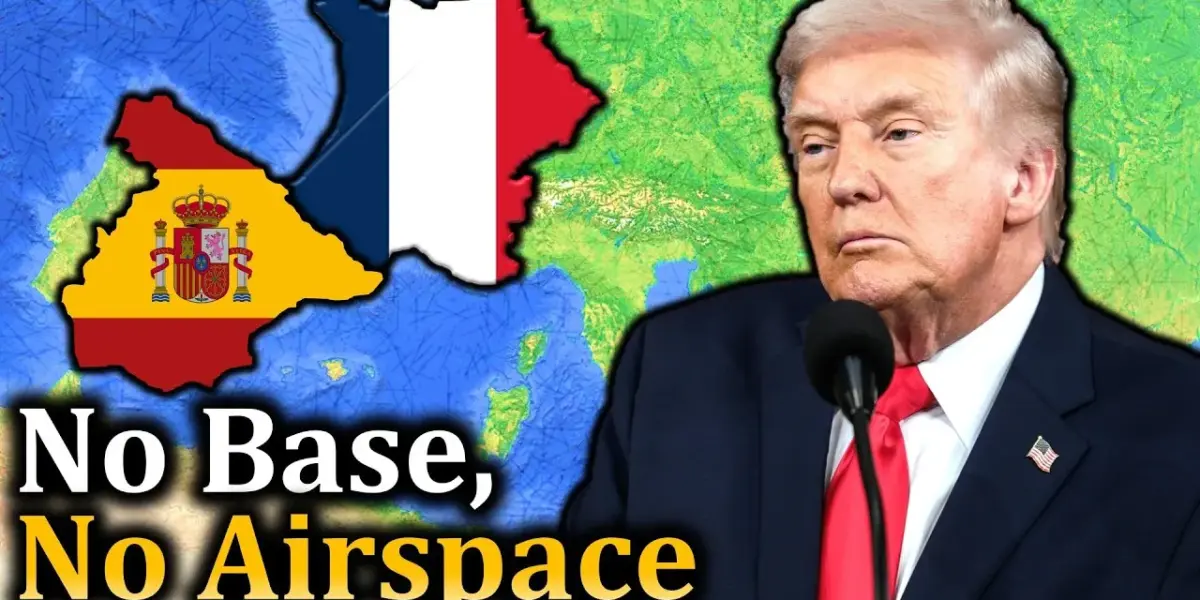
Italy reportedly denied landing rights to U.S. military aircraft bound for the Gulf. This incident may have been due to a procedural oversight, as advanced permission was not sought. However, Spain and France have explicit policies against allowing U.S. military aircraft involved in the Iran operation to use their airspace or bases.
These denials are seen as a deliberate attempt to alter the U.S. mission in Iran, rather than simply refusing to incur direct military risks. Unlike providing troops or equipment, granting base and airspace access does not carry the same immediate costs for these European nations.
Broader Geopolitical and Economic Factors
European decisions are also influenced by economic concerns, particularly rising energy prices and the ongoing war in Ukraine. Higher oil prices can benefit some nations, like Russia, which uses the revenue to fund its war efforts.
For Europe, the conflict in Iran is a secondary concern compared to the stability of Ukraine. While Ukraine is disrupting Russian oil exports, lower global crude prices would still be beneficial. Therefore, a faster resolution to the conflict in Iran, potentially leading to a reopened Strait of Hormuz, aligns with European economic interests.
Furthermore, some European officials believe that a change in Iran’s leadership could reduce its support for Russia, indirectly benefiting Ukraine. This perspective suggests that pressuring the U.S. to end the war quickly could have positive spillover effects for the broader European security situation.
Strategic Implications and Uncertainties
The European strategy aims to pressure the U.S. into ending the conflict swiftly. However, the effectiveness of this strategy remains unclear. Denying logistical support makes it less likely for the U.S. to achieve a swift victory. This could lead to Iran demanding more concessions and the U.S. demanding less, without necessarily bringing the war to an end.
The core issue is resolving the underlying “bargaining friction” that led to the conflict. It is uncertain how denying passive support will create the conditions for a settlement that was not previously possible. One possibility is that removing European support might clarify Iran’s war prospects, helping to resolve information gaps and facilitating a deal.
However, this strategy could also backfire. If the U.S. hopes for internal change within Iran following the conflict, prolonging the war through base denials might hinder that goal. The U.S. might continue its campaign until its intelligence agencies believe enough Iranian security forces have been weakened to allow for a successful internal uprising.
Transatlantic Strain and Future Outlook
The current situation highlights a recurring pattern of disagreement between the U.S. and Europe. These disputes often lead to public spats and strain transatlantic relations. There are even concerns that the U.S. might retaliate by withdrawing support for initiatives like the PURL initiative, which provides European buyers access to U.S. weapons needed by Ukraine.
As discussions continue, it remains to be seen whether Europe has a unified and well-defined strategy. The differing approaches among European nations, with some denying bases and others remaining open to certain forms of support, add to the uncertainty. The ultimate success of Europe’s strategy hinges on its ability to clearly link its actions to a desired diplomatic outcome and a swift end to the conflict.
Source: Europe's Surgical Weapon Against Trump's Iran War (YouTube)

Related Articles
Iran Strikes Target Infrastructure: Gulf States Fear Escalation
Iran's retaliatory strikes on critical infrastructure, including a Kuwaiti desalination plant, have heightened fears across Gulf states. Expert Kaman Matin explains Iran's strategy of targeting civilian and economic assets in response to attacks, while Gulf nations brace for potential escalation. The situation remains tense, with diplomatic efforts struggling to find a path to de-escalation.

Iran Conflict Escalates: Infrastructure Attacks Spark Global Economic Fears
The conflict in Iran has escalated dramatically, with the U.S. targeting critical infrastructure like bridges. Iran is retaliating by attacking energy assets in the Gulf. This "infrastructure warfare" risks severe global economic consequences, including soaring oil prices and increased inflation.
Iran Downs US Jet, Exposing Global Power Shifts
An F-15E jet shot down over Iran sparks a rescue mission and highlights global power shifts. Allies question U.S. predictability while domestic debates rage over military spending. This incident underscores complex regional tensions and evolving international dynamics.