Ethiopia-Eritrea Tensions Escalate Amid Red Sea Access Ambitions
Fears of renewed conflict are escalating in the Horn of Africa as Ethiopia and Eritrea mobilize troops along their shared border. Ethiopia's ambitions to regain Red Sea access are at the heart of the crisis, raising sovereignty concerns for Eritrea and a complex web of regional alliances. The situation is further complicated by Ethiopia's ongoing internal conflicts and its strained relationships with neighboring countries.

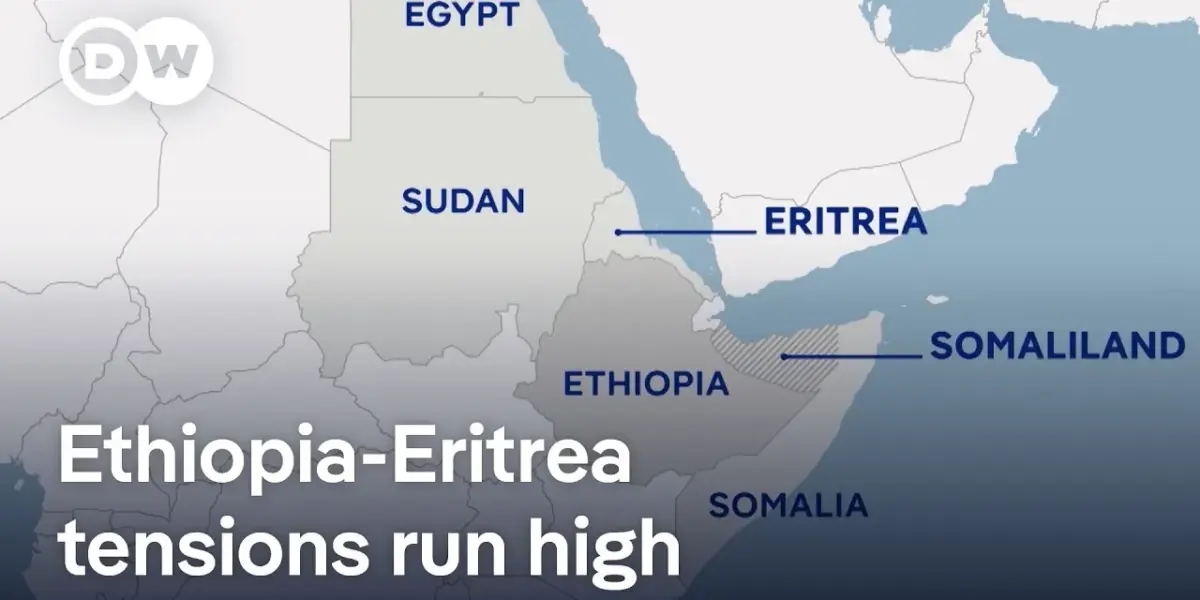
Horn of Africa on Edge: New War Fears Emerge Between Ethiopia and Eritrea
Fears of renewed conflict are mounting in the Horn of Africa as Ethiopia and Eritrea mobilize troops along their shared border. The escalating tensions stem from Ethiopia’s stated ambition to regain access to the Red Sea, a move Eritrea views as a direct threat to its sovereignty. Relations between the two nations have been fraught with instability since Eritrea gained independence from Ethiopia in 1993, marked by periods of deadly conflict.
Ethiopia’s Red Sea Ambitions Fuel Regional Instability
Ethiopian Prime Minister Abiy Ahmed has openly declared his nation’s urgent need for access to the sea, highlighting the economic burden of being landlocked since 1993 when international arbitration granted Eritrea control over the vital ports of Assab and Massawa. “What we need is outlets to the sea from whichever direction, whether through purchase, lease, or some form of agreement. Whichever way, this is what we want. Our population is increasing and we will not be able to shoulder this burden much longer,” Ahmed stated, underscoring the perceived national imperative.
These ambitions were visibly demonstrated at a recent military parade in Addis Ababa, where special forces showcased maneuvers widely interpreted as a message to Eritrea. The United Nations Secretary-General, Antonio Guterres, has urged both nations to adhere to their existing border treaty, while other regional actors have called for dialogue to de-escalate the situation.
Convergence of Warning Signs Point to Potential Conflict
Sidal Lima, founder of Addis Standard, a monthly news magazine based in Addis Ababa, highlighted a convergence of concerning signs indicating a heightened risk of war. “There is a clear sign, but most importantly, there is a convergence of multiple signs. This is not just a possible war involving Eritrea and Ethiopia, but also involving the Tigray region,” Lima explained.
She detailed an increase in reciprocal accusations, particularly from the Ethiopian federal government, which accuses Tigrayan political and military leaders of colluding with Eritrea. These accusations have been compounded by a recent skirmish in the Tigray region, leading to a rapid mobilization of federal forces. “We are looking at a massive mobilization of forces by the federal government towards the Tigrayan territories but also that rhetoric by the federal government accusing Tigrayan forces and Eritrean forces colluding to unseat the federal government,” Lima added, emphasizing the heightened possibility of eruption.
Eritrea’s Fears: Sovereignty Under Threat?
The rhetoric surrounding Ethiopia’s pursuit of Red Sea access has stoked significant apprehension in Eritrea. “It’s not just Prime Minister Abiy Ahmed; it’s also the military leaders, the senior military leaders, and the political class of the ruling party in Ethiopia and their backers. They have framed the access to the Red Sea as existential,” Lima noted.
She elaborated that the ambition is not merely for diversified port access but for “sovereign access to the Red Sea and that has given the narrative that it’s not just a country of 120 million or 30 million people seeking access diversified access but a sovereign access and a military presence. I think a navy presence that is the ambition the federal government has framed its actors as a national interest.” This framing, coupled with questioning of Eritrea’s very statehood and the legitimacy of its independence referendum, has intensified Asmara’s concerns that Ethiopia’s intentions could lead to encroachment on its sovereign territory.
Nobel Laureate’s Path to Conflict: A Complex Peace Legacy
For those who know Abiy Ahmed primarily as a Nobel Peace Prize laureate, his current stance presents a difficult paradox. Lima challenged this perception, stating, “The framing that Abiy Ahmed as a peacemaker derives it is origin from probably the Nobel Peace Prize, which was awarded to him when he attempted to normalize relations with Eritrea. That is the framing, but that’s not what exactly happened.”
She pointed out that the 2018 normalization agreement lacked parliamentary ratification in Ethiopia, and the subsequent relationship evolved into a military and intelligence alliance against the Tigray People’s Liberation Front (TPLF). “What is concretely known for many of us Ethiopians is that their relationship was anchored in their common enemy of the TPLF, which turned out to be really against the Tigrayan people when you see the conduct of the war. So there is that element that there was no really peace to begin with.” While diplomatic efforts are ongoing, with special envoys engaged, their outcomes remain unclear, lacking a foundation in a ratified peace agreement or the resuscitation of the 2000 Algerian peace accord.
Internal Dynamics: Ethiopia’s Strained Capacity for Conflict
Despite a seemingly strong media narrative supporting the push for Red Sea access, internal dynamics within Ethiopia present significant challenges to mobilizing widespread military support. “Abiy Ahmed and his military will be struggling to galvanize the kind of military support that they did for the war in the Tigray region,” Lima observed.
This difficulty arises from fractured alliances, particularly with the Amhara regional state, and ongoing insurgencies in the Amhara and Oromia regions involving groups like the Oromo Liberation Army. “There are these increased militarized insurgencies on the ground. So the federal government will be struggling to coalesce the same kind of support that they have brought together in their war against the Tigray region,” she stated. Recent security vacuums and localized violence, such as a massacre of Orthodox Christian followers in the Oromia region, further complicate the government’s ability to project strength and secure domestic backing for a new military venture.
Regional Realignments and Shifting Alliances
The potential for conflict between Ethiopia and Eritrea is occurring against a backdrop of complex regional realignments. Notably, the TPLF, once a bitter enemy of Eritrea, is now reportedly allied with Eritrea against the Ethiopian federal government. “Even for seasoned observers of the region, it was a plot twist that not many saw coming,” commented Zakarius Zelim, a visiting fellow at the European Council on Foreign Relations.
This unexpected alliance, based on the principle of the ‘enemy of my enemy is my friend,’ could potentially draw in other rebel factions, including the Amhara-based Fano forces, who previously fought alongside the Ethiopian government against the TPLF. This intricate web of shifting loyalties and potential new alliances complicates any projection of how a conflict might unfold.
Ethiopia’s Troubled Neighborhood: A Web of Tensions
Ethiopia finds itself at the center of multiple regional disputes, potentially complicating its ability to engage in a new conflict. Beyond the immediate tensions with Eritrea, Ethiopia faces accusations of backing the Rapid Support Forces (RSF) in Sudan’s civil war, strained relations with Egypt over the Grand Ethiopian Renaissance Dam, and a contentious port deal with Somaliland that Somalia deems a violation of its sovereignty. These overlapping disputes create a volatile regional environment where a conflict between Ethiopia and Eritrea could have significant spillover effects.
Military Capabilities and Regional Support
Zakarius Zelim assessed the military readiness of both nations. “It’s hard to say whether or not the army is ready to go for a new renewed all-out war. What is known is that the army has been bogged down with internal conflict,” he stated, referring to the ongoing engagements in the Amhara and Oromia regions. In contrast, the Eritrean army, though potentially smaller, has had time to recuperate since the devastating Tigray war and may benefit from external support.
Eritrea’s strategy, Zelim suggests, may involve leveraging Ethiopian rebel factions as a buffer, potentially avoiding a direct confrontation with a battle-hardened Ethiopian military. Alleged support from countries like Egypt and the Sudanese armed forces could also influence the conflict’s dynamics. The involvement of regional and international players, including the United Arab Emirates, adds another layer of complexity, potentially drawing in a wider array of actors than seen in previous conflicts.
A History of Conflict and Fragile Peace
The current tensions are rooted in a long and complex history between Ethiopia and Eritrea. Following Eritrea’s independence in 1993, a border dispute erupted into a full-scale war from 1998 to 2000, resulting in tens of thousands of casualties. While a ceasefire was eventually reached, relations remained hostile for two decades.
The 2018 peace deal, brokered by Abiy Ahmed, led to the reopening of borders and restored diplomatic ties, earning Ahmed the Nobel Peace Prize. However, this rapprochement was short-lived, as both nations later allied to fight the TPLF in the Tigray war. Now, with diplomatic ties severed and troops on the move, the fragile peace appears to have dissolved, raising concerns about a potential return to widespread conflict in the Horn of Africa.
Looking Ahead: Diplomatic Efforts and Regional Stability
The coming weeks will be critical in determining whether diplomatic channels can avert a full-scale war. The international community’s role in facilitating dialogue and ensuring adherence to international law will be paramount. Observers will be closely watching for any signs of de-escalation, the effectiveness of regional mediation efforts, and the potential impact of Ethiopia’s internal security challenges on its foreign policy decisions. The stability of the Horn of Africa hangs in the balance as these tensions continue to simmer.
Source: Ethiopia-Eritrea tensions: Renewed war in the Horn of Africa? | DW News (YouTube)

Related Articles


Trump’s Iran Gambit Unravels Amidst Global Backlash
Donald Trump's alleged invasion of Iran has sparked a cascade of negative consequences, from potential domestic attacks and rising gas prices to fractured alliances and deep internal divisions. The operation's unclear objectives and the human cost, including disturbing allegations of civilian casualties, are under intense scrutiny.
UAE Freezes Iranian Assets in Major Economic Blow
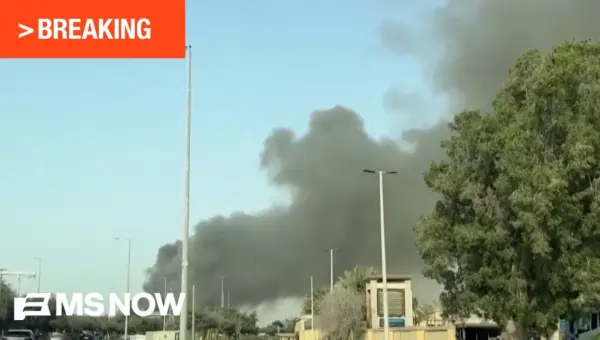
The United Arab Emirates has moved to freeze billions of dollars in Iranian assets, a decisive action that severely curtails Iran's economic lifeline. This move, prompted by Iran's missile and drone attacks on the UAE, signals a significant political and economic blow to Tehran and reflects growing regional unity against its aggression.


Putin’s War of Attrition Faces Five Crushing Realities
A prevailing narrative suggests Putin's inevitable victory in Ukraine through attrition, but a closer look reveals significant challenges. The drone-saturated battlefield, evolving geopolitical dynamics, weakening oil revenues, a fragile domestic economy, and the high cost of maintaining loyalty all undermine the Kremlin's 'outlast the West' strategy.