Esper: Iran Strikes Right Call, Regime Weakest in 47 Years
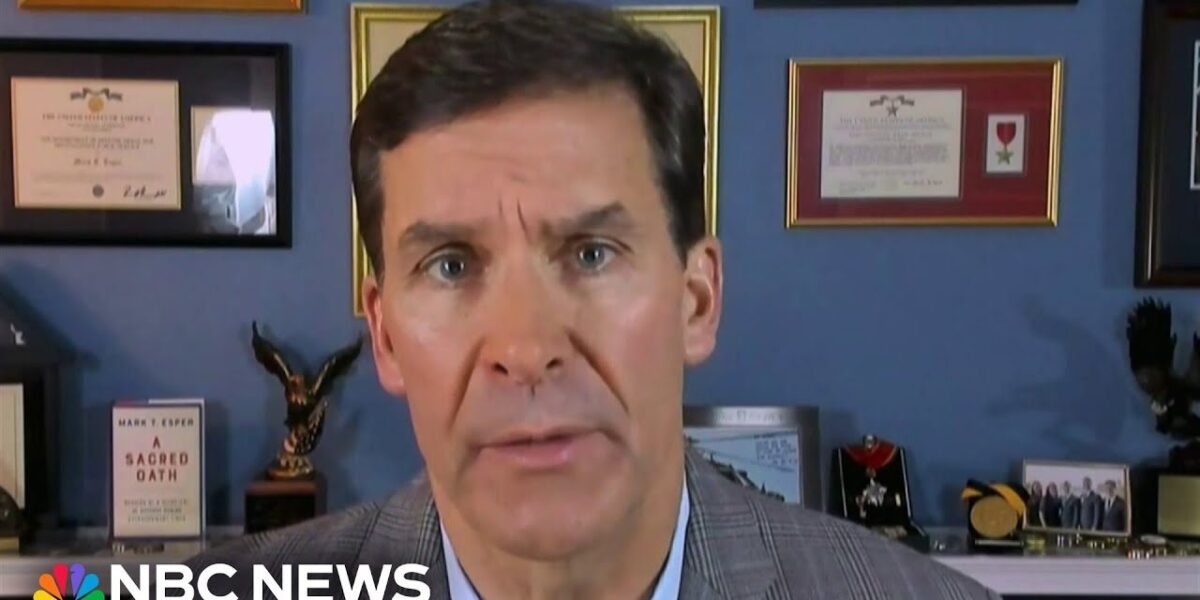
Former Defense Secretary Mark Esper stated that recent U.S. strikes against Iran were the "right call," deeming the regime the weakest in 47 years. He cited Iran's stalled nuclear program and diminished regional influence as key factors. Esper discussed potential scenarios, emphasizing that regime change ultimately depends on the Iranian people.

Esper: Iran Strikes Right Call, Regime Weakest in 47 Years
Former Defense Secretary Mark Esper stated that the recent U.S. strikes against Iran were the “right call,” asserting that the Iranian regime is currently the weakest it has been in its 47-year history. Esper, speaking in the context of escalating tensions and military actions in the Middle East, highlighted a confluence of factors leading to the decision, including Iran’s stalled nuclear enrichment program, its diminished regional influence, and the culmination of U.S. military deployments in the region.
Strategic Rationale Behind the Strikes
Esper detailed the potential objectives behind the military operations, suggesting they were aimed at degrading Iran’s ballistic missile production capabilities and naval assets. He noted that while strikes on internal Iranian sites likely targeted missile production, the reported lack of direct action against Iran’s navy might indicate a specific focus. Esper also referenced Israel’s actions against leadership targets, implying a potential “decapitation” strategy, and acknowledged President Trump’s stated aim of regime change.
“I think the President and his team made the right call, and that is that the Iranians weren’t serious, at least not serious enough to give up their enrichment program.”
Mark Esper, Former Defense Secretary
The former Defense Secretary pointed to several indicators that suggested the timing was opportune for action. The U.S. Ambassador to Israel’s authorization for embassy staff to leave the country served as a potential signal. Additionally, closed-door negotiations involving Jared Kushner and Jason Greenblatt with Iranian representatives yielded no apparent progress, further suggesting a lack of seriousness from Tehran regarding their nuclear ambitions. Esper also emphasized the strategic imperative of utilizing the U.S. military assets that had reached their “apex of deployment” in the Middle East, noting that such forces cannot remain indefinitely without readiness degradation.
Assessing Best and Worst Case Scenarios
When asked about the best and worst-case scenarios, Esper framed the discussion around the stated purpose of the operations. The best-case scenario would involve the successful destruction of Iran’s ballistic missile and naval capabilities, thereby preventing harassment of commercial shipping and mining of the Strait of Hormuz. Esper also considered the possibility of Israel’s strikes on leadership targets leading to a “decapitation” effect.
However, he also elaborated on the administration’s hope for regime change, driven by internal pressure from the Iranian populace. “The President mentioned regime change. And I think here at what he’s hoping for is that there’ll be enough pressure on the Iranian regime that the people in Iran would rise up once again… and maybe further on. U.S. or Israeli attacks could set the conditions further for the Iranian people to overtake the country, the regime, and push them out of power.” Esper cautioned that the “endgame looks a little fuzzy right now” and that the success of achieving regime change without U.S. “boots on the ground” hinges significantly on the Iranian people’s actions.
The Role of the Iranian People and Previous Operations
Esper underscored that while the U.S. can potentially create conditions, the ultimate responsibility for regime change rests with the Iranian people. He alluded to covert means the U.S. might be employing to support such movements, citing the provision of Starlink terminals for communication.
He drew a direct parallel to “Operation Midnight Hammer” from the previous June, stating that at that time, Iran’s air defenses were compromised, its ballistic missile forces depleted, and its nuclear enrichment program significantly set back. Esper argued that this was the opportune moment to demand the return of IAEA inspectors to verify Iran’s nuclear activities and enriched uranium stockpiles. The failure to do so has led to current uncertainties.
“Whether or not there is regime change at this point in time, I think it was important to continue to set back their missile defenses, their air defenses, their missile capabilities, and continue to set back also their nuclear ambitions.”
Mark Esper, Former Defense Secretary
Iran’s Regional Weakness and Historical Context
Esper provided a stark assessment of Iran’s current standing, declaring it “the weakest they’ve been in 47 years.” This weakness, he explained, extends beyond its domestic challenges to its regional proxy network. He detailed the significant setbacks Iran’s proxies have suffered:
- Hamas in Gaza has been decimated by Israeli operations.
- Hezbollah in Southern Lebanon has been severely impacted by Israel.
- Syria, under Bashar al-Assad, has seen its regime weakened.
- Iraqi Shia militia groups have also faced setbacks.
The Houthis in Yemen were noted as the only remaining significant force, but even they are not considered a considerable threat in the broader context. This dismantling of Iran’s support network, Esper argued, demonstrates a systemic weakness across the board, both domestically and in its regional sphere of influence.
Communication and Congressional Engagement
Regarding President Trump’s communication strategy, Esper suggested that while the President’s video message was a step, direct engagement with the American people and Congress is crucial. He advocated for presidents to clearly articulate the “what, why, how long, what the pros, the cons, the risks” of military operations. Esper recalled his own role after the January 2020 strike on Qasem Soleimani, which involved briefing congressional committees and members of the Armed Services Committees.
“I think every president benefits by going before the American people and explaining what we’re doing, why we’re doing it, how long it will take, what the pros are, the cons, the risks.”
Mark Esper, Former Defense Secretary
Soleimani Strike and Precedent
Esper drew a parallel between the current strikes and the operation that eliminated Qasem Soleimani. He believes the Soleimani strike laid the groundwork by demonstrating Iran’s vulnerability and the U.S. capacity to inflict significant damage without suffering expected repercussions. Soleimani, described as one of the most important figures in Iran, was instrumental in enabling proxy forces. The fact that Iran’s response to his elimination did not result in American deaths was seen as remarkable.
The operations by Israel and the U.S. in the subsequent months, coupled with the recent uprisings within Iran where citizens chanted “Death to the Ayatollah,” further illustrated the regime’s brittle nature. Esper reiterated that while the U.S. can set conditions, it is ultimately up to the Iranian people to take charge of their country.
Risk of Wider Conflict and Long-Term Strategy
Addressing concerns about a wider regional conflict, Esper expressed skepticism about Arab countries joining directly. He suggested Iran’s recent strikes near Arab countries might be a ploy to draw them into the conflict, potentially pressuring Washington. However, he does not foresee direct involvement from these nations.
On the question of a protracted war, Esper conceded it was possible. He interpreted Iran’s retaliatory responses as an indication that they are marshaling resources and preparing for a long-term engagement. Esper anticipates Iran will “hunker down, respond where they can, and see how this plays out,” potentially waiting for the U.S. to tire of the attacks or for diplomatic intervention. He believes Iran is likely to adopt a defensive posture rather than actively seeking to expand the conflict militarily.
Looking Ahead
The coming days and weeks will be critical in observing Iran’s response to the sustained pressure and the potential for internal shifts within the country. The international community will be watching closely to see if diplomatic channels can be effectively utilized to de-escalate tensions, and whether the current military actions will indeed set the conditions for a change in Tehran’s nuclear ambitions or its regional posture.
Source: Former Defense Secretary Esper says administration 'made the right call' on Iran strikes (YouTube)

Related Articles


US Strikes Iran: Mounk and Fukuyama Discuss Unpredictable Conflict
Leading political scientists Yascha Mounk and Francis Fukuyama analyze the recent US strikes on Iran, warning of unpredictable outcomes and internal instability. They question the objectives of the "war of choice" and its potential to destabilize the region, while also discussing the shifting global perceptions of Israel.

Iran War Escalates: US Suffers First Casualties
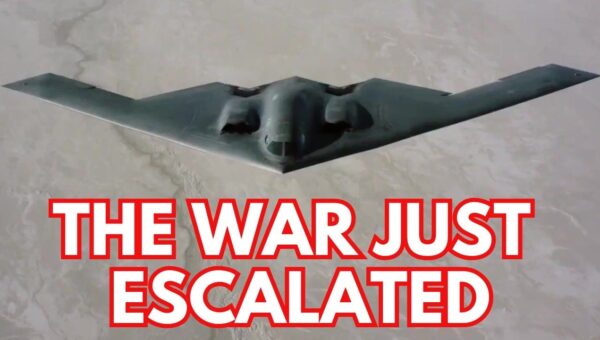
The conflict involving Iran has dramatically escalated with the first confirmed U.S. service member fatalities. As 13 nations become involved, U.S. and Israeli forces intensify operations against Iranian missile sites and command centers. The rising casualties and regional instability raise questions about future U.S. involvement.

Iran Rejects Trump Ceasefire Offer Amid Escalating Regional Conflict
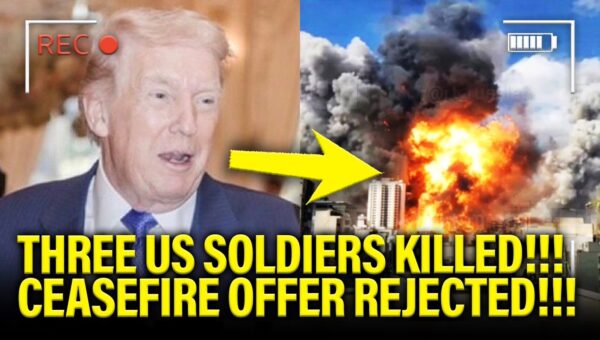
Iran has rejected a ceasefire offer from the Trump administration, escalating regional tensions and leading to U.S. casualties. The conflict, dubbed 'Operation Epic Fury,' has seen Iranian retaliatory strikes across the Middle East and disruption in the Strait of Hormuz.