Elon Musk’s ‘Muskism’: A New Era of Private Power?
Authors Ben Tarnoff and Quinn Sabidian introduce "Muskism," a concept explaining how figures like Elon Musk represent a new era of private technological power. Their book argues that while technology promises sovereignty, it often deepens dependency on private infrastructures, impacting both individuals and nation-states.

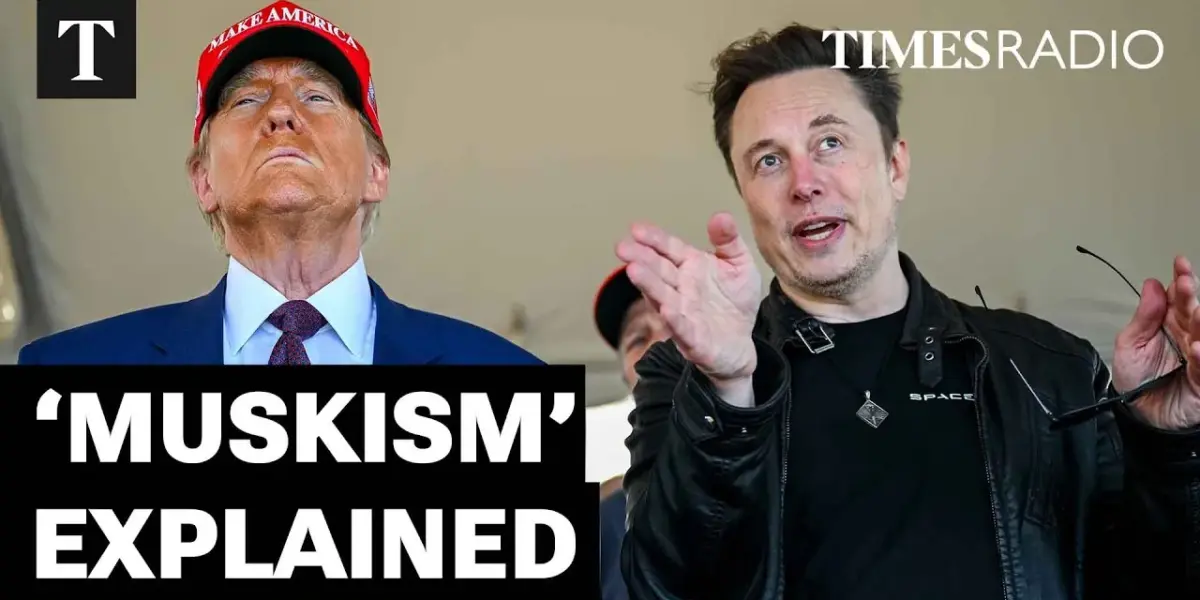
Muskism: A New Force in Global Power?
In a world grappling with complex challenges, the influence of private technology firms, particularly those led by figures like Elon Musk, is growing. Authors Ben Tarnoff and Quinn Sabidian, in their new book “Muskism,” argue that we should look beyond the individual Elon Musk and instead understand what he represents: a new era of “post-liberal” politics where technology promises sovereignty but can lead to deeper dependency.
What is Muskism?
Tarnoff explains that “Muskism” isn’t about Elon Musk the person, but rather a broader concept. It’s about the idea of achieving self-reliance through technology. Companies like Musk’s offer infrastructures that individuals and even nations can use to feel more independent. However, by relying on these private systems, they often become more dependent on them.
This idea is clearly seen with SpaceX. By 2024, SpaceX controlled 95% of U.S. orbital launches and about half globally. This makes SpaceX a key gatekeeper for countries wanting to access space. For example, when Austria or Spain needs to launch a satellite, they often rely on SpaceX. This shows how nations want to perform important sovereign tasks but must depend on private companies like SpaceX to do so.
Echoes of Henry Ford?
The authors compare the current focus on Musk to how people viewed Henry Ford a century ago. Ford was a successful industrialist, and observers at the time developed a concept called “Fordism” based on his innovations and his vision for society and his workers. Ford himself might not have seen himself as a follower of a specific ideology.
Similarly, Tarnoff suggests that while Musk may not see himself as the architect of “Muskism,” his career and recurring themes reveal patterns that form this broader idea. Musk, he believes, often acts on intuition rather than a carefully planned philosophy. By examining his life’s work, the authors identify the core ideas of “Muskism.”
The Digital Age and State Symbiosis
While private enterprise has always worked with states, the digital age has intensified this relationship. Tarnoff points to the war in Iran as an example. The Pentagon increasingly relies on tech firms like Anthropic and Palunteer for tasks like target selection, using AI for data analysis to speed up military operations. This fusion of public and private power is a hallmark of the current era.
The Pentagon may not have developed these advanced technologies itself, but it has supported companies like SpaceX through crucial early contracts. This state funding and industrial policy have been vital for the growth of these private firms. The Pentagon sees these partnerships as beneficial, allowing them to perform functions they couldn’t otherwise.
Vulnerabilities and State Control
However, this reliance creates vulnerabilities. Tarnoff highlights recent tensions between the Pentagon and Anthropic. The public sector is becoming aware of its dependence on private companies. In some cases, like under the Trump administration, the government has tried to exert more control.
The Trump administration, for instance, took stakes in Intel and sought a share of Nvidia’s revenue from chip sales to China. This shows that when the public sector tries to gain power over the private sector, the outcomes aren’t always straightforwardly progressive. The authors note that traditionally, progressives focused on the private sector being too lightly regulated. Now, even non-progressive administrations are exploring forms of “state capitalism.”
Addressing Dependency
Governments are starting to look for ways to reduce their reliance on Silicon Valley technology. European nations, in particular, are concerned about this dependency, especially given perceived alignments between Silicon Valley and certain U.S. political factions. For example, a Spanish startup, PLD Group, is working on reusable rocket technology to compete with Musk in the low Earth orbit satellite market.
While a French provider, Eutelsat, operates around 600 low Earth orbit satellites, SpaceX’s Starlink has about 10,000. SpaceX is also seeking approval to launch a million more. This significant lead highlights the challenge for nations trying to build their own capabilities.
Beyond Military: Everyday Life
The influence of private technology extends beyond military applications into everyday life. Examples like self-driving cars and ride-sharing services, even electric bike rentals, can reshape public transportation systems. These disruptive technologies challenge the traditional boundaries between public and private services.
Tarnoff emphasizes that this shift is not inevitable. Governments made political choices in the past to rely on the private sector for innovation, believing it would be more dynamic and efficient. Different choices could be made in the future to build up public sector capacity in these new areas.
What Would Musk Say?
When asked if Elon Musk would recognize the concept of “Muskism,” Tarnoff expressed hope that he might see the themes in the book. However, he’s unsure if Musk would acknowledge “Muskism” as a distinct phenomenon that can be productively studied.
Source: How Elon Musk Infiltrated The Public Sector (YouTube)

Related Articles
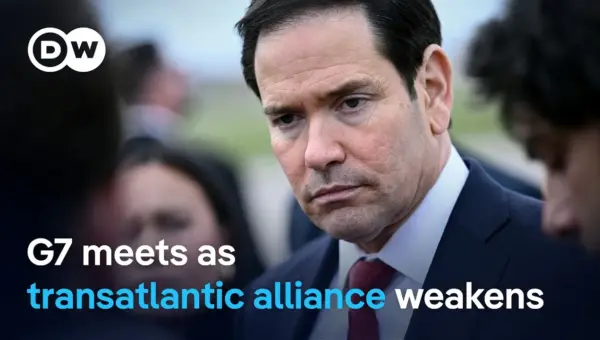
G7 Allies Clash Over Iran War Strategy, Urge Focus on Russia
G7 foreign ministers met in Paris, revealing deep divisions over the U.S. war with Iran. European allies urged the U.S. to pressure Russia, linking its actions to the conflict and fearing support for Ukraine will wane.

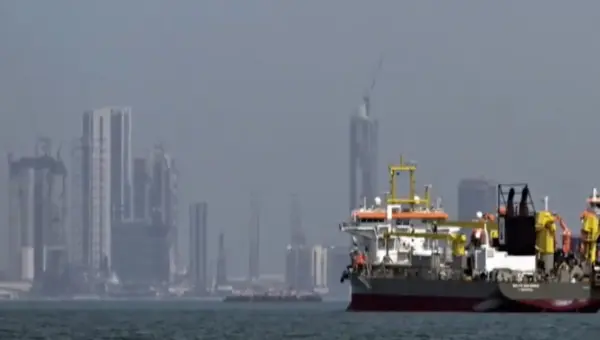
Iran Blocks China Ships, Exposing Beijing’s Weak Grip
Iran's recent decision to block Chinese ships at the Strait of Hormuz is exposing the limits of Beijing's influence in the Middle East. This action is causing delays and cancellations for Chinese manufacturers, turning a perceived geopolitical win into an economic strain.
Trump’s “Walk Away” Tactic Signals Tougher Stance on China
Retired Air Force Brigadier General David Stillwell believes President Trump's strategy of being willing to walk away from negotiations puts pressure on China. This tactic, combined with US global actions and strengthened alliances, signals a more assertive American foreign policy.