Electric Powerhouse Dominates Supercars in Thrilling Drag Race
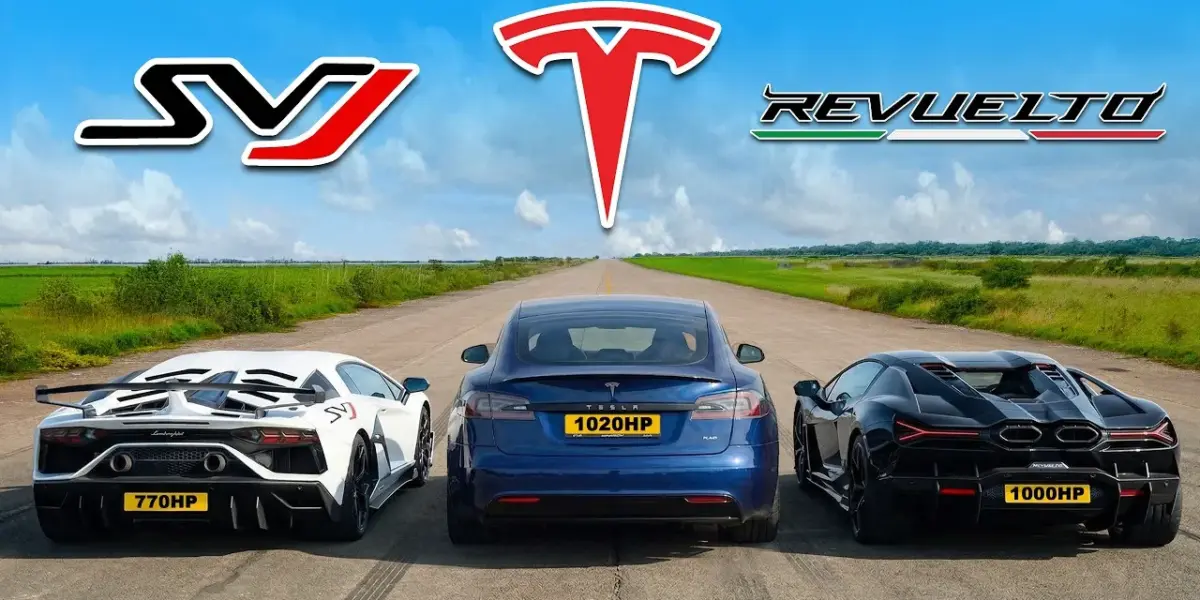
In a thrilling series of drag races, the Tesla Model S Plaid proved that electric cars can outperform even the most potent Italian supercars. The electric sedan consistently delivered brutal acceleration, outclassing Lamborghinis like the Huracan Performante, Aventador SVJ, and even the hybrid Revuelto in most head-to-head matchups.

Electric Cars Prove Their Mettle Against Italian Supercars
In a head-to-head battle that pitted the raw power of Italian supercars against the instant torque of electric vehicles, the verdict is in: electric cars have arrived. In a series of drag races, the Tesla Model S Plaid, a powerful electric sedan, emerged victorious against some of Lamborghini’s finest, proving that the future of performance might just be electric. While the roaring engines and dramatic styling of Lamborghinis have long defined automotive excess, this showdown reveals a new contender has stolen the spotlight.
Smart Brabus vs. Lamborghini Huracan Performante: An Unlikely Duel
The first matchup featured an unlikely pairing: a Smart Brabus, an electric city car packing a surprising punch, against a Lamborghini Huracan Performante. The Smart Brabus boasts 646 horsepower and 710 Nm of torque from its dual motors, giving it all-wheel drive and launch control. Despite its 2.4-ton weight and a price tag just under £52,000, it put up a serious fight against the Huracan Performante. The Lamborghini, with its 5.2-liter naturally aspirated V10 engine, delivers 640 horsepower and 600 Nm of torque, driving all four wheels through a seven-speed dual-clutch transmission. Weighing in at under 1.5 tons, the Performante is a true supercar, valued at around £185,000.
In a rolling race, the Smart Brabus initially pulled ahead, but its speed limiter at around 130 mph proved to be its downfall. The Huracan Performante managed to overtake, but the race was incredibly close. A subsequent drag race saw the Smart car hit its limiter again, while the Huracan, despite some driver error in gear selection, eventually pulled ahead. The Huracan Performante ultimately won the best-of-three series, but the Smart Brabus proved that EVs can challenge established performance cars, especially with their consistent, immediate acceleration.
Aventador SVJ: Raw Power Meets Electric Efficiency
Next, the Tesla Model S Plaid faced the formidable Lamborghini Aventador SVJ. The SVJ, a symphony of a 6.5-liter naturally aspirated V12 engine, produces 770 horsepower and 720 Nm of torque. This Italian masterpiece, weighing 1,650 kg, commands a price of around £450,000 and is known for its raw, unadulterated supercar experience. The Tesla Model S Plaid, on the other hand, features three electric motors producing a staggering 1,020 horsepower and 1,420 Nm of torque. It weighs nearly 2.2 tons and costs approximately £80,000.
In a rolling race, the Tesla’s immense power was immediately apparent, leaving the SVJ struggling to keep up. Even with four passengers added to the Tesla as ballast to make the race fairer, the Aventador SVJ was comprehensively beaten. The electric sedan’s acceleration was simply too much for the V12 supercar to handle. While the SVJ offered a thrilling soundtrack and a visceral driving experience, its straight-line speed couldn’t match the instant, brutal acceleration of the Model S Plaid.
The Ultimate Showdown: Tesla Model S Plaid vs. Lamborghini Revuelto
The final and most anticipated race pitted the Tesla Model S Plaid against Lamborghini’s hybrid hypercar, the Revuelto. This hybrid beast combines a 6.5-liter naturally aspirated V12 with three electric motors, delivering a combined 1,015 horsepower and 1,625 Nm of torque. Weighing 1,872 kg, the Revuelto starts at around £455,000. The Tesla, with its 1,020 horsepower and 1,420 Nm of torque, was up against its toughest opponent yet.
In the standing drag race, the Revuelto, despite its incredible power, struggled for traction off the line. The Tesla Model S Plaid, even with added weight, managed to get a better launch and pull ahead. In a subsequent rolling race, the Tesla again demonstrated its superior acceleration, leaving the Revuelto far behind. The Revuelto’s hybrid system, while powerful, couldn’t match the seamless, relentless acceleration of the Tesla’s three electric motors.
However, in the final standing drag race, the Revuelto managed a much better launch, and the race was incredibly close. The Lamborghini ultimately crossed the finish line just ahead of the Tesla, proving that when it hooks up, it is incredibly fast. But in most other scenarios, especially in terms of consistent acceleration, the Tesla Model S Plaid proved to be the dominant force. The quarter-mile times confirmed this: the Smart Brabus was the slowest at 11.4 seconds, followed by the Huracan Performante (11.2s), the Aventador SVJ (11.0s), and the Tesla Model S Plaid with passengers (10.5s). Both the Tesla and the Revuelto clocked 10.4 seconds, but the Tesla’s consistent performance across various tests, especially its ability to manage traction, made it the overall winner in this electric vs. supercar challenge.
Verdict: Electric Performance Reaches New Heights
This drag race series clearly shows that electric vehicles have reached a new level of performance, capable of challenging and even beating some of the world’s fastest supercars. The Tesla Model S Plaid, with its immense horsepower, instant torque, and advanced traction control, proved to be a formidable competitor. While the Lamborghinis offered unparalleled sound and driving drama, the electric sedan delivered brutal, consistent speed. For buyers seeking ultimate straight-line performance and cutting-edge technology, the Model S Plaid represents incredible value, especially when compared to the six-figure price tags of its Italian rivals. The era of electric dominance in performance metrics has truly begun.
Source: Fastest Lambos v Fastest Tesla: DRAG RACE (YouTube)

Related Articles
Tesla Model S Battery Loses Significant Range After 4 Years
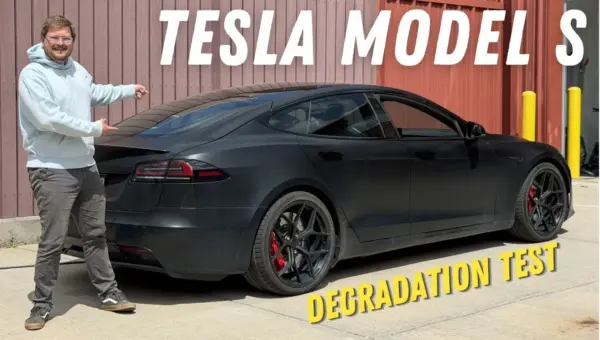
A four-year-old Tesla Model S Plaid has lost a significant portion of its battery capacity, resulting in a substantial reduction in driving range. The owner's testing revealed a nearly 28% decrease in usable energy, impacting the car's long-term practicality.
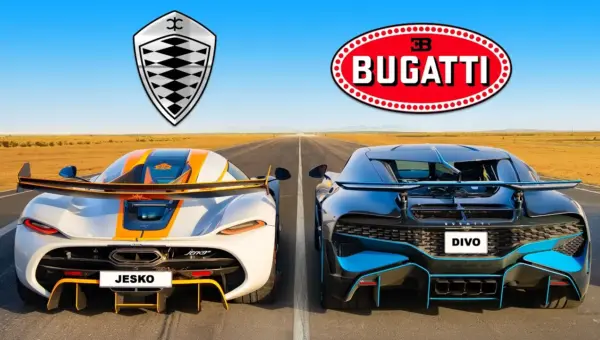
Bugatti Divo vs. Koenigsegg Jesko: The Ultimate Hypercar Drag Race Unfolds
In a chaotic yet thrilling two-day event in the Middle East, the Bugatti Chiron Super Sport faced off against the Koenigsegg Jesko Attack in a highly anticipated rematch, with the Jesko ultimately claiming victory. The day also featured a host of other hypercar battles, including a surprising win for an electric Xiai SU7 Ultra against a Ferrari SF90 XX.

Corvette Grand Sport Arrives, Porsche Eyes Manual EVs
The Corvette Grand Sport makes its return, but without a manual transmission. Porsche is patenting a manual-like shifter for EVs, while Sony Honda Mobility's Afeela project is dead. Lamborghini is exploring a two-plus-two GT, and the Nissan Z Nismo gets a manual.