El Mencho’s Demise: Mexico Plunges into Chaos as Cartel Kingpin’s Death Ignites Widespread Violence
The killing of Nemesio Oseguera Cervantes, known as "El Mencho," leader of the Jalisco New Generation Cartel (CJNG), has plunged Mexico into widespread violence, with reports of chaos across 18 states. This pivotal event, supported by U.S. intelligence, has sparked fears of civil war as the highly militarized cartel retaliates, challenging the state's control and forcing a nation to shelter in place amid burning vehicles and intense shootouts.

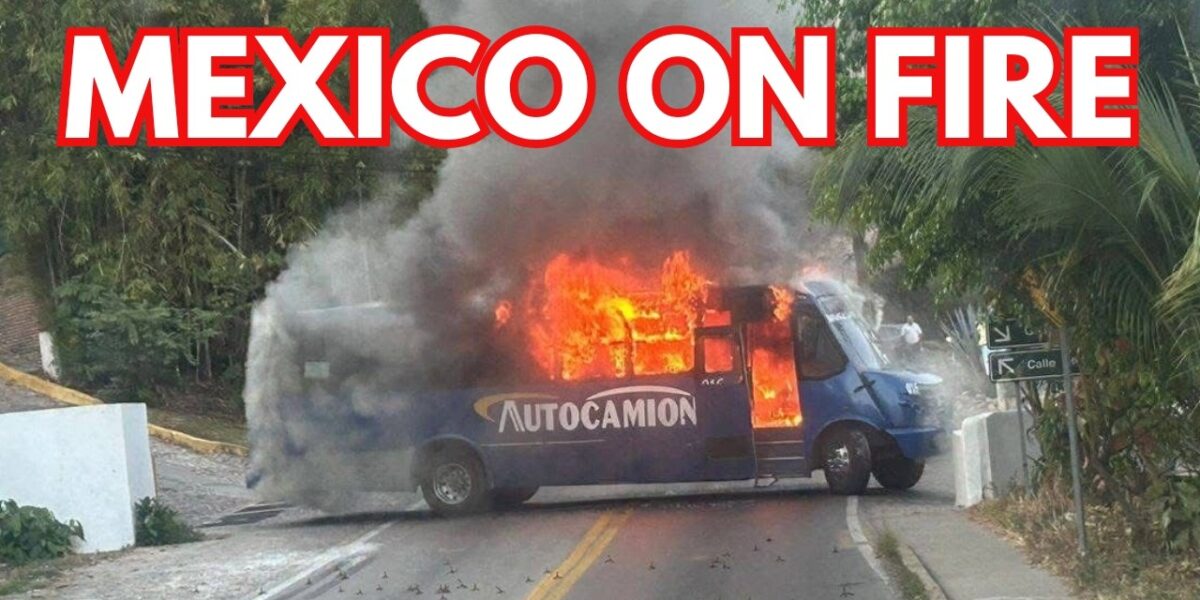
The Fall of a Narco Kingpin: El Mencho’s Demise Ignites National Crisis
In a dramatic turn of events that has sent shockwaves across Mexico and the international community, Nemesio Oseguera Cervantes, widely known as "El Mencho," the elusive leader of the Jalisco New Generation Cartel (CJNG), has been killed. The operation, executed by the Mexican military, marks one of the most significant blows to organized crime in the country’s recent history. However, the victory has been immediately overshadowed by an unprecedented eruption of violence, threatening to plunge Mexico into a full-blown internal conflict.
As of Sunday, February 22nd, at 4:00 p.m. Central time, reports confirmed El Mencho was wounded during a capture attempt in Jalisco and subsequently died while being transported to Mexico City. The operation, which involved intense clashes, resulted in the deaths of four cartel members, the wounding of three others (including El Mencho, who later succumbed to his injuries), and the arrest of two. Mexican armed forces also seized an arsenal of armored vehicles, rocket launchers, and other sophisticated weaponry, sustaining injuries to three of their own personnel.
The immediate aftermath has been characterized by a rapid and brutal response from the CJNG, triggering widespread chaos across at least 18 Mexican states. Cities are under siege with burning vehicles, roadblocks, and reports of intense shootouts, painting a grim picture of a nation teetering on the brink of an escalating war.
El Mencho: The Architect of a Narco Empire
Nemesio Oseguera Cervantes, or "El Mencho," was not merely a drug trafficker; he was the architect of one of the world’s most formidable and ruthless criminal organizations. His rise to power was marked by extreme violence, strategic alliances, and a relentless pursuit of territorial control. The CJNG, under his leadership, grew from a regional gang into a transnational criminal enterprise, rivaling the infamous Sinaloa Cartel in its reach and brutality.
For years, El Mencho remained a ghost, evading capture despite a years-long international manhunt and a staggering $15 million reward offered by the U.S. State Department for information leading to his arrest or conviction. The Latin Times aptly described his killing as "one of the most consequential blows to a major Mexican criminal organization in years," underscoring both the CJNG’s immense power and El Mencho’s enduring fugitive status.
His cartel became synonymous with extreme violence, including public executions, dismemberments, and the use of improvised explosive devices. This reign of terror allowed the CJNG to assert dominance over critical drug trafficking routes, extort businesses, and infiltrate local governments, effectively establishing a parallel state in many regions.
US Intelligence Support: A Limited Role
While the operation to neutralize El Mencho was carried out by the Mexican military, the United States played a supportive role. Reports indicate that the U.S. provided crucial intelligence support to Mexican forces. However, official statements and reliable sources have not suggested any further direct involvement, such as U.S. aircraft overhead or "boots on the ground." This limited, yet vital, assistance underscores the complex and often sensitive nature of cross-border security cooperation between the two nations, particularly when dealing with high-profile targets like El Mencho.
Mexico Engulfed: A Nation on Edge
The death of El Mencho has unleashed a torrent of retaliatory violence, transforming parts of Mexico into active war zones. The CJNG’s response has been swift, coordinated, and devastating, demonstrating its capacity for widespread disruption.
Widespread Chaos and Civilian Impact
Videos and reports flooding the internet depict scenes of burning vehicles, strategically placed roadblocks designed to impede security force movement, and intense shootouts between cartel gunmen and authorities. The violence is not confined to isolated pockets; it has spread rapidly, with analysts tracking narco-related incidents in at least 18 states. One unconfirmed but widely circulated report suggests the CJNG is offering up to 20,000 pesos for each dead Mexican soldier, highlighting the cartel’s direct targeting of military personnel.
The impact on civilian life has been immediate and severe. In Jalisco, the state’s governor activated a "code red," a protocol for a state of emergency, suspending public transportation and urging residents to shelter in place. The U.S. State Department echoed this warning, advising U.S. citizens in several affected states to remain indoors until the situation stabilizes. Disturbingly, reports have emerged of text messages, purportedly from the CJNG, explicitly threatening civilians who venture outside: "Do not leave your homes. All hell is going to break out because of the filthy government. We have orders to kill anyone who gets in our way and we don’t want to harm the people. Everyone stay in your homes until the situation is under control." This chilling directive underscores the cartel’s intent to control public spaces through fear and intimidation.
Infrastructure Under Siege
The violence has even reached critical infrastructure. There were reports and videos suggesting the presence of armed gunmen in and around the Guadalajara International Airport. While a widely circulated image of a burned-out airplane on the tarmac was later debunked as misinformation, the threat was real enough to cause significant disruption. Southwest and Alaska Airlines canceled flights out of Puerto Vallarta, and Delta issued waivers for travelers to and from Puerto Vallarta and Guadalajara. This illustrates the cartel’s ability to shut down major transit hubs, paralyzing commerce and travel in key regions.
The deployment of dozens of roadblocks, often involving 18-wheelers set ablaze in the middle of roads, further showcases the CJNG’s tactical sophistication in disrupting government response and asserting control over vast swathes of territory.
The CJNG’s Formidable Arsenal and Tactics
The ongoing violence is a stark reminder of the CJNG’s military-grade capabilities. This is not a typical street gang; it is a highly organized and heavily armed force that poses a significant challenge to the Mexican state.
The cartel’s arsenal includes advanced armored vehicles, rocket launchers, machine guns, and even drones. These assets, combined with well-trained personnel, allow the CJNG to engage security forces in protracted and deadly confrontations. As noted in the transcript, the scenario is "much closer to that [force-on-force] than it is say in the United States if the US military were to go after a gang somewhere in the US. Not a fair fight. This is closer to a level playing field in a lot of ways." This assessment highlights the profound threat the CJNG represents, capable of challenging the state’s monopoly on violence in a manner rarely seen from non-state actors.
Their strategic use of roadblocks and public displays of force is not just reactive; it’s a calculated demonstration of strength and an attempt to sow fear, both among the populace and government forces. This show of force aims to prove that even with the loss of their leader, the cartel remains a potent and destructive entity.
The Cartel’s Reach: A Global Threat
The Jalisco New Generation Cartel’s influence extends far beyond Mexico’s borders, making its activities a concern for international security. The U.S. Drug Enforcement Administration (DEA) considers the CJNG to be as powerful as the Sinaloa Cartel, one of Mexico’s most infamous criminal groups, with a presence in all 50 U.S. states.
The cartel is a primary supplier of illicit drugs to the U.S. market, generating billions of dollars annually from the production and trafficking of fentanyl, cocaine, and methamphetamines. The fentanyl crisis, in particular, has devastated communities across the United States, and the CJNG’s role in this deadly trade underscores its profound impact on public health and safety in North America.
El Mencho’s death, while a strategic victory, does not automatically dismantle this vast criminal network. The cartel’s deep integration into the global drug supply chain means that its operations will likely continue, albeit potentially with new leadership or internal power struggles.
Navigating the Information Battlefield: The Scourge of Misinformation
In the midst of such a rapidly unfolding crisis, the information landscape has become a breeding ground for misinformation and disinformation. The transcript explicitly warns of this phenomenon, noting the spread of old pictures, AI-generated images (like the debunked burned airplane at Guadalajara Airport), and outright false reports.
One particularly alarming, yet inaccurate, report claimed that Americans were being taken hostage by cartels in response to a U.S. operation that killed El Mencho. The Mexican government was quick to refute this, clarifying that U.S. forces were not directly involved in the killing and that there were no credible reports of cartels targeting Americans or taking hostages. Such false narratives not only fuel panic but also complicate efforts to understand and respond to the real threats on the ground. The prevalence of misinformation underscores the critical need for individuals to rely on verified sources and exercise caution when consuming news during high-stakes, developing situations.
The Road Ahead: Volatility and Uncertainty
The coming days and weeks will be critical in determining Mexico’s trajectory post-El Mencho. The short-term future is fraught with uncertainty, while the medium-to-long-term outlook presents a complex interplay of power dynamics within the criminal underworld and the state’s capacity to respond.
Short-Term Outlook: Reactive Violence or Civil War?
The immediate question facing Mexico is whether the current surge in violence represents a short spurt of reactionary defiance by the CJNG, a common pattern following the capture or killing of major cartel figures, or if it marks the beginning of a more profound and sustained conflict. In previous instances, cartels have taken to the streets to demonstrate continued control over certain areas. However, the scale and intensity of the current violence suggest a potentially more dire scenario.
The Mexican government is mobilizing resources to quell the unrest, but its ability to deploy sufficient forces to the right areas and effectively restore order remains to be seen. This period will test the state’s control and its capacity to prevent the situation from spiraling into what some fear could evolve into a form of civil war, where non-state actors openly challenge governmental authority across vast territories.
Medium-to-Long-Term Implications: Fragmentation or Consolidation?
The Latin Times offers insightful analysis into the potential medium-to-long-term consequences of El Mencho’s removal. Research on cartel fragmentation and Mexico’s "kingpin era" has repeatedly shown that decapitating a top leader can lead to several outcomes:
- Splintering and Contested Leadership: A power vacuum at the top often results in internal feuds among aspiring successors. This internal struggle can lead to the fragmentation of the cartel into smaller, often more brutal, factions vying for control.
- New Local Wars: As factions fight over revenue streams, drug routes, and territorial control, new localized conflicts are likely to erupt. These internal cartel wars can be exceptionally violent, further destabilizing regions already plagued by organized crime.
- Broader Rivalry Map: The CJNG’s rivals, particularly in hot spots where it already faces entrenched enemies, may attempt to capitalize on any perceived weakness. If CJNG’s internal leadership becomes contested, other cartels could seize the opportunity to grab territory or trafficking corridors, leading to an expansion of the overall conflict.
- Demonstration of Strength: Conversely, if the CJNG’s next leadership consolidates quickly, the cartel may seek to demonstrate its continued strength through intensified retaliation, roadblocks, and intimidation tactics, mirroring the current response. This would be a clear message that the organization remains formidable despite the loss of its founder.
Each of these scenarios carries significant implications for Mexico’s security landscape, potentially ushering in a new, even more volatile, chapter in the country’s ongoing struggle against organized crime.
The Question of US Intervention: A Delicate Balance
The escalating violence inevitably raises the question of direct U.S. involvement. Currently, the U.S. stance appears to be one of cautious observation, with no immediate plans for military intervention to stabilize Mexico internally.
Direct U.S. military intervention, such as deploying "boots on the ground" in Mexico, is considered a distant possibility. Such a move would be politically sensitive, potentially infringing on Mexican sovereignty, and would likely only occur under very specific and extreme circumstances. The primary condition for such an intervention would be a direct threat to the United States itself. This could manifest as the violence spreading across the border into U.S. territory, impacting border checkpoints, or directly threatening U.S. citizens within Mexico on an unprecedented scale.
While CJNG and other Mexican cartels have a presence in the U.S. and have engaged in violence, it has not reached the level currently seen in Mexico. Should such violence erupt within the U.S., a localized crackdown by American law enforcement would be the likely response, rather than a military operation in Mexico.
However, the situation could change if the Mexican government loses significant control, and the cartels begin to exert dominion over critical infrastructure like airports and border crossings, genuinely paralyzing entire cities. In such a dire scenario, if the Mexican government were to formally request assistance, the U.S. might consider a more direct role, potentially including military deployment. But for now, that remains a "quite a ways away" prospect, with the immediate focus on whether the Mexican state can regain control and de-escalate the current crisis.
Conclusion: A Nation at a Crossroads
The death of El Mencho marks a pivotal moment for Mexico. While a significant achievement in the fight against organized crime, it has unleashed a wave of retaliatory violence that underscores the profound challenges facing the nation. The coming days will determine whether this is a temporary outburst of defiance or the precursor to a more entrenched and brutal conflict. The Mexican government’s ability to restore order, the internal dynamics within the CJNG, and the delicate balance of international cooperation will all play critical roles in shaping the future of a nation grappling with the legacy of a fallen kingpin and the escalating threat of cartel warfare. The world watches anxiously as Mexico stands at a critical crossroads, facing potentially its most violent episode in recent history.
Source: Cartel Boss Taken Out: Mexico In Chaos (YouTube)

Related Articles

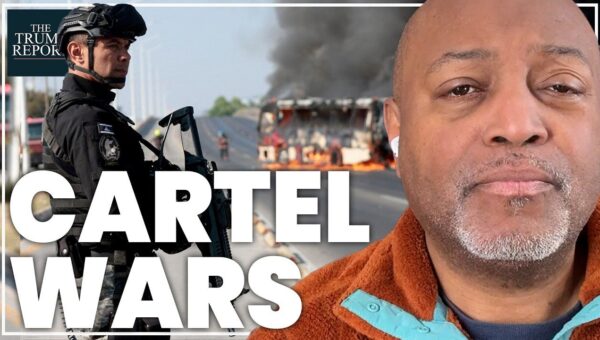
Mexico Cartel Violence Erupts After US-Aided Leader’s Death
A targeted operation against a top cartel leader, supported by US intelligence, has triggered a violent surge in Mexico. The killing of the CJNG leader has led to subordinate factions unleashing chaos, raising questions about US drug policy and the complex geopolitical landscape.

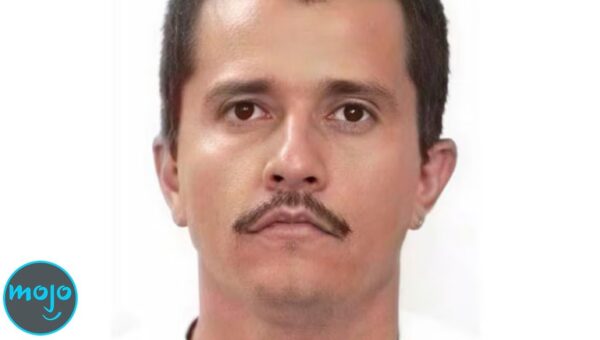
Mexico’s Cartel Chaos: El Mencho Raid Sparks Crisis
A decisive military raid on cartel leader El Mencho has plunged Mexico into chaos, triggering widespread retaliation and nationwide roadblocks. As President Claudia Sheinbaum grapples with restoring order amidst escalating cartel conflicts and the upcoming 2026 FIFA World Cup, the nation's future hangs in the balance.

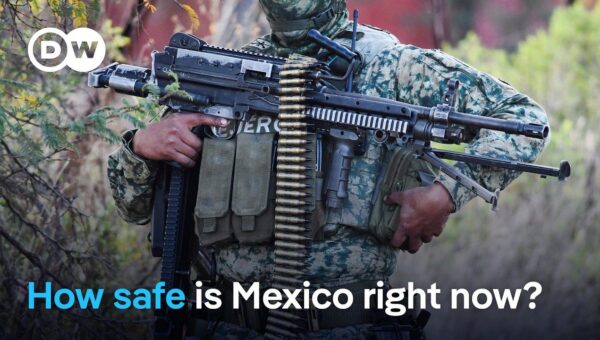
Mexico’s Cartel Violence: Is the Situation Truly Escalating?
Recent cartel violence in Mexico, triggered by a major drug lord's arrest, has raised concerns about tourism and the upcoming World Cup. Experts suggest the situation reflects a familiar cartel response, but new tactics like AI-generated videos have emerged. The deep-rooted problem is fueled by immense cartel wealth and sophisticated weaponry, making government control a formidable challenge.