El Mencho’s Death Sparks Violence, Raises Questions for Mexico
The killing of feared cartel leader El Mencho has triggered widespread violence across Mexico, raising concerns about the long-term implications of decapitating powerful criminal organizations. Experts warn that internal power struggles and further violence may ensue.

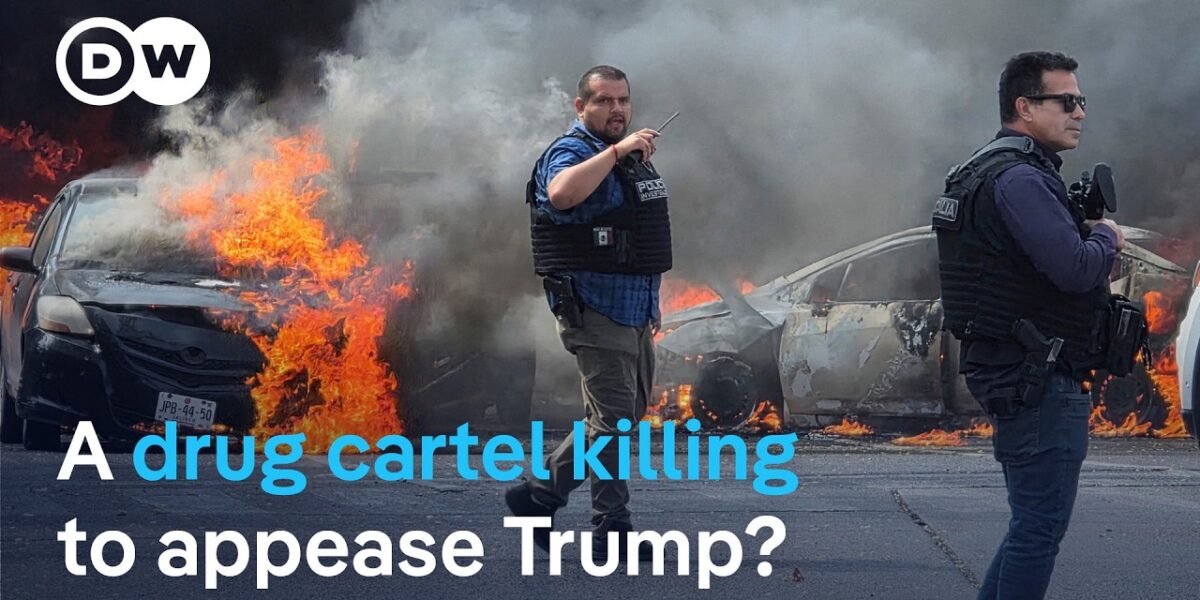
Cartel Leader’s Demise Ignites Nationwide Unrest
Mexico is grappling with a surge of violence following the death of Nemesio Oseguera Cervantes, widely known as “El Mencho,” the feared leader of the Jalisco New Generation Cartel (CJNG). El Mencho, one of the most sought-after criminals in both Mexico and the United States, was killed during a special forces raid in the state of Jalisco. His demise has triggered a wave of retaliatory attacks across the country, resulting in dozens of deaths, including members of the Mexican National Guard. Eyewitnesses captured chaotic scenes on social media, showing panic at Jalisco’s airport as vehicles were set ablaze outside.
A Hydra’s Head: The Perils of Decapitating Cartel Leadership
The operation against El Mencho, a figure described as “omnipresent” in Mexico’s underworld, is being viewed as a significant move by authorities to confront powerful criminal networks. However, experts warn that targeting cartel leaders, a strategy often referred to as “decapitation,” may not be a straightforward victory. Alex Gonzalez, a journalist specializing in Mexican politics, articulated this concern, stating, “The great problem that we’ve been through for over 20 years at this point is if you kill the drug leader of a cartel organization, what you get is many leaders in a fractured cartel. It’s like cutting off the hydra’s head.”
This sentiment is echoed by David Ma, a senior analyst at the International Crisis Group. “Past experiences teach us that just beheading, you know, taking away, cutting off the head of the snake doesn’t really magically end the operation, the criminal operation. Quite the opposite. What we’re expecting, what I’m expecting to see, is internal struggles for control by different criminal groups… to fight over control of the organization.” This internal conflict could lead to increased violence within the CJNG and heightened turf wars with smaller, local criminal groups.
“The great problem that we’ve been through for over 20 years at this point is if you kill the drug leader of a cartel organization, what you get is many leaders in a fractured cartel. It’s like cutting off the hydra’s head.” – Alex Gonzalez
The CJNG: A Growing Force of Extreme Violence
The Jalisco New Generation Cartel, under El Mencho’s leadership, has become one of Mexico’s fastest-growing and most formidable criminal organizations. It is notorious for its extensive drug trafficking operations, particularly the export of fentanyl, cocaine, and methamphetamine into the United States, valued in the billions of dollars. The cartel is also known for its extreme violence and sophisticated weaponry, including grenades and rocket launchers, some of which were reportedly recovered during the raid that led to El Mencho’s death. In recognition of its power, former US President Donald Trump declared the CJNG a terrorist organization approximately a year prior to the operation.
The cartel’s rise to power is partly attributed to a power vacuum left after previous government actions against other cartels. As Gonzalez explained, “The reason the cartel of Khalisco became so powerful was because it filled in the space after the government came in and decapitated the Sinaloa cartel, leaving that space open for a new cartel.”
Government Response and Shifting Strategies
Mexican President Claudia Sheinbaum has been under significant pressure from the United States, particularly during Donald Trump’s presidency, to intensify efforts against drug cartels. While US forces were not directly involved in the raid, there has been substantial information sharing between the two countries. Sheinbaum’s administration has emphasized intelligence-led operations and efforts to cut off cartel finances. The killing of El Mencho’s second-in-command, responsible for logistics and finance, shortly after El Mencho’s death, indicates a strategic approach to dismantling the organization from multiple angles.
“The short answer is yes,” Gonzalez stated regarding whether Sheinbaum has addressed the structures enabling cartel power. “Overall, I think the stats speak for themselves, independently verified stats. Mexico’s murder rate is declining precipitously… since she came to office about a year ago, violent crime and mostly homicide has gone down by 40%, making Mexico safer than Brazil and more or less on par with Puerto Rico.” This suggests a potential shift towards a more effective, albeit complex, strategy under her leadership.
The Role of US Pressure and Cooperation
The timing of the operation has led to speculation about whether it was primarily motivated by a desire to appease former President Trump or align with Sheinbaum’s own agenda. Experts suggest it could be a combination of both. The emergence of a new US task force focused on cartel networks may also be influencing the dynamics of intelligence sharing and cooperation. However, the long-term effectiveness of these efforts is contingent on addressing the root causes of demand.
“So long as Americans continue letting millions of dollars worth of drug proceeds back into Mexico after buying them, that demand will continue,” Gonzalez cautioned. This highlights the interconnected nature of the drug trade and the need for comprehensive strategies that extend beyond enforcement actions.
On the Ground: A Return to Uneasy Normalcy
Following the initial outbreak of violence, authorities reported that most of the 250 cartel roadblocks across 20 states had been cleared. However, a warning for citizens to remain indoors underscored the ongoing instability. In Mexico City, journalist Katie Silver reported a gradual return to normalcy, though a sense of trepidation lingered. “The streets were very, very quiet,” she noted, “but it does seem for the most part the country getting back to life as normal.”
The state of Jalisco, the cartel’s home base, remained under a “code red,” with schools closed and many residents sheltering in place. Significant deployments of the National Guard were instrumental in mitigating the immediate crisis and facilitating the slow return to public life. The situation in other affected states, like Michoacán, also saw gradual alleviation of restrictions.
El Mencho’s Trajectory: From Undocumented Immigrant to Cartel Kingpin
El Mencho’s rise to power is a stark illustration of the complexities of organized crime in Mexico. He initially came to the United States in his 20s as an undocumented immigrant, where he entered the heroin trade. After serving three years in jail and being deported, he returned to Mexico and systematically climbed the ranks within criminal organizations. He eventually became the head of the CJNG upon its formation in 2009, transforming it into a dominant force in the international drug trade.
What Lies Ahead?
The death of El Mencho marks a significant moment in Mexico’s ongoing battle against organized crime. While the immediate violence has subsided, the underlying challenges remain. The potential for internal power struggles within the CJNG and the persistent demand for illicit drugs in the US suggest that the fight is far from over. Future developments will likely focus on the Mexican government’s ability to dismantle the CJNG’s operational structures, the effectiveness of continued US-Mexico cooperation, and the broader societal and economic factors that contribute to the cartel phenomenon.
Source: What does El Mencho’s death mean for Mexico’s battle against organized crime? | DW News (YouTube)

Related Articles


Epstein Files Reveal New Sex Trafficking Probe Details
New details from the unsealed Epstein files reveal an FBI informant's claims of an American shooting a judge in a Mexican sex trafficking case and suspicions of leaks. Senator Ron Wyden is now urging the DEA to investigate potential drug trafficking links connected to Epstein.

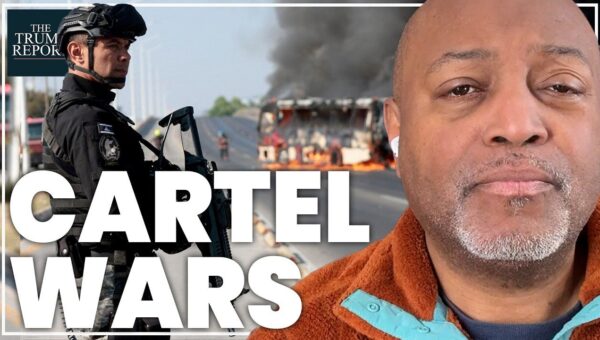
Mexico Cartel Violence Erupts After US-Aided Leader’s Death
A targeted operation against a top cartel leader, supported by US intelligence, has triggered a violent surge in Mexico. The killing of the CJNG leader has led to subordinate factions unleashing chaos, raising questions about US drug policy and the complex geopolitical landscape.

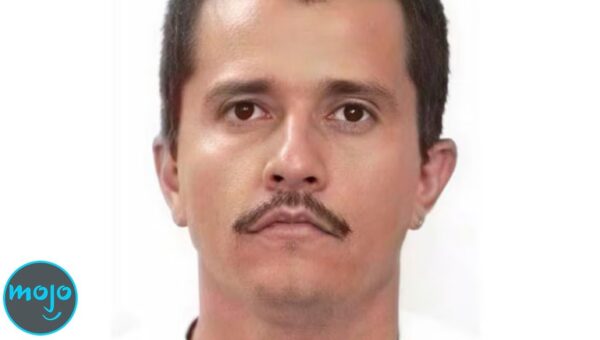
Mexico’s Cartel Chaos: El Mencho Raid Sparks Crisis
A decisive military raid on cartel leader El Mencho has plunged Mexico into chaos, triggering widespread retaliation and nationwide roadblocks. As President Claudia Sheinbaum grapples with restoring order amidst escalating cartel conflicts and the upcoming 2026 FIFA World Cup, the nation's future hangs in the balance.