Ecuador at a Crossroads: Democratic Backsliding Amidst Unprecedented Violence and Constitutional Turmoil
Ecuador faces a severe crisis marked by escalating violence, deep political polarization, and a contentious move towards a new constitution. Amidst an “internal armed conflict” declared by President Noboa to combat drug-related crime, the Constitutional Court has become a target for limiting executive power, leading to widespread human rights concerns and a potential erosion of judicial independence. The upcoming plebiscite on a new constitution, driven by the executive's clash with the judiciary, risks further destabilizing the nation and prolonging political uncertainty.


Ecuador at a Crossroads: Democratic Backsliding Amidst Unprecedented Violence and Constitutional Turmoil
Ecuador, a nation once known for its relative tranquility, finds itself embroiled in a profound crisis, grappling with escalating violence, deep political polarization, and a looming constitutional overhaul. This tumultuous period has seen a dramatic rise in organized crime, a declared internal armed conflict, and a contentious clash between the executive branch and the judiciary, threatening the very foundations of its democratic institutions.
The severity of the situation was recently underscored in a discussion with the Honorable Daniela Salazar, a distinguished lawyer and former judge of the Ecuadorian Constitutional Court. Speaking on the podcast “Frankly Fukuyama,” Salazar painted a stark picture of a country in “constant political crises” and experiencing “progressive democratic backsliding,” exacerbated by an “unprecedented surge in violence.”
A Nation Divided: The Legacy of Polarization
The roots of Ecuador’s current polarization can be traced back to the presidency of former President Rafael Correa. His decade-long tenure (2007-2017) saw significant social and economic reforms but also a highly centralized government and a deep ideological divide. This era left the country split into “pro- and anti-Correa factions,” a schism that continues to influence the political and legal landscape. The 2008 Constitution, often associated with Correa, established a powerful Constitutional Court, a body that would later become a focal point of contention.
For its first decade, the Constitutional Court “operated under the shadow of political dynamics,” according to Salazar, not playing a significant independent role. However, following a period of vacancy and the confirmation of new justices in 2019, including Salazar herself, the court became “very active in basically setting limits to the government and deciding lots of lots of cases.” Composed of nine judges serving nine-year terms, the court wields extensive powers, with over 30 different authorities, making it “a very powerful court in comparison to other courts in the world.” Despite handling a high volume of cases, its broad mandate in political questions solidifies its influence.
The Surge in Violence: A “Playbook” of Crisis
Perhaps the most alarming development in Ecuador is its transformation from a relatively peaceful country to one of the most violent in the region. This dramatic shift is primarily attributed to the entrenchment of international drug trafficking routes through the country. Ecuador’s strategic geographical location, porous borders, and access to Pacific ports have made it an attractive transit hub for drug cartels, leading to a breakdown in citizen security.
The current President, Daniel Noboa, inherited a nation gripped by fear. In response to the escalating violence, he officially declared the existence of an “internal armed conflict” in January 2024. This declaration, a significant legal and political move, triggered a major confrontation with the Constitutional Court. The court consistently challenged the executive’s use of states of emergency, arguing that the “requisites” for such extreme measures – specifically the “intensity of the violence and organization of the groups” – were not always met by the government’s evidence.
The statistics on violence are chilling. Salazar revealed a “very scary” increase in homicides, with a 47% rise in murders in the first half of 2024 compared to the same period last year. Alarmingly, there have been over 7,400 violent deaths in 2025 alone (as stated in the transcript, likely referring to the current year of discussion or a projection, given the context of future dates in the recording). This pervasive violence has had a devastating impact on society, with “72,000 children not go[ing] back to school” in the last school year, primarily due to fear and the threat of being drawn into organized crime. Over 336 children were victims of violent deaths in 2025 (again, as stated in the transcript).
Human Rights Concerns and State Violence
The military response to the internal armed conflict, while intended to restore order, has raised serious human rights concerns. Salazar noted that “state violence has increased,” with a surge in claims of crimes committed by armed forces. Reports of torture have “quadrupled” from 50-52 cases in 2023 to 205 cases in 2024, and claims of extrajudicial executions, abuse of power, and forced disappearances have “doubled.” Civil society organizations, including Amnesty International, have documented approximately 43 disappearances of individuals “after being arrested by irregular operations and raid carried out by the military” since the internal armed conflict was declared.
This situation mirrors concerns raised in other parts of the world, including the United States, where attempts by populist politicians to deploy strong-arm tactics against perceived violence have been met with judicial resistance. Francis Fukuyama drew a parallel to Donald Trump’s efforts to use National Guard troops in U.S. cities, noting that “there’s a playbook that a lot of rulers are following.” However, Salazar emphasized that “the level of violence in Ecuador is still substantially higher” than in the U.S.
The Prison Crisis: A Breeding Ground for Gangs
A critical, and often overlooked, dimension of Ecuador’s security crisis is the catastrophic state of its prison system. Salazar explained that “the security crisis before it extended to the whole territory of Ecuador it started within the jail system.” The government “completely lost control of the prisons” over successive administrations, leading to horrific massacres. Between 2018 and 2023, 680 inmates were murdered inside prisons. Following the declaration of an internal armed conflict, over 500 more prisoners died in custody between the declaration and mid-2024. “Massacres keep occurring inside the jail system,” Salazar lamented, “to the point that they stop being in the news.”
This situation has chilling parallels with the origins of notorious gangs like Mara Salvatrucha (MS-13), which gained strength in Los Angeles prisons before being deported to El Salvador, overwhelming that country’s capacity to control them. In Ecuador, the failure to control prisons has allowed criminal organizations to flourish and operate with impunity from within state custody.
Noboa’s Constitutional Ambitions: A Plebiscite Amidst Unrest
Against this backdrop of escalating violence and judicial confrontation, President Noboa has called for a plebiscite on November 16th, asking Ecuadorians to decide whether to convene a new constitutional assembly to draft the country’s 21st constitution. Salazar suggests that this move largely stems from the executive’s “confrontation with the court on many issues,” particularly the court’s limits on states of emergency and its rejection of certain “economic urgency” laws.
Noboa has “blamed it on the court and on the current constitution” for the inability to fully tackle violence. While he claims a new constitution would enable him to “stop this increase of violence by organized crime,” his exact objectives remain opaque. “We don’t know exactly what he wants,” Salazar stated, “He hasn’t said that.” However, there are indications that he seeks to “change the protections that the current constitution gives to people deprived of liberty,” aligning with a “mano dura” (iron fist) approach seen in El Salvador under President Nayib Bukele, who has garnered popularity by drastically reducing crime rates through mass arrests and a disregard for due process.
The prospect of a new constitution raises significant concerns about the rule of law and human rights. Salazar fears that “one of the things that the current government is looking for is impunity for certain crimes committed by the military and police forces” during the internal armed conflict. The lack of clarity around the proposed constitutional changes creates immense “uncertainty,” potentially deterring international investment in a country already struggling economically.
The Perilous Path of Judicial Independence
The judiciary, particularly the Constitutional Court, has found itself under immense pressure. Salazar recounted how the court members have been “institutionally and personally attacked and targeted by this government.” President Noboa himself organized a march against the court, and on the day of the march, “huge gigantic signs all over the city with the faces of the nine judges” appeared, “blaming them for the lack of peace in the country and blaming them for insecurity.”
While Constitutional Court judges face institutional pressure, the greatest danger is borne by judges and prosecutors in smaller cities, especially along the coast, where drug trafficking is most prevalent. “There have been many assassinations of judges and prosecutors,” Salazar revealed, primarily “from the drug traffickers.” These officials are often given an impossible choice: “plata o plomo” – money or lead – meaning accept bribes or face death. “They don’t really have a choice,” she concluded.
The upcoming plebiscite, regardless of its outcome, promises continued political instability. If approved, it will trigger multiple rounds of elections for a constitutional assembly and subsequent referendums, plunging Ecuador into a prolonged “political campaign for the next year and a half or two in the middle of all this violence.” Salazar argues that this diversion of focus from the “structural reasons that are causing this violence” – issues of inequality and lack of opportunity – is a perilous path.
A Global Struggle for Rule of Law
The challenges facing Ecuador are not unique. As Francis Fukuyama observed, this struggle “is a global problem,” with judges across Latin America and beyond “trying to uphold a rule of law against populist politicians that don’t want to have constrained power.” From Mexico to Peru and Colombia, judicial independence is under threat from forces seeking to undermine established legal systems. Ecuador’s current crisis serves as a stark reminder of the fragility of democratic institutions when confronted by extreme violence and political ambition.
The survival of Ecuador’s rule of law hinges on its ability to navigate this complex interplay of violence, political division, and constitutional reform, while safeguarding fundamental rights and ensuring accountability for all.
Source: Ecuador's Democratic Backsliding (YouTube)

Related Articles

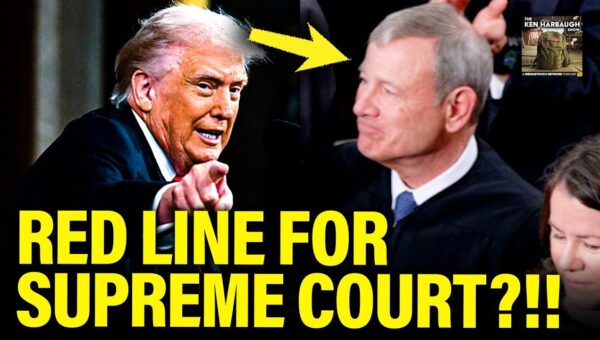
Trump’s Judicial Clash: A Threat to Constitutional Order?
Former President Trump's public criticism of Supreme Court rulings and perceived attempts to circumvent judicial authority have raised alarms about a potential constitutional crisis. Legal experts emphasize the judiciary's reliance on public trust and adherence to the rule of law, especially in the face of executive challenges.

Keir Starmer Faces Critical Test as Royal Scandal Deepens with Prince Andrew Investigation
Prime Minister Keir Starmer faces a critical constitutional challenge as Prince Andrew's arrest for misconduct intensifies royal scandal. With Peter Mandelson also under investigation and document releases expected next week, Starmer must navigate the delicate balance between legal processes, public opinion, and constitutional stability.

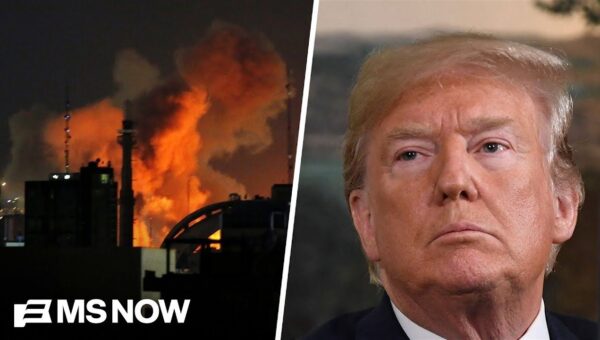
Congressman Swalwell Slams Trump’s Iran Strikes, Cites ‘No Plan’
Congressman Eric Swalwell has strongly condemned the recent U.S. military strikes in Iran, deeming them illegal and lacking a clear strategic plan. He joins Democrats in demanding a War Powers vote, asserting that the administration has failed to present evidence of provocation or a post-strike strategy. Swalwell criticizes the move as a distraction from domestic issues and a departure from campaign promises.