Earth’s Quirks: Immortal Jellyfish & Other Strange Realities
Discover the astonishing reality of our world, from immortal jellyfish and lightning hotter than the sun to the surprising DNA we share with bananas. This collection of mind-bending facts reveals the planet's hidden wonders and challenges our understanding of life, nature, and our place in the universe.

Our World Is Weirder Than We Think: 20 Mind-Bending Facts
Think you know the world around you? Prepare to have your mind blown. From jellyfish that can live forever to lightning hotter than the sun, reality is far stranger than it appears. A new collection of scientific facts is reshaping how we understand our planet and the universe.
Nature’s Immortality Trick: The Jellyfish That Rewinds Time
Imagine being able to reverse your own aging. For one tiny creature, this isn’t science fiction – it’s biology. The Turritopsis dohrnii, often called the immortal jellyfish, can actually turn back its own clock. After reaching adulthood, it can transform back into its younger polyp stage. This process, called transdifferentiation, allows specialized cells to change into different types. Instead of dying, it effectively restarts its life cycle, especially when stressed. While predators and disease can still end its life, this jellyfish doesn’t have a set lifespan. In ideal conditions, this cycle could repeat forever, making it biologically immortal.
Lightning: A Fiery Fist Punch from the Sky
We’ve all seen lightning, but did you know it’s hotter than the surface of the sun? A single bolt can reach temperatures of about 30,000 Kelvin. That’s roughly five times hotter than our sun’s surface! This incredible heat causes the air around it to expand explosively, creating the shockwave we hear as thunder. Each strike releases hundreds of millions of volts. While it happens in a flash, lightning shows us our atmosphere can create forces as powerful as those found in deep space.
Your Brain Is a Master Editor, Hiding Your Nose
Your brain is constantly working to make sense of the world, but it plays a neat trick on you every day. It filters out things your senses pick up constantly, like the sight of your own nose. Your nose is always in your field of vision, but your brain edits it out to avoid sensory overload. This helps you focus on what’s important, like not bumping into things or noticing the clothes on your skin. What you perceive as reality is actually an edited version, processed for efficiency.
We’re More Banana Than You Think
Get ready for a surprising connection: humans share about 40-60% of their DNA with bananas. While we don’t look alike or have the same smarts, this shared genetic code shows how basic life functions are similar across different species. Genes that control cell division, growth, and how our bodies work are remarkably universal. It turns out, at a molecular level, we’re all connected, sharing a common biological foundation built by evolution.
Chess: A Universe of Possibilities in 64 Squares
The game of chess, played on a simple 64-square board, holds more possible game variations than there are atoms in the entire observable universe. Mathematician Claude Shannon estimated there are about 10 to the 120th power unique chess games. For comparison, the universe only has about 10 to the 80th power atoms. This shows how complex outcomes can emerge from simple rules. Chess demonstrates a mind-boggling level of combinatorial growth that’s hard to even imagine.
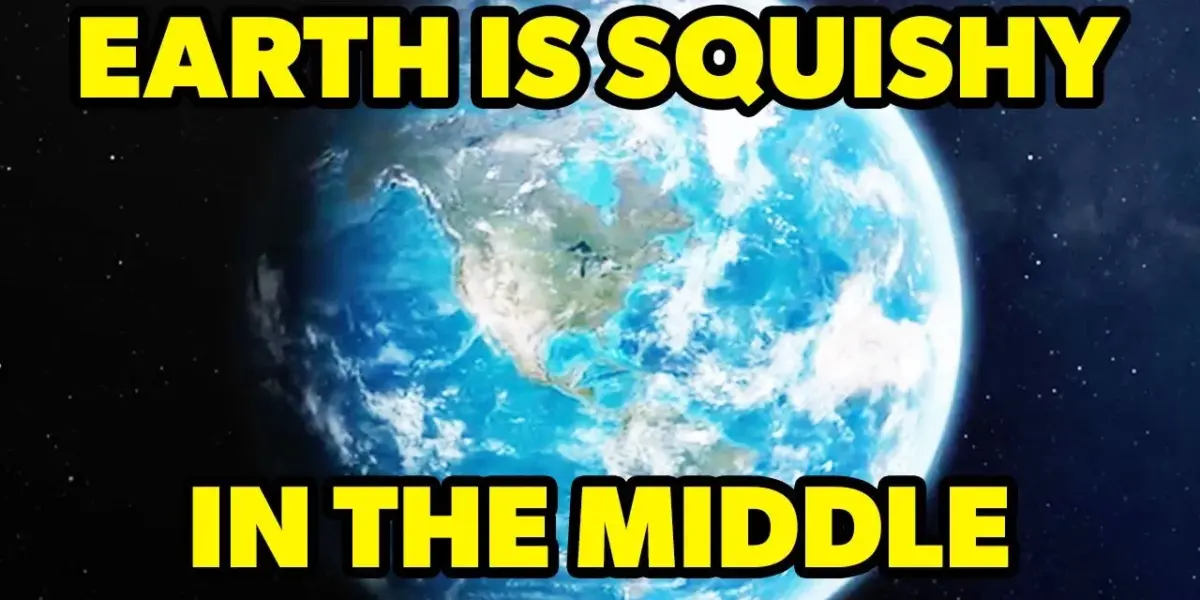
Earth’s Interior: A Slow, Squishy Dance
Beneath our feet, the Earth isn’t just solid rock. Its interior mantle is semi-solid and flows very slowly over millions of years. This movement is what drives plate tectonics, causing earthquakes and volcanic activity, and even changing the shape of continents. During the last ice age, massive glaciers pressed down on the crust, causing it to sink. As the ice melted, landmasses like parts of Canada and Scandinavia began to rise, a process still happening today in some areas. Our planet is a dynamic, ever-changing place.
Tardigrades: Tiny Survivors That Could Outlast Us All
Meet the tardigrade, also known as the water bear. These microscopic creatures are incredibly tough survivors. They can withstand extreme heat, freezing cold, high acidity, radiation, and even the vacuum of space. They achieve this by entering a dehydrated state called cryptobiosis, which effectively stops their metabolism. In this suspended animation, they can survive for years. Some scientists believe tardigrades could even survive catastrophes that wipe out humanity, showing that survival isn’t always about size or intelligence.
Antarctica’s Dry Valleys: A Desert That Never Sees Rain
In Antarctica, the McMurdo Dry Valleys haven’t seen rain in about 2 million years. The air is so cold and dry that snow turns directly into vapor before it can melt. These valleys are similar to the environment on Mars, making them a perfect place for scientists to test equipment for exploring the Red Planet. Even in this harsh, frozen desert, microbial life finds a way to survive in isolated pockets, proving life can endure in conditions we’d never expect.
The Freshwater Paradox: Abundant Water, Scarce Drinkable Supply
Earth is called the Blue Planet because it’s covered in water, but most of it isn’t usable for us. Only about 3% of Earth’s water is fresh, and nearly 70% of that is locked up in glaciers and ice caps. Much of the rest is stored deep underground. This leaves less than 1% of all global water easily accessible for drinking and daily use. While oceans seem vast, drinkable water is actually a scarce and unevenly distributed resource, making careful management crucial.
The Rise of Shortsightedness: Our Eyes Are Changing
A concerning trend is emerging: a third of children worldwide are now shortsighted, a condition known as myopia. This number has dramatically increased over the last 30 years. By 2050, over half the world’s population is expected to be shortsighted. Experts believe this is due to more time spent indoors, prolonged close-up work on screens, and less exposure to natural daylight. Our eyes are adapting to modern lifestyles in ways that are narrowing our vision.
Climate Change: The Map of Normal Weather Is Being Redrawn
Climate shifts are happening faster than predicted. Weather patterns that were once stable are changing within decades. The rise in greenhouse gases is warming the planet rapidly. Scientists now expect that by 2050, most major cities will experience weather unlike anything recorded before in their regions. It’s not just about warmer temperatures; rainfall, seasons, and extreme weather events are all becoming unpredictable. Our infrastructure and planning need to catch up with this evolving reality.
Earth’s Magnetic Pole: On the Move
Earth’s magnetic north pole isn’t staying put. It’s currently drifting westward at an accelerating speed, moving towards Siberia. This movement is caused by shifting flows of molten iron deep within the Earth’s outer core. This rapid change means that even our compasses, and the navigation systems in our phones and planes, need constant updates to keep up. The invisible shield that protects us from solar radiation is surprisingly dynamic.
The Ocean: Our Planet’s Unsung Oxygen Provider
When you think of oxygen production, you probably picture forests. However, most of the oxygen we breathe actually comes from the ocean. Tiny marine organisms called phytoplankton, invisible to the naked eye, generate between 50% and 80% of Earth’s oxygen through photosynthesis. These microscopic plants use sunlight to convert carbon dioxide into oxygen, just like land plants. The health of our oceans is directly linked to the air we breathe, making marine conservation vital for our own survival.
Plastic Planet: We’ve Created a New Layer of Waste
Humanity has produced an astonishing amount of material, but plastic stands out. We’ve created so much plastic that it could theoretically blanket the entire Earth’s surface in a thin layer. This synthetic material, found in everything from packaging to clothing, is forming a new, unintended layer on our planet. Future archaeologists will easily identify our era by the plastic residues embedded in soil and ocean sediment. Our waste has become a lasting geological signature.
The Moon Landing: Ingenuity Over Power
When humans first landed on the moon during the Apollo 11 mission, the onboard computer had less processing power than a modern smartphone uses to stream a video. The Apollo Guidance Computer operated with kilobytes of memory. Yet, with this limited technology, astronauts navigated space, calculated trajectories, and landed safely on another world. This incredible feat wasn’t powered by supercomputers, but by human ingenuity and teamwork. It proved that determination can achieve monumental goals, even with basic tools.
Source: 20 Facts That COMPLETELY Change How You See the World (YouTube)

Related Articles


Cosmic Visitor Rocks Texas Home, Sparks Meteorite Inquiry
A Texas woman's home was struck by a meteorite, which crashed through multiple floors before landing in her daughter's bedroom. This rare event follows recent meteor sightings in California and Ohio, prompting scientific interest and public fascination with celestial occurrences.


Empty Space Pushes Mirrors Together in Quantum Trick
Discover the Casimir effect, a quantum phenomenon where 'empty' space exerts a powerful force. Tiny quantum waves, blocked in the gap between close mirrors, create a pressure that pushes them together, revealing the dynamic nature of the vacuum.


Meteor Boom Shakes Cleveland, Sparks Sky Fireball
A massive meteor, estimated at seven tons, streaked across the Cleveland sky and broke apart, causing a loud boom that startled residents. NASA confirmed the event, noting that while meteors are common, this one was unusual due to its daylight appearance over a populated area. Experts assure the public that the event posed no significant threat.