Earth’s Ice Age Cycles: A Frozen Epic
Explore the dramatic 100,000-year cycles of Earth's Ice Age, driven by orbital mechanics and the rise and fall of magnificent megafauna. Discover the scientific explanations behind glacial periods and the ongoing debate about human impact on ancient extinctions.

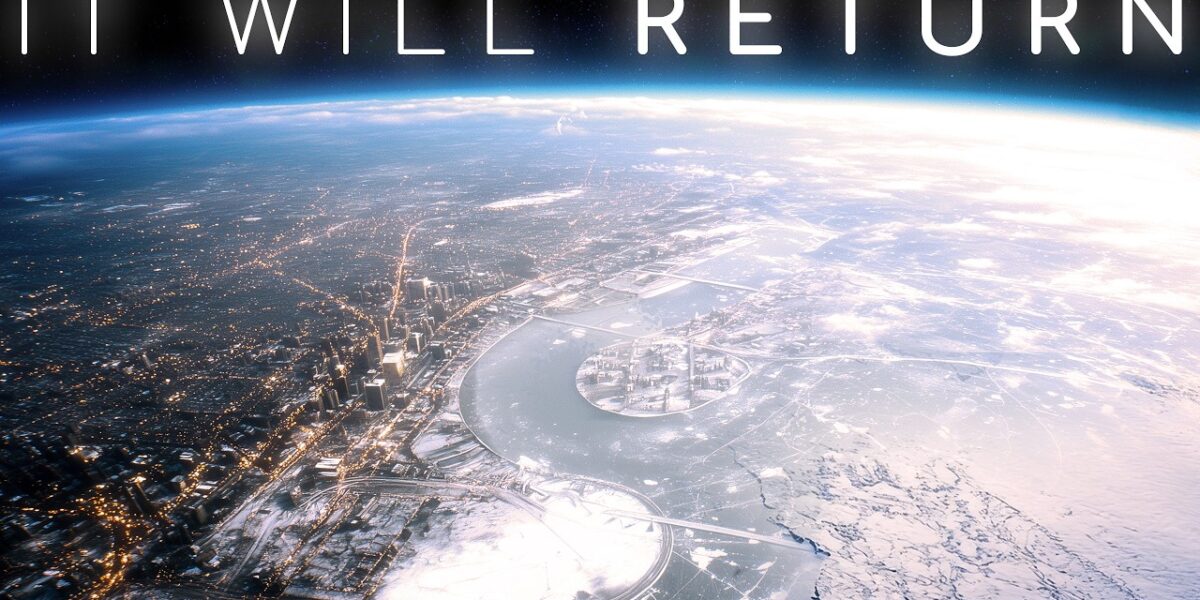
The Last Great Chill: Unraveling Earth’s 100,000-Year Ice Age Cycle
Our planet has a dramatic history, punctuated by periods of extreme cold that have reshaped continents and challenged life itself. The last Ice Age, a period that began approximately 2.6 million years ago and technically continues today, offers a profound glimpse into Earth’s climatic extremes. While we are currently in a warmer, interglacial phase that has lasted about 11,000 years, the popular notion of ‘the last Ice Age’ often refers to the most recent glacial period, which spanned from 115,000 to 11,700 years ago. This era, though only about 6 degrees Celsius colder on average than today’s global temperature, witnessed colossal ice sheets, altered landscapes, and the rise of magnificent megafauna, many of which would ultimately vanish.
The Rhythms of Orbit: Milankovitch Cycles
The question of what triggers these planet-altering ice ages has long fascinated scientists. A pivotal understanding came from the work of Serbian scientist Milutin Milankovitch in the last century. He hypothesized that long-term, cyclical changes in Earth’s orbit around the Sun are the primary drivers of these glacial periods. These orbital variations influence the amount of solar radiation reaching Earth’s surface, thereby affecting global temperatures.
Milankovitch identified three key orbital cycles:
- Eccentricity: The shape of Earth’s orbit varies from nearly circular to more elliptical over a period of about 100,000 years. A more elliptical orbit leads to greater variations in seasonal temperatures, with longer, cooler summers and shorter, warmer winters.
- Obliquity (Axial Tilt): The tilt of Earth’s axis, which causes seasons, fluctuates between approximately 22.1 and 24.5 degrees over roughly 41,000 years. A lesser tilt results in milder seasonal differences, allowing winter ice to accumulate because summers are not warm enough to melt it.
- Axial Precession (Wobble): Earth wobbles on its axis like a spinning top due to gravitational influences from the Sun and Moon. This cycle, lasting about 26,000 years, affects the timing of seasons in relation to Earth’s position in its orbit, influencing the intensity of seasonal contrasts.
The interplay of these three cycles creates predictable patterns that can nudge Earth into or out of glacial periods. While these cycles are the grand orchestrators, shorter-term phenomena like Dansgaard-Oeschger (DO) events, characterized by sudden warming, and Heinrich events, marked by rapid cooling due to massive ice sheet discharges, also played significant roles during the last Ice Age.
Giants of the Ice Age: Megafauna Adaptations
The Pleistocene epoch, the era of the last Ice Age, was a time when Earth was populated by incredible megafauna. These colossal creatures, some weighing over 4,500 kg, developed remarkable adaptations to survive the frigid conditions. Bergmann’s Rule, for instance, suggests that animals in colder climates tend to be larger to minimize heat loss due to their lower surface area-to-volume ratio. This principle likely contributed to the prevalence of giant species during this period.
Iconic among these were the woolly mammoths. Far from being simply larger elephants, these magnificent beasts, standing up to 3.5 meters tall at the shoulder, possessed thick, double-layered fur, a layer of insulating fat up to 9 cm thick, and small, fur-covered ears to conserve heat. Their unique nasal sinuses may have helped warm and humidify the frigid air they breathed. Astonishingly, a small population of woolly mammoths survived on Wrangel Island in the Arctic until around 4,000 years ago, long after the Great Pyramids of Giza were built.
Another fascinating creature was the Glyptodont, a distant relative of the armadillo. These heavily armored behemoths, weighing up to two tonnes, sported a massive, turtle-like carapace. Recent studies suggest they may have even been capable of bipedal locomotion, using their powerful hind legs and potentially their armored tails for defense or reaching food.
The sloth family also saw remarkable diversification, giving rise to giant ground sloths. Species like Eremotherium rivaled giraffes in height and elephants in bulk, while Megatherium americanum, weighing an estimated 3,800 kg, was nearly 950 times heavier than its modern-day descendants. Evidence from fossil sites in Ecuador suggests these giants congregated at watering holes, possibly to escape the heat and insects, indicating they were social animals. Further discoveries in Argentina reveal that some giant ground sloths, like Glossotherium and Scelidotherium, were capable of excavating massive burrows, some up to 40 meters long and 1.8 meters wide. These impressive feats of engineering, evidenced by claw marks matching their skeletal structure, suggest they sought refuge from extreme temperatures or possibly predators.
The Mystery of Extinction: Humans and the Megafauna Collapse
Despite their incredible adaptations, a staggering 72-88% of large-bodied creatures disappeared from Australia, North, and South America at the end of the Pleistocene. The precise cause of this megafauna extinction remains one of paleontology’s most intense debates.
One theory points to natural climate change. As the Earth transitioned into the current interglacial period, rising sea levels submerged land bridges, and melting ice sheets altered habitats. However, this doesn’t fully explain why some species, like the Wrangel Island mammoths, persisted much longer.
The other major theory, gaining significant traction since the 1960s, implicates humans. Anatomically modern humans, Homo sapiens, evolved around 300,000 years ago and spread across the globe, coexisting with Ice Age megafauna for millennia. During the Late Paleolithic (50,000 to 10,000 years ago), human cultural development accelerated, leading to more sophisticated tools, hunting techniques, and social structures.
The Clovis people of North America, known for their distinctively crafted spear points, are a prime example. Their arrival in North America coincided with the extinction of megafauna, leading to speculation that intense hunting pressure by these skilled hunters played a significant role. Isotope analysis of the remains of a Clovis child, dating back 12,700 years, revealed that mammoth constituted about 40% of its mother’s protein intake, suggesting a direct and substantial reliance on these large animals.
Similar patterns are observed in Australia, where megafauna populations collapsed within 4,000 years of human arrival, despite some environmental shifts. The slow reproductive rates of large mammals made them particularly vulnerable to even moderate hunting pressure.
The disappearance of Neanderthals, who vanished around 40,000 years ago, also presents a complex puzzle. These robust hominins were well-adapted to cold climates, possessing sophisticated cultures, including art and burial rituals. Theories suggest that Homo sapiens may have outcompeted them for resources or assimilated them into larger populations, a notion supported by the 1-2% Neanderthal DNA found in modern Europeans and Asians. Their stockier build, while beneficial for heat retention, may have been less energy-efficient than that of Homo sapiens, potentially giving our ancestors a competitive edge.
Looking Ahead: Future Glaciations and Human Resilience
The Earth’s history of five major ice ages underscores the dynamic nature of our planet’s climate. While the current interglacial period has been relatively stable, the possibility of future glaciation events remains. Short-term cycles like Heinrich events, triggered by ice sheet discharges and linked to changes in ocean currents like the Atlantic Meridional Overturning Circulation (AMOC), could potentially initiate periods of cooling. Current observations of subsurface ocean warming, which can destabilize ice sheets, may be warning signs.
Whether such an event could trigger a return to Pleistocene-level ice ages would likely depend on its coincidence with other long-term orbital cycles. The prospect of another glaciation raises profound questions about the adaptability of current life forms, including Homo sapiens. Can we navigate another era dominated by ice, or are we vulnerable to forces that might favor different adaptations?
The legacy of the last Ice Age is etched in the fossil record – the skeletons, burrows, and cave paintings left behind. They tell a story of incredible resilience, adaptation, and ultimately, profound change. As we continue to unravel the mysteries of this frozen epoch, we gain a deeper appreciation for the complex interplay of climate, evolution, and the enduring, and sometimes destructive, impact of humanity on the planet.
Source: Understanding Earth’s 100,000-Year Ice Age Cycle (YouTube)

Related Articles


White Dwarf Dyson Spheres: A Tiny Star’s Big Energy Solution
Astronomers are exploring the possibility of building Dyson spheres around compact white dwarf stars, which offer a long-lasting and stable energy source. Meanwhile, the Vera Rubin Observatory promises near real-time astronomical discovery, and new data challenges models of supermassive black hole formation in the early universe.

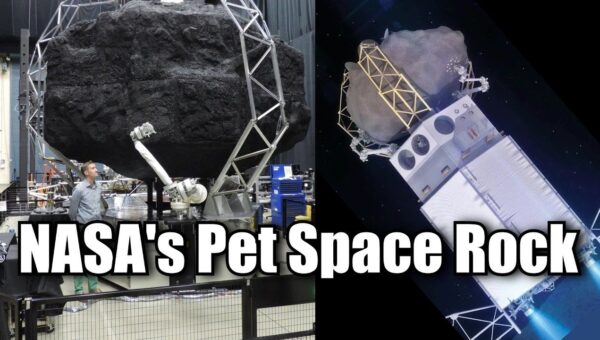
NASA’s Asteroid Mission: From Mars Dream to Lunar Gateway
NASA's ambitious Asteroid Redirect Mission (ARM), designed as a stepping stone to Mars, aimed to capture a small asteroid boulder and tow it to lunar orbit for astronaut testing. Though cancelled, its advanced propulsion and robotic technologies live on in NASA's Lunar Gateway and future deep space exploration plans.


NASA’s Evolving SLS Rocket Hints at New Upper Stage
NASA's Artemis program may be adopting a new upper stage for its Space Launch System (SLS) rocket, potentially utilizing the commercially available Centaur V. An updated infographic reveals design changes and hints at evolving mission strategies, including advanced lunar lander operations.