Earth’s Atmosphere Bends Light, Delaying Equal Day and Night
The day of equal daylight and darkness, known as the equilux, typically occurs a few days before the spring equinox. This difference is due to Earth's atmosphere bending sunlight, making days appear longer.


Atmosphere’s Glow: Why Equal Day and Night Miss the Equinox
As winter’s chill recedes and the promise of warmer days arrives, many anticipate the equinox – the day often described as having equal hours of daylight and darkness. However, the reality is a bit more nuanced. The precise moment of equal day and night, known as the ‘equilux,’ typically occurs a few days before the vernal (spring) equinox each year. The reason for this celestial discrepancy lies not in orbital mechanics, but in a phenomenon we experience every day: Earth’s atmosphere.
Defining the Equinox and Equilux
The equinox, occurring around March 20th for the spring equinox and September 22nd for the autumnal equinox, marks a specific astronomical event. It’s the moment when the Sun crosses the celestial equator, the imaginary line in the sky directly above Earth’s geographic equator. At this precise time, Earth’s axis is at a 90-degree angle to its orbit around the Sun, meaning neither the Northern nor the Southern Hemisphere is tilted more directly towards or away from the Sun. Theoretically, this alignment should result in a perfect 12 hours of daylight and 12 hours of night across the globe.
However, the ‘equilux’ – the day when the duration of daylight and darkness are truly equal – often doesn’t coincide with the equinox. This difference is primarily due to a phenomenon called atmospheric refraction. While the equinox is a geometric event based on the Sun’s position relative to the celestial equator, the equilux is determined by when the Sun appears to be above the horizon.
The Bending Light of Refraction
Earth’s atmosphere acts like a giant lens. As sunlight enters our atmosphere, it bends, or refracts. This bending effect is most pronounced when the Sun is near the horizon, during sunrise and sunset. The atmosphere refracts sunlight upwards, allowing us to see the Sun for a short period after it has geometrically set below the horizon, and for a short period before it has geometrically risen above it.
This atmospheric refraction effectively extends the perceived length of daylight. When the Sun is just below the horizon, its light is bent around the curve of the Earth, reaching observers on the surface. This means that even when the Sun’s disk is no longer visible, its rays are still contributing to daylight. Consequently, the day appears longer than it geometrically is.
When Day and Night Align
Because of this atmospheric bending of light, the point at which we experience precisely 12 hours of daylight and 12 hours of darkness – the equilux – occurs a few days before the spring equinox and a few days after the autumnal equinox. For example, in Oxford, UK, the spring equinox might fall on March 20th, but the equilux, when day and night are truly equal, could be as early as March 17th or 18th.
The exact date of the equilux varies slightly year to year and also depends on your specific latitude. At the equator, the difference is minimal, but the effect becomes more pronounced at higher latitudes. This is because the angle at which sunlight enters the atmosphere changes with latitude, affecting the degree of refraction.
Historical Context and Future Observations
The understanding of atmospheric refraction dates back centuries, with early astronomers and physicists noting its effects on celestial observations. While ancient cultures often marked the equinox as the day of equal light and dark, modern astronomical understanding, aided by precise measurements and our knowledge of atmospheric physics, reveals this common perception to be a slight simplification. Missions like NASA’s Parker Solar Probe, while focused on studying the Sun up close, indirectly enhance our understanding of how solar radiation interacts with Earth’s upper atmosphere, a realm crucial to phenomena like refraction.
What’s Next?
While the equilux might seem like a minor detail in the grand cosmic ballet, it highlights the intricate interplay between celestial mechanics and our own planet’s physical characteristics. It’s a reminder that our perception of astronomical events is mediated by the very atmosphere that sustains life. As we continue to explore the cosmos with increasingly sophisticated tools, understanding such terrestrial influences becomes ever more important for interpreting distant signals and phenomena.
The next time you mark the arrival of spring or autumn by the equinox, take a moment to consider the equilux. Check the sunrise and sunset times for your location and observe when the balance of day and night truly tips. It’s a subtle, yet profound, demonstration of science at work, right here on Earth, making the transition between seasons a little more magical.
Source: Why is equilux not on equinox? #shorts (YouTube)

Related Articles

NASA Pivots: Mars Nuclear Probe, Moon Base Ahead
NASA is pivoting its exploration strategy, prioritizing a nuclear-powered Mars probe and accelerating plans for a moon base. The International Space Station's future is uncertain, with a shift towards commercial platforms. Meanwhile, new telescope data reveals overmassive black holes in dwarf galaxies and captures stunning images of Saturn and the Crab Nebula.


Dark Matter Defies Gravity, Forming Fuzzy Clouds Instead of Stars
Dark matter, which outweighs all visible matter, surprisingly does not collapse under gravity to form stars or black holes. Instead, it forms vast, diffuse clouds around galaxies, baffling scientists with its unique behavior. Understanding this cosmic enigma is key to comprehending the universe's structure and evolution.
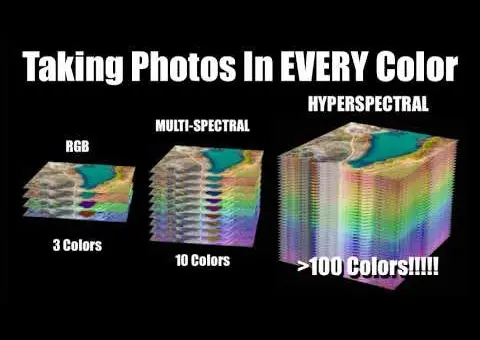
New Satellites Capture ‘Impossible’ Colors from Space
New hyperspectral satellites are capturing images with hundreds of color bands, revealing details invisible to the human eye and traditional cameras. This advanced technology builds on a 200-year legacy of spectral analysis, enabling unprecedented insights into Earth's resources and environment.