Dubai Reporter: Debris Fell ‘Thick and Fast’ Amid Iran Strikes
Dubai reporter Inza Mam Rashid described falling debris 'thick and fast' as Iran launched retaliatory strikes across the UAE, targeting areas including Dubai and Abu Dhabi. Experts warn of a 'war of choice' with uncertain outcomes.

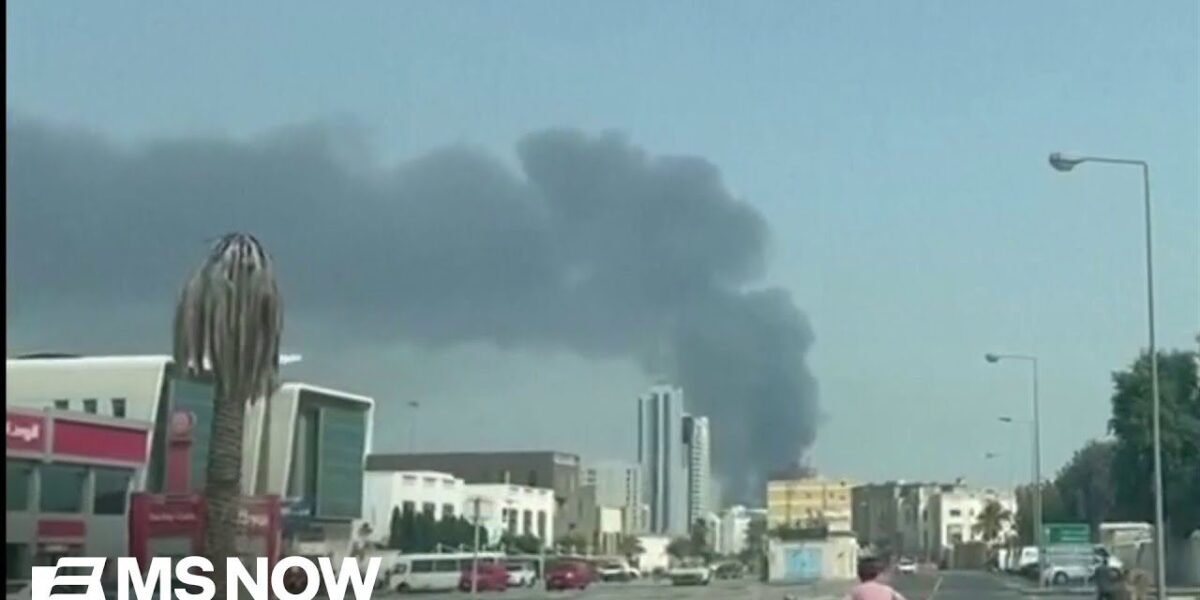
Middle East Braces for Escalation as Iran Launches Retaliatory Strikes
The Middle East is on high alert as Iran launched retaliatory strikes against regional targets, including the United Arab Emirates, in the early hours of Friday. The attacks, which continued deep into the night, have raised fears of a significant escalation in regional conflict, with one U.S. official, President Trump, claiming that Iran’s Supreme Leader, Ayatollah Ali Khamenei, was killed in earlier airstrikes. Iranian officials have not yet confirmed this claim.
Dubai and Abu Dhabi Under Fire
Inza Mam Rashid, an international reporter based in Dubai, described a tense atmosphere as the region experienced a barrage of attacks. “It’s calmed down over the last hour or so, I’d say. But the attacks from Iran… carried deep into the night here in the United Arab Emirates,” Rashid reported. “We have seen attacks right throughout the day coming in from Iran, targeting a number of areas in the UAE, namely here in Dubai, where I am, and down the road of the capital in Abu Dhabi.”
Initially, incoming Iranian missiles were directed at Abu Dhabi. The UAE’s defense missile systems were reportedly successful in intercepting many of these threats. However, the interception process led to falling debris, which caused significant concern and even casualties. “A lot of the debris causing explosions on the ground as well, which was a huge concern for the UAE authorities,” Rashid explained. She noted that one such incident involving debris resulted in the death of a South Asian man.
U.S. Naval Base and Iconic Landmarks Targeted in Dubai
The focus of the attacks later shifted to Dubai, with Iranian forces targeting U.S. military interests. “Moving over here to Dubai, it was something that we weren’t actually expecting, targets of U.S. bases here in Dubai. There are two small bases in Dubai,” Rashid stated. “And, of course, just over my shoulder here is actually the Jebel Ali port where a number of U.S. Navy vessels are based. And that has been the latest target of Iran. They have been specifically targeting the Jebel Ali port.”
Rashid witnessed explosions in the direction of the Jebel Ali port. While interceptions were underway, she observed that “debris has been falling thick and fast, and that’s been quite visible to see from the balcony here.” The impact of the falling debris was not limited to military installations. Reports indicate that debris also fell near prominent landmarks, including the Fairmont Hotel on the Palm Jumeirah, where a significant explosion occurred, and the iconic Burj Al Arab Hotel, where debris falling nearby caused an explosion on its side.
Expert Analysis: A ‘War of Choice’ with High Stakes
The unfolding events have drawn analysis from foreign policy experts. Aaron David Miller, a former diplomat and senior fellow at the Carnegie Endowment for International Peace, offered his perspective on the situation. “We’re, what, a day into this? The Brits would say it’s early days, and it really is early days,” Miller cautioned. He emphasized that the enemy, Iran, still has agency and that the immediate aftermath, including the succession struggle within Iran if Khamenei is indeed gone, will be critically important.
“Ali Khamenei is gone. That’s a good thing. Yahya Sinwar is gone. That’s a good thing. Hassan Nasrallah, Ereb Nizballah, that’s a good thing. But removing these individuals still leaves the structures, the ideologies that created them.” – Aaron David Miller
Miller characterized the U.S. and Israeli operation as a “war of choice,” suggesting there was no imminent threat that necessitated such action. He stressed that the metrics for evaluating success in such a scenario are much higher because the war was not deemed necessary. “And when war starts, people die, there are complications. We’re very early in in the process,” he added.
Uncertainty and Potential for Further Retaliation
David Rothkopf, host of the podcast Deep State Radio and an experienced figure in Middle East policy, concurred on the early stage of the conflict. He highlighted the importance of observing Iran’s response in the coming days. “I’m looking to see exactly, in the days that follow, where the Iranians are putting their primary energies. It’s regime preservation. But I wouldn’t rule out even a more aggressive response in the days to come from what remains,” Rothkopf stated.
The situation remains highly volatile, with the potential for further retaliatory actions from Iran. The coming days will be crucial in determining the trajectory of this escalating conflict and its broader implications for regional and global stability. The confirmation of Ayatollah Khamenei’s status, as well as Iran’s official response to the strikes, will be closely watched.
Source: 'Debris has been falling thick and fast': Dubai reporter on Iran's retaliatory strikes on region (YouTube)

Related Articles

Congressman Swalwell Slams Trump’s Iran Strikes, Cites ‘No Plan’
Congressman Eric Swalwell has strongly condemned the recent U.S. military strikes in Iran, deeming them illegal and lacking a clear strategic plan. He joins Democrats in demanding a War Powers vote, asserting that the administration has failed to present evidence of provocation or a post-strike strategy. Swalwell criticizes the move as a distraction from domestic issues and a departure from campaign promises.
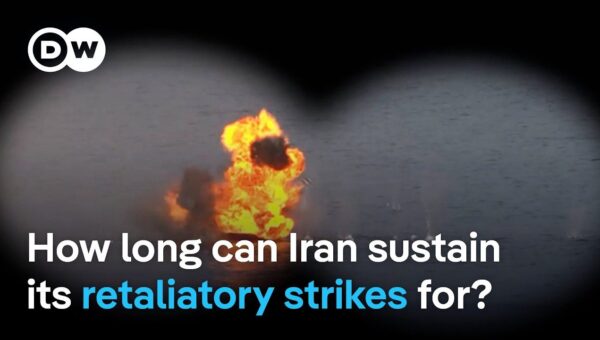
Iran’s Power Vacuum: IRGC Steers Nation Amidst Crisis
Iran faces unprecedented vulnerability following the assassination of Supreme Leader Ayatollah Ali Khamenei. The nation is under attack internally and externally, with the IRGC playing a crucial role in managing the leadership transition and maintaining state control amidst a deepening political and economic crisis.


US Navy Crushes Iran’s Fleet in Escalating Conflict
President Trump announced the US military has sunk nine Iranian naval ships, crippling Iran's navy and securing the Strait of Hormuz. The announcement comes amid a massive bombing campaign targeting Iranian military assets, with significant involvement from the Israeli Air Force.