Donbas: Ukraine’s Crucial Frontline in Russia War Stalemate
The battle for Donbas remains the critical flashpoint in the Ukraine-Russia war, with Ukraine resisting calls to cede territory. Despite arguments for a painful concession to secure peace, Ukraine's fortified defenses and the potential human cost of Russian occupation underscore its determination to fight.

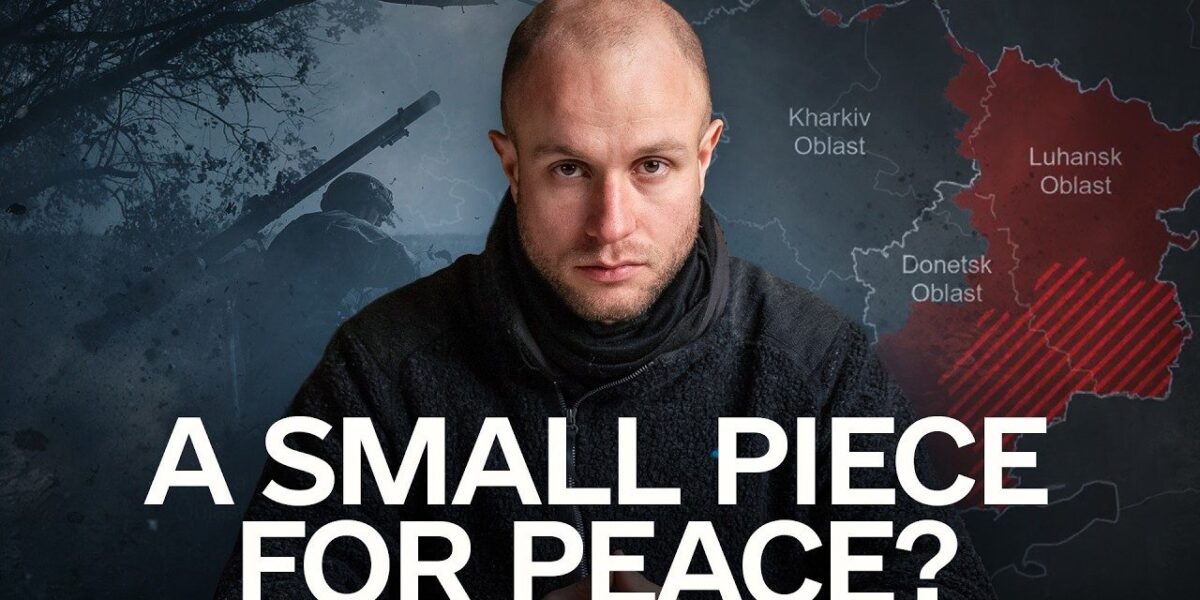
Donbas at the Heart of Ukraine-Russia Conflict
As the four-year mark of Russia’s full-scale invasion of Ukraine approaches, a crucial question hangs over the conflict: could a resolution in the Donbas region bring an end to the devastating war? The message, increasingly amplified in Western information spaces, suggests that Ukraine could achieve peace by ceding a portion of its eastern territory. This narrative posits that while Ukraine has heroically defended its sovereignty, Russia’s protracted war effort may be leveraging time to its advantage. The argument is that a painful, yet strategic, concession now in the Donbas could prevent greater losses later. The focus is on the Donetsk Oblast, a region that has witnessed some of the most brutal and deadly fighting globally since World War II. This article delves into why this specific territory has become so pivotal and explores the prospects for its future, as well as the possibility of it being the key to lasting peace.
A Region Steeped in History and Conflict
Francis Farrell, a frontline reporter for the Kyiv Independent, brings a unique perspective to the Donbas, having reported extensively from the region. He notes that due to heightened security risks, few major Western media outlets now venture to the frontlines, leading to a more distant and often vague understanding of this vital Ukrainian territory. Farrell’s ability to provide an accurate account of the Donbas is attributed to the support of the Kyiv Independent’s community members.
Historically, the land that now constitutes Donetsk Oblast was part of the “wild fields,” a borderland between the Crimean Khanate, Cossack nations, and the expanding Tsardom of Moscow. By the 18th century, it became an outpost of the Russian Empire. Industrialization in the 19th century transformed it into a major coal-mining center, popularizing the name Donbas (Donets Basin). During the Soviet era, extensive industrialization led to the relocation of workers from across the USSR, including the Gulag system, to the region’s mining and heavy industry sectors. This historical influx contributes to the perception of the Donbas as predominantly Russian-speaking, although Farrell observes that while urban centers largely use Russian, many rural residents, particularly older populations, continue to speak Ukrainian.
The region’s modern conflict trajectory began in 2014 following the Euromaidan revolution, which ousted the pro-Russian President Viktor Yanukovych, a native of the Donbas. In the ensuing weeks, Russia initiated its covert invasion, commencing with the annexation of Crimea and escalating into proxy separatist movements in Donetsk, Luhansk, and other Ukrainian regions. Despite Moscow’s consistent denials, evidence of Russian involvement—from leadership and financing to the direct presence of Russian troops—was undeniable.
The Donbas as a “Fortress Belt”
Since the full-scale invasion in 2022, Donetsk Oblast has remained the epicenter of the conflict, hosting intense battles in cities like Mariupol, Bakhmut, Avdiivka, Chasiv Yar, Vuhledar, and more recently, Pokrovsk and Konstantinovka. Russia has frequently cited the “liberation” of Donbas as a primary justification for its war, particularly after its initial objectives of “denazifying” and “demilitarizing” Ukraine faltered. Farrell recounts witnessing firsthand the devastating reality of this “liberation,” which has led to the destruction of towns and cities and the loss of countless lives.
As of February 2026, while Russia controls nearly all of Luhansk Oblast, Ukraine maintains control over approximately a quarter of Donetsk Oblast in the northwest. This Ukrainian-held territory, home to over 180,000 civilians according to regional authorities, continues to face daily Russian strikes. Key Ukrainian strongholds include the southern mining city of Velyka Novosilka, the strategically recaptured city of Lyman in the north, and the vital Krematorsk agglomeration in the center. This cluster of cities—Sloviansk, Kramatorsk, Druzhkivka, and the frontline city of Konstantinovka—forms the core of Ukraine’s defense in the region.
These cities, often referred to as Ukraine’s “fortress belt,” have been heavily fortified since 2014. Combined, Sloviansk and Kramatorsk alone represent a formidable defensive line, exceeding the scale of any city Russia has captured since Mariupol in 2022. Furthermore, the territory between and behind these cities is crisscrossed by extensive defensive lines, bolstered significantly since 2024. These fortifications include multi-layered anti-tank ditches, barbed wire, minefields, and “dragon’s teeth” anti-tank obstacles. Coupled with Ukraine’s sophisticated drone warfare, these defenses funnel Russian assaults into concentrated kill zones, preventing infiltration and resulting in immense casualties for minimal territorial gains. This pragmatic defense underscores Ukraine’s refusal to cede territory, viewing it as essential to breaking Russia’s will and preventing future capitulation.
The Human and Political Cost of Concessions
Beyond the strategic and military considerations, ceding territory to Russia carries profound human consequences. Handing over hundreds of thousands of Ukrainian citizens to Russian occupation would expose them to systematic torture, forced deportations, and the militarization of children—practices documented across occupied Ukrainian territories. Legally, any peace deal involving territorial concessions would require parliamentary approval in Ukraine, and potentially a referendum, given President Zelenskyy’s statements. Public opinion polls, such as one from January 2026, indicate strong opposition, with 74% of Ukrainians against ceding territory without robust security guarantees.
The concept of “territorial concessions” itself warrants careful examination. It can range from a de facto freezing of the front lines, acknowledging current Russian occupation, to the official recognition of occupied lands as Russian—a move that would legitimize conquest and set a dangerous international precedent. The most contentious meaning, however, involves the physical transfer of Ukrainian territory not yet occupied by Russia. This is precisely what Russia, reportedly with U.S. encouragement, has demanded. Initially seeking the handover of not only Donbas but also Kherson and Zaporizhzhia Oblasts, Russia later narrowed its demands to the remainder of Donbas, ostensibly to signal a willingness to compromise.
This strategic reduction in demands is viewed with suspicion, given Russia’s initial broader ambitions for Kyiv, Kharkiv, and Odesa. The historical context of peace negotiations, such as the infamous 28-point plan involving Donald Trump’s envoy Steve Bannon, highlights the persistent Russian objective of territorial acquisition. While this plan was later revised, the core demand for Ukrainian withdrawal from Donetsk Oblast remained a sticking point.
Prospects for Peace and the Path Forward
Recent peace talks in Abu Dhabi and Geneva have reignited discussions, but the question of territory remains the primary obstacle. Some analysts argue that while a peace deal involving concessions might not be just for Ukraine, time is increasingly on Russia’s side, and future terms could be even less favorable. Former President Donald Trump has reportedly urged President Zelenskyy to consider such concessions.
However, a fundamental reason for Ukraine’s intransigence lies in the perceived lack of good faith from Moscow. Given Russia’s broader territorial ambitions and its history of disregarding agreements, any concession, such as establishing a demilitarized zone, could be swiftly exploited. In an era where the rules-based international order is increasingly challenged, paper agreements hold little weight against military power. The effectiveness of security guarantees, whether Article 5-style or otherwise, is questioned as long as major powers like the U.S. and Europe are unwilling to directly confront Russia militarily over Ukraine.
Consequently, a swift peace in the coming months appears unlikely. The conflict is expected to continue until a decisive shift occurs on the battlefield. The battle for Donbas remains central to this dynamic. Ukrainian soldiers on the ground, from commanders to rank-and-file, express a resolute refusal to withdraw, understanding that their fight is not just for Donbas but for the security of all of Ukraine. As one soldier from western Ukraine articulated, “I fight for Donbas because if we don’t stop them here, they will come all the way to my home.”
With fighting expected to intensify in the spring and summer following a winter lull, the need for on-the-ground reporting remains critical. The Kyiv Independent plans further frontline field trips to the Donbas to provide essential context and understanding of the ongoing struggle.
Source: Is Donbas key to ending Ukraine-Russia war? (YouTube)

Related Articles


Trump: Iran Strikes Ahead of Schedule, Expects ‘Great Deal for World’
Three U.S. service members have been killed amid escalating conflict with Iran, President Trump confirmed. He stated that strikes are ahead of schedule, with senior Iranian leaders killed, and expressed optimism for a "great deal for the world" despite ongoing talks with Iranian officials.

Trump’s Putin Stance: US Strategy and Global Implications
Analysis suggests Donald Trump's approach to the Ukraine war involves pressuring Kyiv, but US involvement is crucial for resolution. China's influence and the 'MAGA' agenda's geopolitical implications are key factors.


US Strikes Iran: Mounk and Fukuyama Discuss Unpredictable Conflict
Leading political scientists Yascha Mounk and Francis Fukuyama analyze the recent US strikes on Iran, warning of unpredictable outcomes and internal instability. They question the objectives of the "war of choice" and its potential to destabilize the region, while also discussing the shifting global perceptions of Israel.