Dollar’s Future Splits: Long-Term Strength vs. Short-Term Woes
The U.S. dollar faces a divided future, poised for long-term strength due to military dominance and favorable demographics, yet weakened in the short term by current U.S. policies on immigration, tariffs, and business regulation.

Dollar’s Future Splits: Long-Term Strength vs. Short-Term Woes
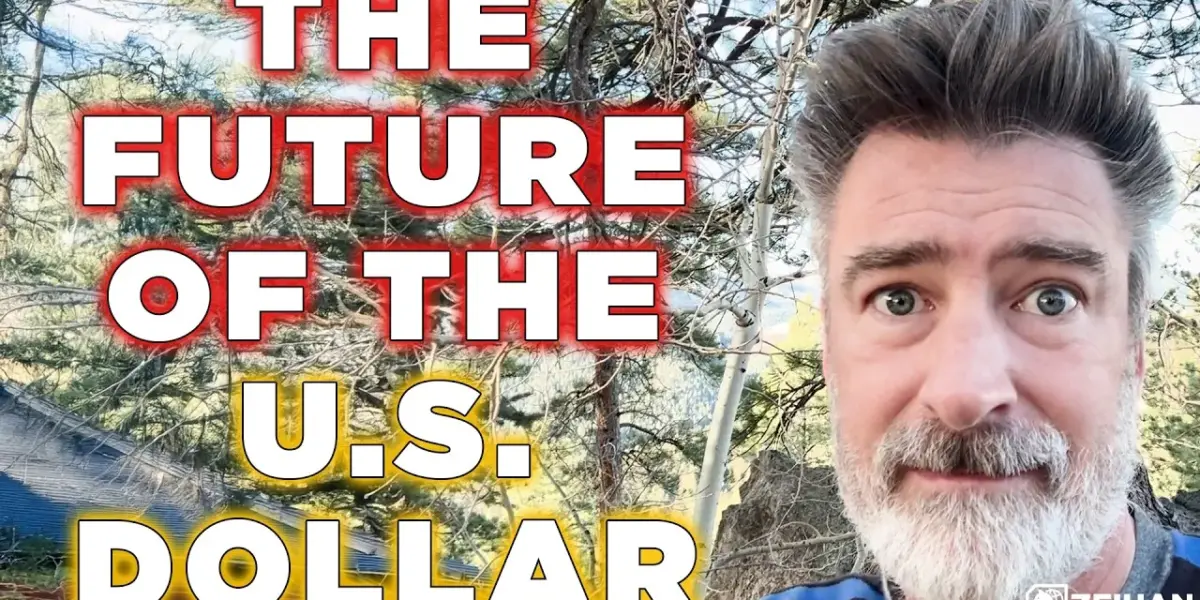
The U.S. dollar faces a divided future. Geopolitical expert Peter Zeihan explains that while the dollar is poised for long-term growth, current policies are causing it to weaken in the short term. This analysis separates the powerful forces that will boost the dollar over decades from the immediate policy choices that are hurting it right now.
Long-Term Strength: A Foundation Built on Power and People
Zeihan argues that a country’s currency usually reflects its economic power and stability. By this measure, the U.S. dollar has a bright long-term outlook for the next several decades. Several key factors support this view.
Military Dominance
First, the U.S. military controls the world’s seas. Even if all other navies combined, they would struggle to challenge American naval power. This naval strength means the U.S. can project power anywhere it chooses, while its shores remain largely protected. This ability makes the U.S. a crucial player in global trade and security.
Favorable Demographics
Second, the U.S. has a more favorable demographic outlook compared to many other developed nations. While the large Baby Boomer generation is retiring, their children, the Millennials, are now in their prime spending and production years. This provides a stable and growing consumer base and workforce for decades. In contrast, countries like Germany, China, Japan, and South Korea face aging populations with fewer young people to support their economies. The U.S. is one of the few large, developed nations with a demographic profile that supports sustained economic growth.
Resource Abundance
Third, the United States is a major producer and exporter of essential resources like food and energy. Along with Australia, Norway, and Canada, the U.S. is not just self-sufficient but also supplies other nations. This constant flow of income into the U.S. economy ensures it has the basic building blocks for its modern economy.
Manufacturing Potential
Finally, the U.S. has a unique opportunity to rebuild its manufacturing sector. While globalization led to some manufacturing moving overseas, the U.S. still leads in value-added manufacturing. As China faces its own demographic and geopolitical challenges, the U.S. has the chance to significantly expand its manufacturing base. This expansion, while potentially inflationary in the short term, represents a massive growth opportunity for the future.
These four factors—military strength, demographics, resources, and manufacturing potential—point to a strong U.S. dollar for decades to come.
Short-Term Weakness: Policy Decisions Undermine Stability
However, current U.S. government policies are actively working against the dollar’s long-term prospects. Zeihan identifies several key issues causing short-term weakness.
Immigration Restrictions
The Trump administration’s strict immigration policies have drastically slowed population growth in the U.S. From being one of the fastest-growing developed nations, the U.S. is now seeing its population shrink for the first time in history. This labor shortage puts pressure on sectors like construction and healthcare, increasing costs and hindering economic growth, which in turn weakens the dollar.
Tariff Policies and Manufacturing
Tariff policies, despite their stated goals, are making U.S. manufacturing more difficult. For complex goods like cars or computers, which involve thousands of production steps, tariffs on intermediate goods increase costs significantly. This encourages companies to move production outside the U.S. to avoid these tariffs. As a result, industrial construction spending in the U.S. has fallen. Instead of expanding its manufacturing base as needed, the U.S. is currently importing more, which puts downward pressure on the dollar.
Business Environment Challenges
The ease of doing business in the U.S. has also been negatively impacted. Unlike previous administrations that actively pursued deregulation, the current approach seems to involve simply not enforcing existing regulations or encouraging businesses to ignore them. This creates uncertainty. Furthermore, the constant changes in tariff policies—over 5,000 since April 2023—make it difficult for businesses to plan. This instability has led to a decline in business confidence and activity, which is bad for the dollar.
Rule of Law Concerns
Zeihan also points to a concerning erosion of the rule of law. The Republican party has seen internal shifts, and federal law enforcement agencies like Immigration and Customs Enforcement (ICE) are operating in ways that create uncertainty for businesses. The perception of a stable legal and governmental structure is crucial for economic confidence, and its absence is hurting the dollar.
These policy-driven issues—restricted immigration, damaging tariffs, a challenging business environment, and concerns about the rule of law—are all pushing the dollar down in the short term. Record deficit spending further exacerbates these problems.
The Geopolitical Shock: Iran War’s Impact
An update notes that the start of the Iran war has added another layer of complexity. Typically, global crises would drive investment into the U.S. dollar as a safe haven. However, due to the current U.S. policies that are weakening the dollar, its gains have been surprisingly modest. While the dollar has risen against most currencies, the increase is moderate, suggesting that global markets are hesitant to invest heavily in the U.S. despite the crisis. This grudging market reaction underscores the distrust caused by current U.S. policies.
Conclusion: A Tale of Two Timelines
In conclusion, the U.S. dollar faces a stark contrast between its long-term potential and its short-term reality. Decades of strong fundamentals like military power, favorable demographics, abundant resources, and manufacturing opportunities suggest the dollar will eventually rise. However, immediate policy decisions regarding immigration, trade, business regulation, and the rule of law are actively weakening the dollar now. This creates a challenging environment for dollar bulls and consumers alike, leading to higher import costs and reduced domestic production in the short run.
The goal of weakening the dollar, as stated by the Trump administration, is to boost exports. However, for a country that imports many manufactured goods, this policy will likely lead to higher inflation for consumers in the near future. The path from the current situation to the dollar’s long-term strength is fraught with challenges driven by these policy choices.
Source: The U.S. Dollar: Short vs. Long Term || Peter Zeihan (YouTube)

Related Articles

G7 Allies Clash Over Iran War Strategy, Urge Focus on Russia
G7 foreign ministers met in Paris, revealing deep divisions over the U.S. war with Iran. European allies urged the U.S. to pressure Russia, linking its actions to the conflict and fearing support for Ukraine will wane.


Iran Blocks China Ships, Exposing Beijing’s Weak Grip
Iran's recent decision to block Chinese ships at the Strait of Hormuz is exposing the limits of Beijing's influence in the Middle East. This action is causing delays and cancellations for Chinese manufacturers, turning a perceived geopolitical win into an economic strain.
Trump’s “Walk Away” Tactic Signals Tougher Stance on China
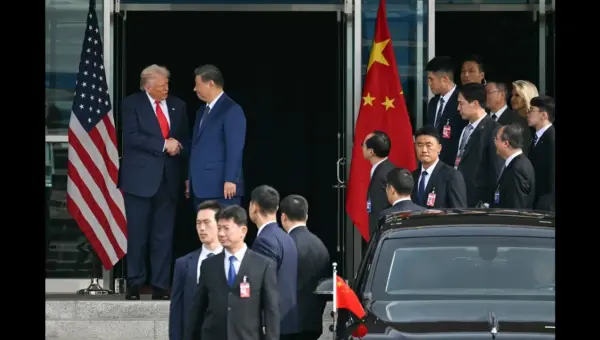
Retired Air Force Brigadier General David Stillwell believes President Trump's strategy of being willing to walk away from negotiations puts pressure on China. This tactic, combined with US global actions and strengthened alliances, signals a more assertive American foreign policy.