DNA Tech Hunts Killer, Offers Hope in Cold Cases
Investigative genetic genealogy is revolutionizing cold case investigations, offering new hope for families like Nancy Guthrie's. CC Moore, a pioneer in the field, explains how DNA technology helped solve the decades-old murder of Michella Welch, identifying a killer who had evaded justice for years. This powerful tool is now being applied to current missing person cases, potentially bringing closure.

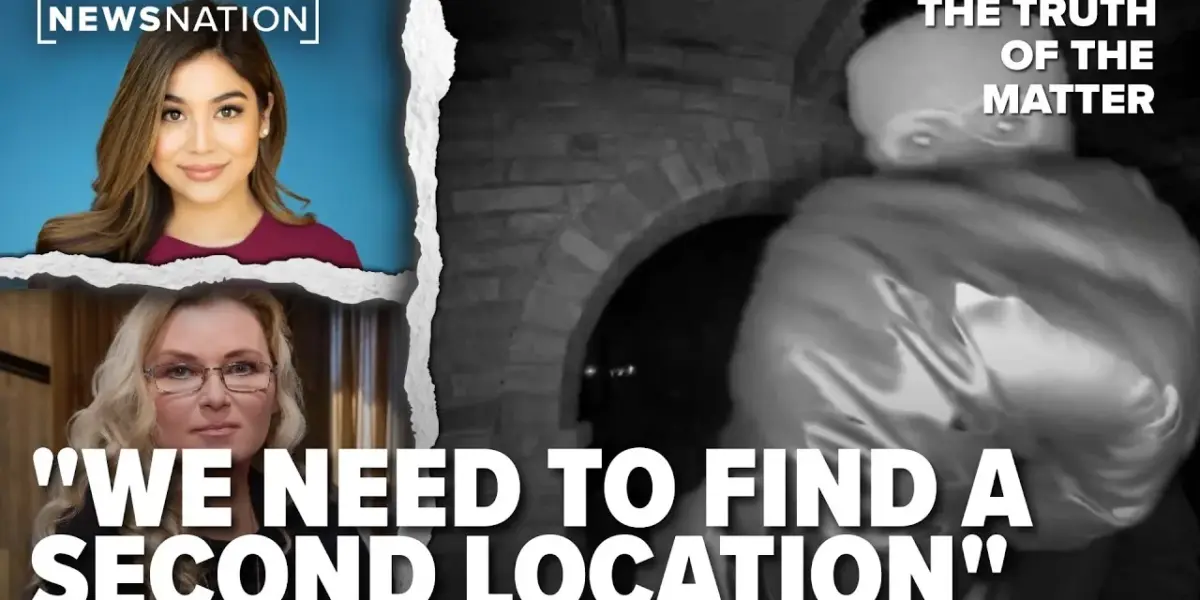
DNA Tech Hunts Killer, Offers Hope in Cold Cases
Investigators are using new DNA technology to solve old crimes, offering hope to families like Nancy Guthrie’s. The FBI recently focused on specific dates in the Guthrie disappearance: January 11th, January 24th, and the early morning of February 1st. This suggests someone may have been near her home before she vanished, possibly leaving behind digital or biological clues. Defense attorney Mark Garagos believes tracking data may show a suspect was in the area weeks before and again the night before Guthrie went missing.
The Guthrie family is suffering through agonizing uncertainty. They continue to ask the public for help, believing their mother is still alive and hoping for her safe return. “Everyone is looking for you, Mommy. Everywhere. We believe our mom is still out there,” her family stated, pleading for information and urging anyone with knowledge to “do the right thing.”
Investigative Genetic Genealogy: A New Tool for Justice
A key tool in these investigations is investigative genetic genealogy. This is the same technology used to identify the suspect in the Brian Coberger case and the Golden State Killer. CC Moore, a leader in this field, believes it’s only a matter of time before this method solves the Nancy Guthrie case.
Moore shared lessons learned from a previous case: the 1986 murder of 12-year-old Michella Welch in Tacoma, Washington. Michella was kidnapped from a park while briefly leaving her younger sisters to get sandwiches. Her body was found later that night; she had been sexually assaulted and murdered. The case went cold for over 30 years.
Police hired CC Moore, who used DNA from the crime scene to build a family tree. Within hours, she identified the killer: Gary Hartman, a psychiatric nurse who lived in the same area. Detectives confirmed his identity by obtaining his DNA from a restaurant napkin.
Snapshot Phenotype: Predicting Appearance from DNA
Moore explained the process, including “snapshot phenotype prediction.” This technology can predict physical traits like hair color, eye color, skin color, and even face shape with high confidence. While not a perfect photograph, it helps investigators narrow down suspects. If genetic genealogy points to a suspect pool, these predictions can help rule out individuals who don’t match the predicted traits.
For example, if DNA suggests a suspect has brown eyes, but a person of interest has blue eyes, it helps law enforcement focus their resources elsewhere. This method can prevent innocent people from being wrongly suspected. “It can help us really zero in and narrow down and rule out people,” Moore said. She noted that while there’s a small chance of error, it significantly aids in identifying likely candidates.
Solving Decades-Old Crimes: The Michella Welch Case
Solving the Michella Welch case took Moore only a few hours. The perpetrator had deep roots in the United States, with predominantly Northwest European ancestry. Location is crucial in these cases; typically, the perpetrator lives very close to the crime scene.
Moore narrowed the search to two brothers living near the park. A challenge arose due to a misattributed paternity in their family tree, meaning cousins shared less DNA than expected. However, Moore’s experience allowed her to recognize this discrepancy. A key match came from an unknown grandfather’s side, connected to her own relative through marriage.
This relative appeared in the 1930 census in Washington, near where the grandmother in the family tree lived. Moore hypothesized that this family member had visited Washington, connecting the puzzle pieces. The DNA evidence was sufficient because Michella had been raped, leaving biological material preserved by crime scene investigators decades ago.
The Importance of Preserved Evidence
Moore stressed the critical role of early crime scene investigators. Their meticulous work, even before DNA technology was common, allowed for reanalysis with modern methods. “We owe a huge debt of gratitude to these early crime scene investigators who couldn’t have imagined how important that would be,” she stated.
She recounted solving cases from before she was born, including the murder of Susan Galvin, a bio clerk for the Seattle Police Department killed near the Space Needle. This case was particularly emotional for Moore, as her family often visited that area. Being able to identify her killer decades later brought answers to her family.
Understanding the Perpetrator: Gary Hartman
Gary Hartman, the convicted killer in the Michella Welch case, was a nurse. Moore noted that nurses, often perceived as caring, appear surprisingly often in these cases. She speculated this might be due to their access to vulnerable individuals, though she emphasized this is not typical for the profession.
Hartman had a child around Michella’s age, leading Moore to wonder if he was a trusted figure in the community. He remained undetected because he didn’t fit the expected profile of a criminal. Investigative genetic genealogy often identifies individuals who “flew under the radar” of traditional law enforcement methods. This technique is particularly effective in identifying white men with deep roots in the U.S., who might have been overlooked when investigators focused on other demographics.
Moore believes Hartman is likely a serial killer, though DNA evidence hasn’t yet linked him to other unsolved cases. She suggested that crime scenes might not always yield usable DNA, or evidence could have been lost over time. However, statements made by Hartman upon his arrest suggest he may have had other victims. Moore urged authorities in the Seattle area to re-examine their cold cases.
Justice and Compassion in Investigations
Hartman fought the charges but was sentenced to life imprisonment. Moore noted that perpetrators identified through genetic genealogy often have resources to hire good attorneys. She hopes that individuals convicted of such crimes, especially those victimizing children, will never be released from prison.
Moore’s work points investigators in the right direction, but they must confirm her findings with direct DNA comparison. She can narrow down suspects to a family but cannot definitively identify an individual without direct DNA evidence, unless they are identical twins. In the Michella Welch case, she narrowed it down to two known brothers, acknowledging the possibility of an unknown third sibling.
Neither of the identified brothers had been suspects in the case before Moore’s investigation. This is common; often, genetic genealogy identifies individuals who were not on law enforcement’s radar. Moore feels compassion for the families of the accused as well, recognizing they are also victims of the perpetrator’s actions. Learning about these families, often through social media and news articles, can be devastating.
The Human Element of Forensic Genealogy
Moore finds her work particularly meaningful when she can connect with victims’ families. Meeting them and understanding the impact of their loss adds purpose to her investigations. She described telling Michella’s mother and sister, “I was thinking of you this whole time.”
Her work extends beyond criminal cases, including helping people find biological families and reuniting unidentified deceased individuals with their names and families. Ultimately, she stated, her work is “all about families.” She acknowledged the emotional toll, especially when identifying perpetrators who have caused immense suffering, but finds satisfaction in bringing answers and justice.
Moore highlighted the dedication of law enforcement officers and forensic scientists. Despite often receiving negative attention, many are deeply committed to their work and have a profound connection to the victims they seek justice for. She expressed gratitude for their foresight in preserving evidence that allows modern technology to solve long-standing mysteries.
Source: Nancy Guthrie search: ‘We need to find a second location,’ expert says | Truth of the Matter (YouTube)

Related Articles

Mother’s 24-Year Absence Ends in Courtroom Reunion
A mother who vanished 24 years ago has been reunited with her daughter in an emotional encounter outside a North Carolina courthouse. Michelle disappeared in 2001, leaving her family searching for over two decades. She was found last month and recently appeared in court, leading to a tearful reunion with her daughter, Amanda.


Cold Case Fears Mount in Nancy Guthrie Abduction
Investigators are working to prevent the abduction of 84-year-old Nancy Guthrie from becoming a cold case. Despite 55 days passing, a former detective believes ongoing leads, digital evidence, and potential DNA testing keep the investigation active. The public release of ransom notes and the use of genetic genealogy are being considered as crucial steps to finding her.


Missing Mom Found After 24 Years, Reunites With Daughter
A mother missing for 24 years has been found and reunited with her daughter in an emotional court appearance. Michelle disappeared in 2001, leaving her family searching for answers for two decades. The reunion brings closure but also raises questions about her years away.