DNA Error Led Police on 16-Year Hunt for Nonexistent Killer
For 16 years, police hunted the "Woman Without a Face" based on DNA evidence, only to discover the culprit was a manufacturing error. A separate case reveals a son's miraculous survival after being presumed murdered.

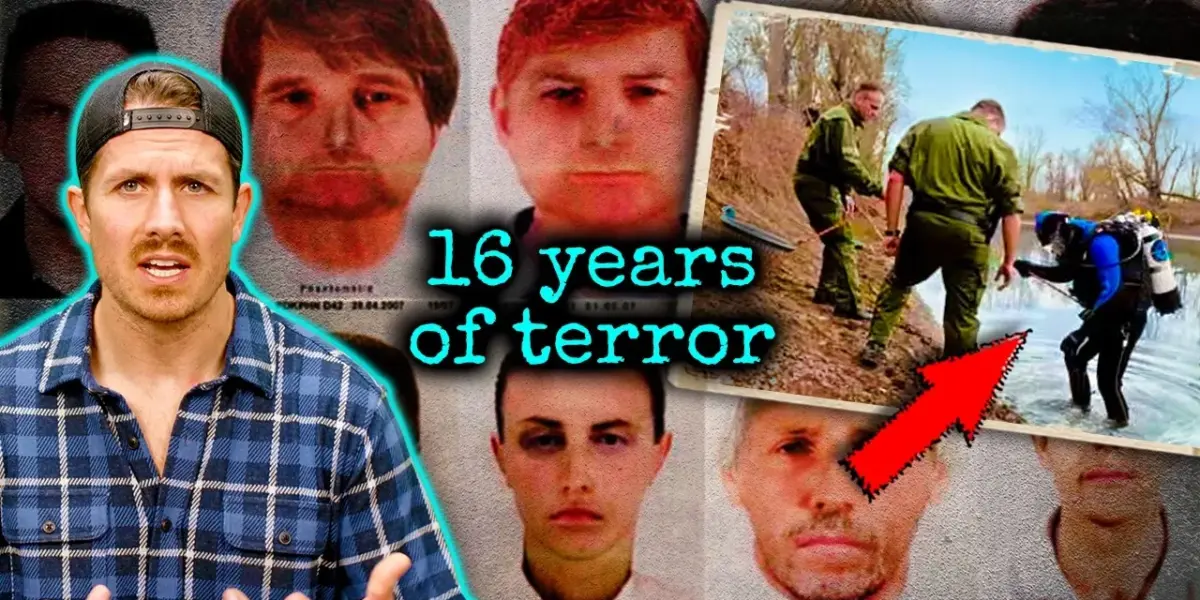
The Phantom Suspect
For 16 years, German authorities hunted a ghost. They chased the DNA of a phantom, a criminal mastermind known only as the “Woman Without a Face.” Her alleged crimes spanned Germany and beyond, leaving a trail of break-ins, robberies, and at least four murders. Police poured millions of euros and countless hours into catching her, but she remained elusive, a master of disguise and careful planning.
A Violent Ambush
On the afternoon of April 25, 2007, in the quiet German city of Hybrun, two police officers, Martin Arnold and Michelle, were on a lunch break in their patrol car. Suddenly, the back doors of their vehicle burst open. Two individuals approached, guns drawn, and opened fire. Officer Michelle was killed instantly. Officer Arnold, though shot in the head, survived but fell into a coma.
A Crucial Clue
The crime scene offered little. No witnesses, no fingerprints, no other obvious evidence were found. In a last-ditch effort, investigators swabbed the inside of the police cruiser for DNA. Weeks later, the lab results came back, sending shockwaves through the police department and igniting a media frenzy. DNA found inside the car did not belong to the officers. It belonged to the elusive “Woman Without a Face.” This discovery elevated the case to a national level, with prosecutor Gunter Horn taking the lead.
Chasing Shadows
Horn and his task force meticulously reviewed all crimes linked to the “Woman Without a Face.” They pieced together a profile: likely a heroin user, possessing criminal contacts who feared her, and remarkably, leaving only her DNA at crime scenes. What puzzled investigators further were witness accounts describing a man at many of her crime scenes, despite DNA confirming the suspect was biologically female. This contradiction deepened the mystery.
Officer Martin Arnold, upon waking from his coma a month after the attack, could offer no useful details. He remembered little beyond seeing two figures before being shot. This left investigators with no eyewitness to identify the perpetrators. For the next two years, the hunt intensified. The “Woman Without a Face” continued her alleged crime spree, with her DNA appearing at scenes in France and Austria. The elusive suspect seemed to be an international criminal genius.
A Twist from France
In March 2009, a baffling case from France offered a potential breakthrough. French police had found a badly burned body, initially identified only as male. Their investigation focused on a missing asylum seeker whose fingerprints were on file. When DNA from these prints was analyzed, the results were nonsensical. The asylum seeker’s DNA profile matched that of the “Woman Without a Face.” This bizarre connection prompted French authorities to contact Prosecutor Horn.
The Truth Revealed
Horn and his team followed this new lead and, within days, unraveled the entire case. The “Woman Without a Face” was not an international criminal mastermind. The DNA found at crime scenes, including the police cruiser, was not left by a perpetrator but by an innocent worker. The woman in question worked on an assembly line manufacturing cotton swabs used in DNA testing. Each day, she handled hundreds of these swabs, accidentally contaminating them with her DNA.
The shocking truth was that police had been chasing a ghost for nearly two decades, misled by contaminated evidence. There was no “Woman Without a Face” committing these crimes. The DNA was a red herring, a result of accidental contamination at the manufacturing plant.
Justice, Redefined
The violent attack on Officers Arnold and Michelle was later attributed to members of a neo-Nazi group. However, many other crimes previously linked to the “Woman Without a Face” remain unsolved, a consequence of police resources being misdirected for years. The “Woman Without a Face” case became one of the greatest embarrassments in German police history, a stark reminder of how easily evidence can be misinterpreted and how a single, innocent person’s DNA can lead investigators on a wild, costly chase.
A Mother’s Anguish and a Son’s Survival (Second Story)
In a separate case from 1930, Gim Su Jin of Bong Myan, Korea, lived in poverty with her 16-year-old son, Bach Chong Su. He worked odd jobs to help them survive. After six days without contact, Su Jin was approached by police, who sadly informed her they believed her son was murdered. A decomposed body of a teenage boy, matching Chong Su’s general description and found on a nearby mountain, had been discovered.
At the morgue, Su Jin identified the body as her son, though she noted the clothes were not his. The police attributed his death to two coworkers from an inn, who confessed to luring him to the mountains, beating, and strangling him over a dispute about an affair. Su Jin was devastated, though troubled by the detail of the unfamiliar clothes.
Months later, Su Jin awoke from a nightmare to see what she believed was her son’s ghost. In a tearful conversation, she urged him to rest in peace. The figure responded, “I’m not dead.” It was Chong Su. He had survived the brutal attack, fleeing in fear of his assailants. The body found on the mountain was another unidentified teenager. The two confessing coworkers, realizing their intended victim had lived, had their murder charges dropped. They served a year for assault. The true victim of the mountain murder was never identified, his grave lost to time, leaving his identity a permanent mystery.
Source: The "Woman Without A Face" terrified Germany for years (YouTube)

Related Articles


Cold Case Fears Mount in Nancy Guthrie Abduction
Investigators are working to prevent the abduction of 84-year-old Nancy Guthrie from becoming a cold case. Despite 55 days passing, a former detective believes ongoing leads, digital evidence, and potential DNA testing keep the investigation active. The public release of ransom notes and the use of genetic genealogy are being considered as crucial steps to finding her.


Justice Denied: 10 Cases Where Cops Got It Wrong
From flawed eyewitness accounts to biased technology, these 10 cases reveal devastating failures in law enforcement that led to wrongful convictions and immense suffering. Discover the shocking details of justice gone wrong.


Gilgo Beach Killer Nears Confession, Ending Long Wait
Rex Heuermann, accused in the Gilgo Beach serial killings, is reportedly expected to plead guilty to seven murders. This potential confession could bring long-awaited closure to the victims' families after years of investigation and uncertainty.