DHS Shutdown Grinds On: Congress Flees Town Amid Funding Stalemate
The Department of Homeland Security remains partially shut down for a record 45 days as Congress departs Washington for a two-week recess, deepening a political stalemate. House Republicans rejected a Senate funding bill, leading to a legislative deadlock with no clear resolution in sight.

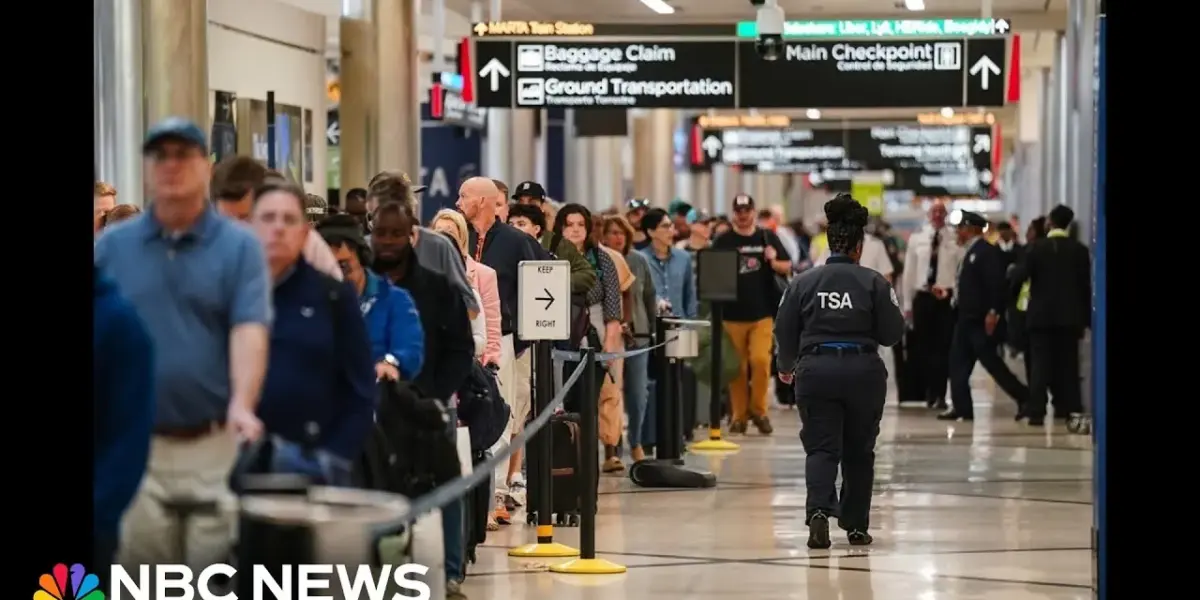
Homeland Security Agency Faces Longest Shutdown in History
The Department of Homeland Security (DHS) has been partially shut down for 45 days, marking the longest such shutdown in U.S. history. Lawmakers on both sides of the Capitol have left Washington D.C. for a two-week recess, with no clear end in sight to the funding crisis. This prolonged shutdown is creating significant tensions within the Republican party.
House and Senate Clash Over Funding Bill
The impasse began when House Republicans rejected a Senate bill that would have funded most of DHS, excluding funding for Immigration and Customs Enforcement (ICE) and Border Patrol. Instead, the House passed its own short-term bill to fund the entire department. However, this House bill has no realistic chance of passing in the Senate, leading to a legislative deadlock.
Speaker Johnson Defends House Action
House Speaker Mike Johnson stated he had informed his Senate counterpart, Majority Leader John Thune, about the House’s decision. “I told him it shouldn’t be a surprise to anybody that we would not be able to do that,” Johnson said. He explained the House’s reasoning: “We’re not going to split apart two of the most important agencies in the government and leave them hanging like that. We just couldn’t do it.”
Former President Trump Weighs In
Former President Donald Trump initially expressed support for the Senate’s bipartisan plan. However, his stance appeared to shift recently. When asked if he was surprised by the Senate vote, Trump suggested a more drastic approach: “It’s a shame they should really just go to a filibuster. They should terminate the filibuster and they should vote. That’s what I think.” He characterized the Democrats as “very sick individuals” and compared them to terrorists, emphasizing the need to protect the country.
Blame Game Intensifies as Lawmakers Depart
Over the weekend, members of both the House and Senate, across party lines, pointed fingers for the ongoing funding lapse. A Senate source criticized the House Republican action: “You had the Senate, as you pointed out with Mr. Homan, pass a bipartisan bill unanimously in the United States Senate to say, look, let’s fund everybody else and let’s deal with this thorny issue about ICE. And then you had the Republican House say, hell, no, we’re not doing that.”
Conversely, a House Republican argued for their chamber’s approach: “The House stayed later than we were scheduled to stay, to take up a bill to fully fund the department and sent it back over to the Senate. So the bill is over in the Senate. The Senate’s got options. They’ve got to come back and deal with it.” Another perspective blamed Speaker Johnson directly, stating, “For the Americans that are standing in line right now at the airports, know that that’s because Speaker Johnson cared about his job more than what you are going through in your lives.”
A different House Republican countered this, saying, “Let’s be clear. Whatever procedural differences we have between the House and the Senate, the reason we’re at this impasse is that Democrats are using long TSA lines to throw a temper tantrum about deportations of violent, criminal, illegal aliens and funding of ICE and Border Patrol.”
No Quick Resolution Expected
NBC News Capitol Hill Correspondent Julie Tsirkin, who spoke with President Trump on Air Force One, reported a pessimistic outlook. “Not from where I’m sitting. I certainly don’t see a path forward,” Tsirkin said. She suggested that lawmakers might face constituents’ anger during their recess, which could potentially shift the needle. However, Senate Majority Leader Thune is reportedly not planning to call senators back to Washington, as Senate Democrats have stated they will not vote for the current House bill.
Tsirkin noted that even President Trump does not favor the current Senate bill. “So I think they’re really in a jam here,” she stated. Typically, long lines at airports during shutdowns create pressure for Congress to act. However, with the President ensuring TSA workers are paid, this pressure might be lessened.
Lawmakers’ Recess Sparks Outrage
Social media has been abuzz with photos of members of Congress on vacation, including reports of Senator Lindsey Graham at Disney World. This has fueled public anger, with many questioning the decision for lawmakers to leave Washington while the government remains partially shut down. The Speaker’s stance has been that it makes no sense for members to be in D.C. unless there is a bill that can garner 60 votes in the Senate.
However, Tsirkin called this position “completely untenable,” especially as Americans are also traveling for spring break and facing disruptions. The contrast between lawmakers enjoying personal time and the public’s travel woes is stark. The idea of calling senators back only to potentially worsen the situation was questioned, as pressure typically builds when there is a concrete issue to address upon return.
Trump’s Leadership Style and Senate Dynamics
President Trump continues to advocate for using the filibuster to push legislation through, a move Senate leaders like Thune have dismissed as unfeasible due to a lack of sufficient votes. Tsirkin believes Trump still thinks his influence can sway senators. “I think it’s the latter,” she said when asked if Trump understands the Senate’s limitations. “He has to find the votes. And speaking of getting rid of the filibuster, you know, one tool they’re talking about, Ryan, at least among Senate Republicans, is to fund all of DHS using reconciliation. So using that 51 vote threshold to get it done, that’s going to be a tall order for them, too.”
Trump’s leadership model appears to be one of direct command, expecting others to follow his directives. This contrasts sharply with Senator Thune’s approach, which must consider the diverse views of 53 elected senators. The Senate’s longer terms and different political calculus compared to the House are significant factors. The unanimous passage of the Senate bill without ICE funding, until the House rejected it, highlights the distinct dynamics at play.
Looking Ahead: A Lingering Stalemate
With both chambers adjourned and significant disagreements remaining, the DHS shutdown is likely to continue. Former President Trump has stated he will not sign any bill that does not include funding for ICE. The path forward remains unclear, with lawmakers returning home to face constituents and the ongoing disruption caused by the federal funding lapse. The pressure of the recess and potential public outcry may be the only catalysts for a breakthrough in this protracted stalemate.
Source: Congress ‘really in a jam’ as lawmakers return home amid DHS shutdown (YouTube)

Related Articles


DHS Shutdown Hits Day 46: Congress Flees Recess
The Department of Homeland Security (DHS) faces its longest-ever shutdown on day 46 as lawmakers depart for an Easter recess. House Republicans rejected a Senate funding bill, demanding more robust funding for ICE and CBP, leading to a stalemate that has left critical agencies without full appropriations.


Millions Protest Trump Amidst War and Corruption Probe
Millions protested nationwide against President Trump over the weekend, with significant turnout in red states. Concerns are rising over potential corruption in detention facility contracts and the administration's challenge to birthright citizenship at the Supreme Court.


GOP Slams ‘Absurd’ Dem DHS Shutdown Strategy
Republican Congressman Rich McCormick criticizes Democrats for a "wrong battle" DHS shutdown strategy, causing airport chaos and worker pay issues. The House passed a stopgap bill, but Senate Democrats may block it, leading to legislative gridlock. The ongoing funding fight creates economic uncertainty.