DHS Shutdown Deepens as Speaker Johnson Rejects Senate Deal
The partial government shutdown continues as House Speaker Mike Johnson rejected a bipartisan Senate deal to fund the Department of Homeland Security. Instead, the House will vote on a separate measure, a move Democrats call "dead on arrival." President Trump has used an executive order to unilaterally fund TSA workers, offering some relief amid widespread airport disruptions and financial hardship for federal employees.

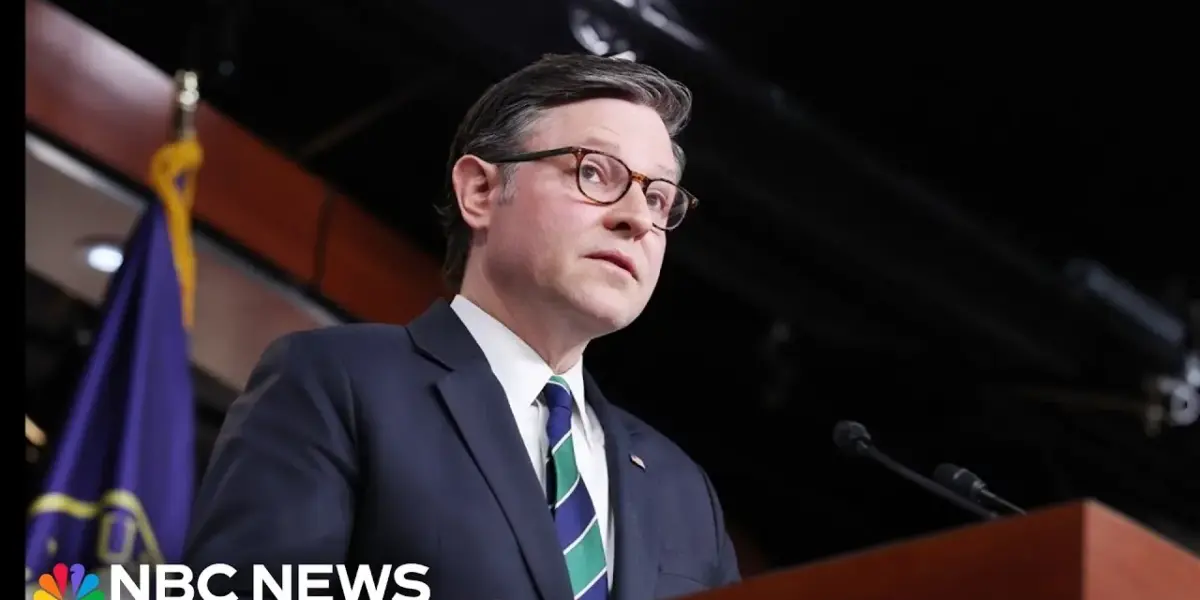
House Rejects Bipartisan Senate Funding Bill
The partial government shutdown has entered a critical phase as House Speaker Mike Johnson rejected a deal passed by Senate Republicans with Democratic support. This deal would have funded the Transportation Security Administration (TSA) and most of the Department of Homeland Security (DHS), but excluded funding for Immigration and Customs Enforcement (ICE) and Border Patrol.
Instead, Speaker Johnson announced the House would vote on a separate measure to fund all of DHS, including ICE and Border Patrol, for a 60-day period. He stated this plan has the President’s support, despite the move likely ensuring further gridlock. “This gambit that was done last night is a joke,” Speaker Johnson told reporters. “We’re going to put a clean, simple, continuing resolution that will go until May 22nd.” He added that all ten agencies under DHS would continue at current funding levels.
Conservatives Outraged, Democrats Vow Opposition
The Speaker’s decision came after strong objections from House conservatives who were angered by the Senate’s proposal. “It is absolutely offensive to the people that we represent, that the Senate would send over a bill that doesn’t fund Border Patrol and the four core components of ICE,” one representative stated. “So we’re going to stand up and say no to that. The bottom line is this is not, this deal is bad for America.”
Democratic leadership, however, has declared the House’s new plan “dead on arrival” in the Senate. They argue that the Republican proposal does not address their concerns and that the Senate’s bipartisan approach was the only viable path forward.
President Uses Executive Order to Fund TSA
In a significant move to bypass congressional inaction, President Trump issued a Presidential Memorandum to unilaterally fund TSA workers. This action aims to ensure TSA officers receive paychecks, potentially as early as Monday, using unspent funds from a previous bill. This mechanism is similar to how the administration funded active-duty military during a past shutdown.
While this executive action addresses the immediate pay concerns for TSA employees, it does not resolve the larger funding crisis for the Department of Homeland Security. White House officials noted that while the President can take these measures, the ultimate solution lies with Congress. Questions remain about why this step wasn’t taken sooner, given the severe hardship faced by TSA workers.
Airport Chaos and Worker Hardship Persist
The shutdown has led to significant travel disruptions and growing frustration at airports nationwide. The rate of TSA officer callouts reached its highest point during the shutdown, exceeding 30% at five major airports. Stories of travelers facing hours-long waits are becoming common, with some opting for alternative travel methods like trains or driving to avoid airport delays.
Beyond the TSA, other critical DHS agencies face funding uncertainty. FEMA workers responding to natural disasters, cybersecurity teams, and the Coast Guard could all be impacted if a full funding solution isn’t reached. TSA officers themselves are facing difficult choices, with some reportedly selling plasma to make ends meet. The ongoing uncertainty is also pushing workers out of the TSA, with over 500 officers having resigned, raising concerns about long-term staffing shortages.
Legislative Stalemate Continues
Capitol Hill correspondents describe the situation as entering “new legislative territory,” with no clear path out of the stalemate. The House and Senate appear locked in a disagreement, with each side blaming the other for the lack of progress. “At some point, someone’s going to have to stand up and present some leadership to try and find a way out of this,” commented one correspondent.
Democrats argue that while they didn’t get all their demands for ICE reforms, they did achieve some concessions, such as the end of certain roving patrols and a commitment to body cameras for ICE officers. However, they acknowledge that Republicans are unlikely to compromise on core issues. The continued finger-pointing between parties leaves the American people frustrated and seeking a resolution to the ongoing crisis.
Looking Ahead
As the shutdown continues, the focus remains on whether Speaker Johnson’s plan will gain any traction or if a new bipartisan effort can emerge to break the deadlock. The President’s executive action provides temporary relief for TSA workers, but the broader funding needs of DHS and the implications for other agencies remain unresolved. The public’s frustration is palpable, and the pressure on lawmakers to find a lasting solution will only intensify.
Source: DHS shutdown enters 'new legislative territory' after Speaker Johnson rejects Senate deal (YouTube)

Related Articles

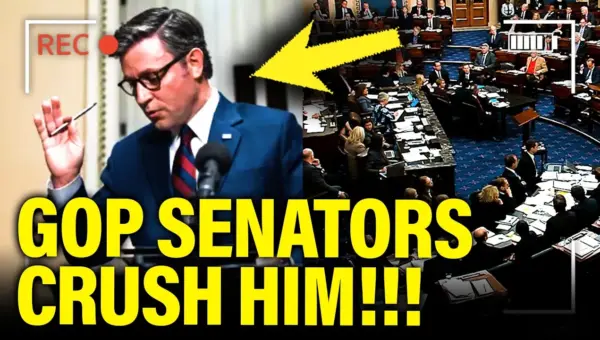
GOP Senate Stuns House, Exposing Deep Party Rift
Republican infighting erupted as the Senate passed a bill funding only the TSA, sparking panic in the House. "MAGA Republicans" demand more for ICE and Border Patrol, highlighting deep party divisions and a standoff with the Senate, which has already adjourned.
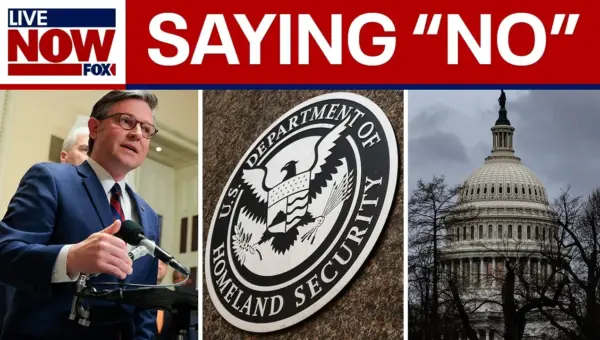
House Speaker Rejects Senate Bill, Proposes Clean Funding for DHS
House Speaker Mike Johnson rejected the Senate's proposed DHS funding bill, calling it a "radical agenda" that would reopen borders. He announced a Republican plan for a "clean" funding extension until May 22nd to ensure DHS employees are paid. President Trump reportedly supports this House-led initiative.


Senator Slams GOP for Using Federal Workers as Political Pawns
A Democratic Senator has sharply criticized House Republicans for using federal workers as "political pawns" by rejecting a DHS funding bill. The Senate passed its own bill to fund essential agencies like the TSA, separating it from broader immigration reform debates. The Senator urged the House to pass the Senate's bill to ensure workers are paid while continuing separate talks on border security.