DHS Funding Fight Costs Economy Billions
A political standoff over funding for the Department of Homeland Security (DHS) is costing the U.S. economy an estimated $2.5 billion. Senator Joni Ernst criticized Democrats for blocking funding, accusing them of prioritizing politics over national security. The debate also touched on President Trump's foreign policy and a new bill promoting government spending transparency.

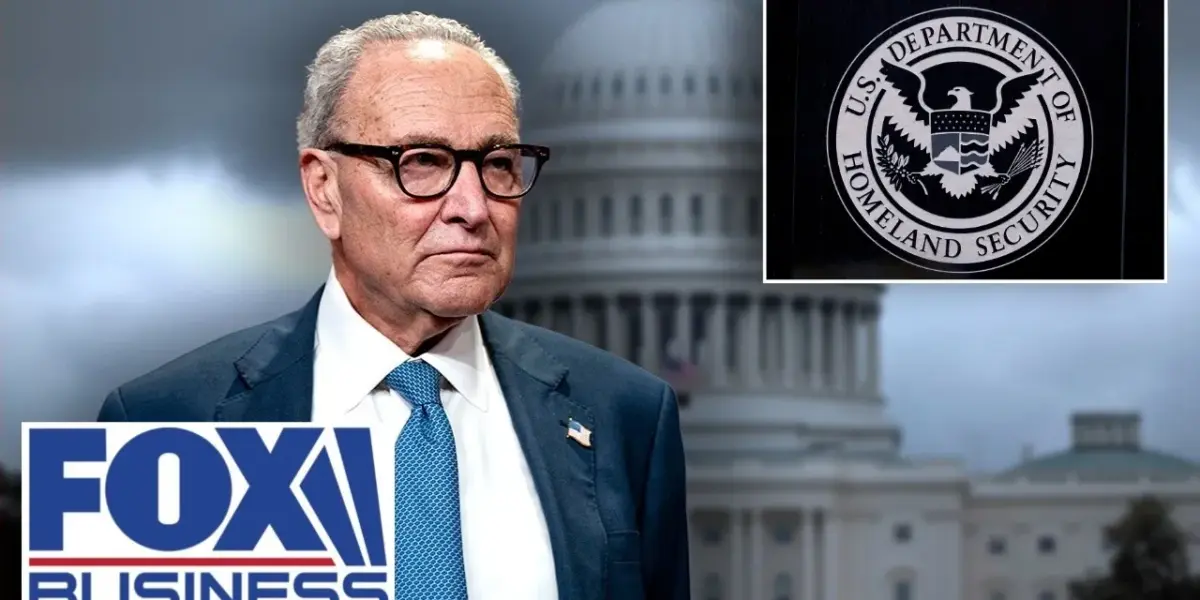
DHS Funding Standoff Sparks Economic Woes, Billions Lost
A fierce political battle over funding for the Department of Homeland Security (DHS) is creating significant economic damage, with an estimated $2.5 billion in losses due to slowdowns and disruptions. Senator Joni Ernst sharply criticized Senate Majority Leader Chuck Schumer and Democrats for refusing to fund the DHS. She stated that Democrats are prioritizing political gains over national security and the well-being of government employees.
Schumer Blames Republicans, Ernst Cites Obstruction
The dispute centers on funding for the DHS, which includes agencies like the Transportation Security Administration (TSA) and the Coast Guard. Senator Ernst accused Democrats of blocking funding proposals, including one from the White House submitted weeks prior. She highlighted that negotiations only began recently, despite the urgent need to fund the department. “This is abhorrent that the Democrats are doing this, and Chuck Schumer is pointing the finger at Republicans, which we tried over and over to fund the Department of Homeland Security and they refused to budge,” Ernst stated.
Schumer, when asked about the consequences of leaving the DHS unfunded, particularly after recent terror attacks, deflected responsibility. He reportedly told reporters to “Ask the Republicans” when questioned about the next steps and how long the DHS would remain without funding.
Economic Impact Felt Across the Nation
The funding stalemate is not just a political issue; it is having a tangible economic cost. Senator Ernst cited estimates that the slowdowns, particularly at TSA checkpoints, have already cost the economy $2.5 billion. This disruption affects the daily lives of federal workers, many of whom are not receiving paychecks, and impacts the broader economic activity tied to national security operations. The senator emphasized that this situation is “costing our economy billions of dollars.”
Trump’s Foreign Policy and Economic Concerns
The discussion also touched upon President Trump’s foreign policy approach, particularly regarding Iran and troop deployment. President Trump reiterated his stance against sending U.S. troops to Iran, stating, “No putting troops anywhere.” He also suggested that his past actions, like increasing oil production, had positively impacted the Dow Jones Industrial Average, which he claimed hit 50,000, and lowered gasoline prices.
Regarding the military buildup in the Middle East, including the deployment of warships and Marines, Senator Ernst explained it as a strategic move. “They provide a lot of leverage,” she said, defending the President’s communication style. “We shouldn’t be telling people what we are going to do and when we are going to do it.” She assured that President Trump prioritizes the safety of American service members and would not engage them unnecessarily. The senator also noted the importance of allied nations in stabilizing the region.
The COST Act: Promoting Fiscal Responsibility
Senator Ernst also briefly introduced her new COST Act. This legislation aims to increase transparency by ensuring that every government project has a clear price tag. The goal is to allow American taxpayers to easily understand how their money is being spent. “Taxpayers send us their hard-earned tax dollars. We need to make sure every project has a price tag and Americans can access how much those projects cost,” Ernst explained. She highlighted the current lack of easily accessible information on project costs.
What Investors Should Know
The ongoing political uncertainty surrounding DHS funding highlights potential risks to government operations and national security infrastructure. Investors should monitor how this funding debate resolves, as disruptions can impact sectors reliant on government services and contracts. The economic cost, estimated at $2.5 billion, underscores the real-world financial consequences of political gridlock. Additionally, President Trump’s foreign policy decisions and trade stances continue to be key factors influencing global markets and energy prices. Senator Ernst’s COST Act, if passed, could lead to greater accountability in government spending, potentially impacting various industries that receive federal funds.
Source: 'ABHORRENT': GOP lawmaker SCORCHES Schumer, Dems over DHS shutdown (YouTube)

Related Articles


AI Threatens White-Collar Jobs, Reshaping U.S. Workforce
Artificial intelligence is poised to significantly reshape the U.S. job market, raising concerns among recent graduates and experienced professionals about future employment. While some lawmakers call for regulation, experts emphasize adaptation and learning to work with AI.

House Funds DHS Short-Term, Senate Stalemate Looms
The House has passed a short-term bill to fund the Department of Homeland Security, but the Senate is expected to reject it. This temporary measure highlights ongoing political divisions and the challenges in reaching long-term budget agreements in the U.S. Congress.
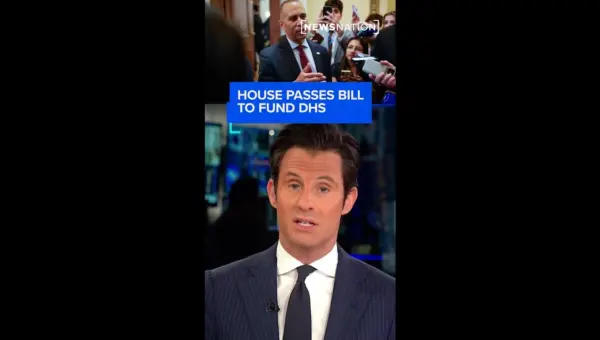
Congress Stalemate Threatens Border Security Funding
The U.S. House passed a temporary funding bill for the Department of Homeland Security, but Senate Democrats are expected to block it. This recurring stalemate highlights deep divisions over border policy and funding, potentially impacting national security and international perceptions of U.S. stability.