DHS Chief Faces Crisis as TSA Funds Ignite Political Firestorm
TSA workers are receiving back pay after a funding dispute led to staffing shortages and long airport delays. The new DHS Secretary faces immediate pressure as Congress remains in recess and a long-term funding deal is still uncertain.

DHS Chief Faces Crisis as TSA Funds Ignite Political Firestorm
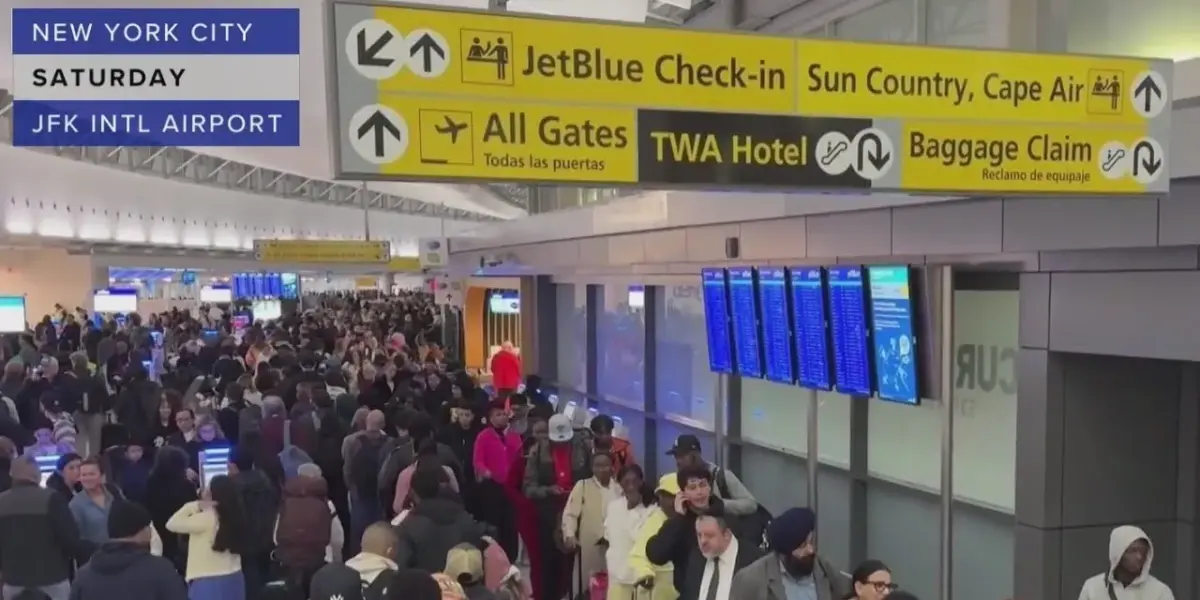
The nation’s air travel system faced serious disruptions over the past six weeks. This was due to political disagreements in Congress over funding. Many Transportation Security Administration (TSA) officers quit their jobs. Thousands more called in sick because they were not getting paid. This led to long security wait times, sometimes over three hours at major airports. Millions of Americans experienced travel nightmares.
TSA Workers Get Back Pay Amid Funding Uncertainty
TSA workers are now receiving back pay for two missed pay periods. President Trump used an executive order to make this happen. This order helps keep airports running for now. However, it raises questions about how long this solution can last without a long-term funding deal from Congress. Many parts of the Department of Homeland Security (DHS) still face a partial shutdown.
New DHS Secretary Faces Immediate Pressure
Secretary Markwayne Mullin is in his first full week leading the DHS. He faces immediate challenges on several fronts. Congress has just left for a two-week Easter recess. This means no new funding decisions will be made soon. At the same time, DHS is facing pressure to meet an aggressive deportation target of one million people per year. This adds strain to an agency already dealing with staffing shortages and uncertain funding.
Protests and Political Pressure Mount
These issues come as hundreds of protests have popped up across the country. This week is shaping up to be a major test for the new DHS Secretary. The political blame game continues between Democrats and Republicans. Democrats argue that Republican political games pushed the air travel system to its breaking point. Republicans argue that Democratic actions created the crisis.
Impact on Airports and Travelers
While back pay has brought some improvement, longer wait times remain an issue at some airports. At New York’s LaGuardia, wait times were still about an hour and a half. At Houston’s Bush Intercontinental, waits that had stretched over four hours last week were down to about nine minutes. This improvement came after a high call-out rate of over 40% among TSA workers. In Baltimore, more TSA workers reporting for duty have shortened lines that had led to four-hour waits.
Analysis: A System Under Strain
The TSA is a critical part of national security and the travel experience. Its funding is tied to larger budget battles in Congress. When paychecks are delayed, it directly affects the morale and availability of essential staff. This creates a ripple effect, impacting travelers and the economy. The DHS, responsible for many security and immigration functions, is feeling the strain from both funding gaps and increased operational demands.
Looking Ahead: The Need for Long-Term Solutions
The executive order providing back pay is a temporary fix. It highlights the urgent need for Congress to reach a long-term funding agreement for the DHS. Without it, the agency will continue to struggle with staffing, operations, and its ability to fulfill its mission. The aggressive deportation target also raises questions about resource allocation and the humanitarian impact of such policies. This situation demands a bipartisan approach to ensure national security and efficient government services.
Global Impact
While this specific crisis centers on U.S. domestic travel and homeland security, it reflects broader trends. Many countries face challenges balancing national security needs with budget constraints. The interconnectedness of global travel means that disruptions in one major hub can affect international routes and economies. The politicization of essential government functions, like airport security, can also erode public trust and create instability.
Why This Reshapes the World Order
This event underscores the fragility of systems dependent on consistent government funding and staffing. It shows how political infighting can directly harm citizens and critical infrastructure. In a world facing numerous global challenges, the ability of governments to function effectively and provide essential services is paramount. When a nation’s own security and transit systems are hobbled by internal disputes, it can impact its standing and reliability on the international stage. It also highlights how domestic policy choices can have far-reaching consequences, influencing everything from trade to tourism.
Historical Context
The TSA was created after the September 11, 2001, terrorist attacks. Its mission is to protect the nation’s transportation systems. Since its inception, the agency has faced scrutiny over staffing levels, efficiency, and funding. This current situation echoes past debates about the balance between security needs and the cost of maintaining them. The reliance on executive orders for emergency funding also points to a recurring pattern of Congress struggling to pass timely budgets.
Economic Leverage
The ability to fund essential services like airport security is a form of economic leverage. When funding is uncertain, it can lead to operational disruptions that hurt businesses, especially the travel and tourism industries. Conversely, consistent funding ensures smooth operations, which supports economic activity. Sanctions, trade disputes, and control over energy routes are other forms of economic leverage, but reliable infrastructure and security are foundational to a healthy economy.
Regional Alliances and Power Balances
While this issue is primarily domestic, the perception of a nation’s operational capacity can affect its alliances. A country struggling to manage its own borders and airports might be seen as less reliable by international partners. Conversely, efficient and secure infrastructure can enhance a nation’s attractiveness for trade and tourism, strengthening regional ties. The focus on deportation targets also relates to regional migration patterns and the cooperation needed between neighboring countries.
Future Scenarios
One likely scenario is that Congress will eventually pass a short-term funding bill to prevent further disruptions, kicking the can down the road. A more optimistic scenario involves a bipartisan agreement on a long-term DHS budget that addresses staffing and operational needs. A less likely, but possible, scenario is continued reliance on executive orders and partial shutdowns, leading to ongoing instability. The outcome will depend on the political will of both parties to prioritize national security and public service over partisan disputes.
Source: Long lines at TSA still reported as workers get backpay | NewsNation Live (YouTube)

Related Articles
Jet Fuel Shockwaves: Airlines Warn of Fare Hikes, Flight Cuts
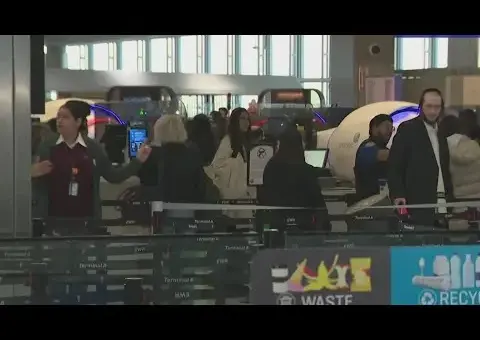
Rising jet fuel prices, driven by conflict in the Strait of Hormuz, are forcing airlines to warn travelers of higher fares and fewer flights. This comes as TSA lines ease, but worker pay remains uncertain, highlighting broader instability.

DHS Shutdown Hits Day 46: Congress Flees Recess
The Department of Homeland Security (DHS) faces its longest-ever shutdown on day 46 as lawmakers depart for an Easter recess. House Republicans rejected a Senate funding bill, demanding more robust funding for ICE and CBP, leading to a stalemate that has left critical agencies without full appropriations.


Trump Threatens Iran; TSA Workers Get Back Pay
Tensions escalate in the Middle East as President Trump threatens severe action against Iran if a deal isn't reached, while Iran denies ongoing U.S. negotiations. Meanwhile, TSA workers receive partial back pay amid a prolonged government shutdown, and lawmakers face scrutiny over potential insider trading in online prediction markets.