Dem Lawmaker Slams ‘Disgusting’ White House Iran War Messaging
A top Democratic lawmaker has condemned the White House's "disgusting" and "game-like" social media portrayal of the conflict with Iran. Congressman Adam Smith argued the messaging trivializes the war's human cost and undermines a clear strategy amidst escalating regional instability.

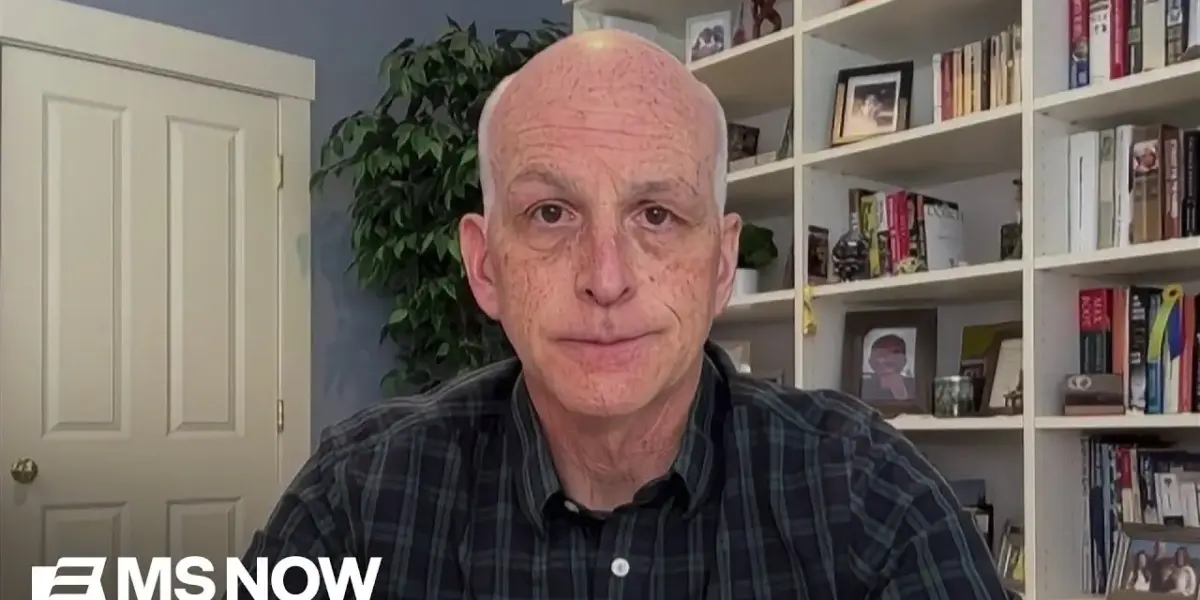
Lawmaker Condemns ‘Game-Like’ White House Portrayal of Iran Conflict
Washington D.C. – A prominent Democratic lawmaker has sharply criticized the White House’s social media strategy regarding the ongoing conflict with Iran, labeling the messaging as “disgusting” and “game-like” at a time of significant human cost and escalating regional instability. Congressman Adam Smith, the ranking member of the House Armed Services Committee, expressed dismay over the administration’s use of video game clips and action movie aesthetics to depict military strikes, arguing that such tactics trivialize the gravity of war and undermine the development of a coherent strategy.
Trivializing War: A ‘Disgusting’ Approach
The criticism stems from recent White House social media posts that juxtaposed images of strikes on Iran with visuals from video games. This approach, while not entirely new for the administration which has previously drawn from action movie and gaming culture, is seen by Congressman Smith as particularly “nauseating” given the current circumstances. “War is not a game,” Smith stated emphatically, pointing to the loss of 13 U.S. service members and hundreds of lives in Iran and Lebanon, alongside the displacement of over 3 million people within Iran.
Smith elaborated on the dual problems posed by this messaging. “One, yeah, it is a disgusting way to sell war, to try to trivialize it and just appeal to people’s basic desire to win a game,” he said. “They’ve been doing this aggressively on TikTok and other mediums, and sadly, they’re having some success.” He cautioned that this trivialization distracts from the grim realities of conflict and the strategic challenges involved.
Strategic Ambiguity and Escalating Conflict
Beyond the tone-deaf social media, Smith highlighted a deeper strategic issue: the disconnect between the administration’s portrayal of the conflict and its actual unfolding. He referenced a press conference by Secretary Haig, who attempted to frame the opening of the Strait of Hormuz as a success, despite ongoing Iranian attacks on ships. “The only problem is the Iranians shooting at the ships going through, which, yeah, but that’s the problem,” Smith noted, underscoring a lack of clear planning to ensure the passage remained open or to manage the associated costs.
The conflict, according to Smith, has “spread out of control.” He indicated that approximately 14 countries are now involved, and a “full-scale war” is underway between Israel and Lebanon. “Even as the President and Secretary Haig still try to act like it is something that A, is a game, B, we’re winning, and C, it’s really simple, it’s going to be over, you know, we’ve already won, really,” Smith observed. He argued that this “lack of seriousness” directly impedes the development of an effective strategy to succeed and, crucially, to end the conflict.
Unclear Objectives and Mixed Messaging
The Congressman also addressed the mixed messaging from Republican colleagues regarding the “end game” of the operation. He played a clip of a statement suggesting a premature declaration of victory, which he found inconsistent with the ongoing hostilities. Smith articulated the two primary, often conflated, objectives that proponents of the war seem to pursue: degrading Iran’s military capability and achieving regime change.
“What are we trying to accomplish?” Smith questioned. “One is we want to degrade Iran’s military capability. Well, one problem with that is by how much and how lasting will that be?” He pointed out the enormous costs incurred thus far, suggesting that any degradation must be significant and lasting, for which there is little evidence.
The second, more ambitious goal, is regime change or, at the very least, installing a less hostile government in Iran. “There’s no evidence whatsoever that we are any closer to any of those goals on that bucket of changing Iran’s government than we were when we started,” Smith stated. He added that there is also no clear plan to achieve these objectives. “And if we don’t achieve that, then the first goal of degrading Iran becomes far less of an accomplishment. You have degraded them, but they’re still there. They still have the same hostile intent, and they rebuild. So you haven’t really accomplished that much.”
Impact on Military Readiness and Global Standing
Concerns were also raised about the war’s impact on U.S. military readiness, particularly with reports of dwindling munitions and the redeployment of THAAD batteries from Korea. Smith acknowledged this as a significant cost, emphasizing the imbalance between the immense expenditures and the questionable benefits achieved. “The cost has been really, really high as we’ve gone forward, and that certainly is one of the costs which you outlined,” he said, referring to the human and economic disruptions.
Furthermore, Smith discussed the detrimental effect on U.S. alliances in the region. “They’re very upset about the way this played out because they’re bearing the cost of it,” he noted, referencing conversations with ambassadors. He criticized the administration’s foreign policy as characterized by “belligerence” and a “bully” mentality, which he argued makes the U.S. appear unreliable and destructive to its partners.
Smith highlighted a Financial Times report quoting a Middle Eastern foreign policy official who expressed frustration over the U.S. dragging allies into a costly war while simultaneously imposing tariffs. “So the rest of the world is looking at this and saying, we better find alternatives to a partnership with the U.S., because they are unreliable and very, very destructive,” Smith concluded.
Looking Ahead: A Call for Strategic Clarity
Congressman Smith’s remarks underscore a growing concern among policymakers about the lack of a clear, coherent strategy in the conflict with Iran. As the war continues to escalate and exact a heavy toll, the demand for transparency regarding objectives, costs, and an exit strategy is likely to intensify. The coming weeks will be critical in determining whether the administration shifts its approach and messaging, or continues down a path that risks further instability and alienates key allies.
Source: Democratic lawmaker CONDEMNS “disgusting” Iran messaging by White House (YouTube)

Related Articles

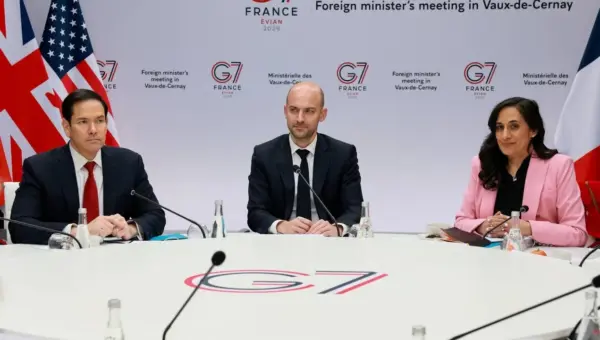
Rubio Puts US First at G7 Summit, Sparks Debate
Secretary of State Marco Rubio attended the G7 summit in France, emphasizing his commitment to serving the American people above all else. The meeting addressed the war in Iran and Russia's role, revealing differing approaches among allies on regional security and the Strait of Hormuz.


Tiger Woods Arrested for DUI After Crash
Golf legend Tiger Woods was arrested for DUI in Florida following a dramatic rollover crash. Meanwhile, a government shutdown continues as House Republicans block a Senate deal, leading to airport chaos and TSA worker pay issues. The stock market also plummeted into correction territory amid fears of a prolonged Iran conflict.

Trump’s Iran War Plans Criticized Amid Border Funding Standoff
Lawmakers and analysts are criticizing the Trump administration's handling of the Iran conflict and its approach to border funding, arguing that a lack of clear planning and a focus on political battles are making the U.S. less safe. Concerns are particularly high regarding the FBI's priorities and the potential impact of these issues on national security.