Delta Force Eyeing Iran’s Oil Hub: A Risky Gambit Unfolds
Reports indicate the U.S. is seriously considering a special forces operation to seize Iran's Kharg Island, the critical hub for 95% of its oil exports. This high-stakes gambit could cripple Iran's economy but risks severe retaliation and global energy market shocks.

Delta Force Eyeing Iran’s Oil Hub: A Risky Gambit Unfolds
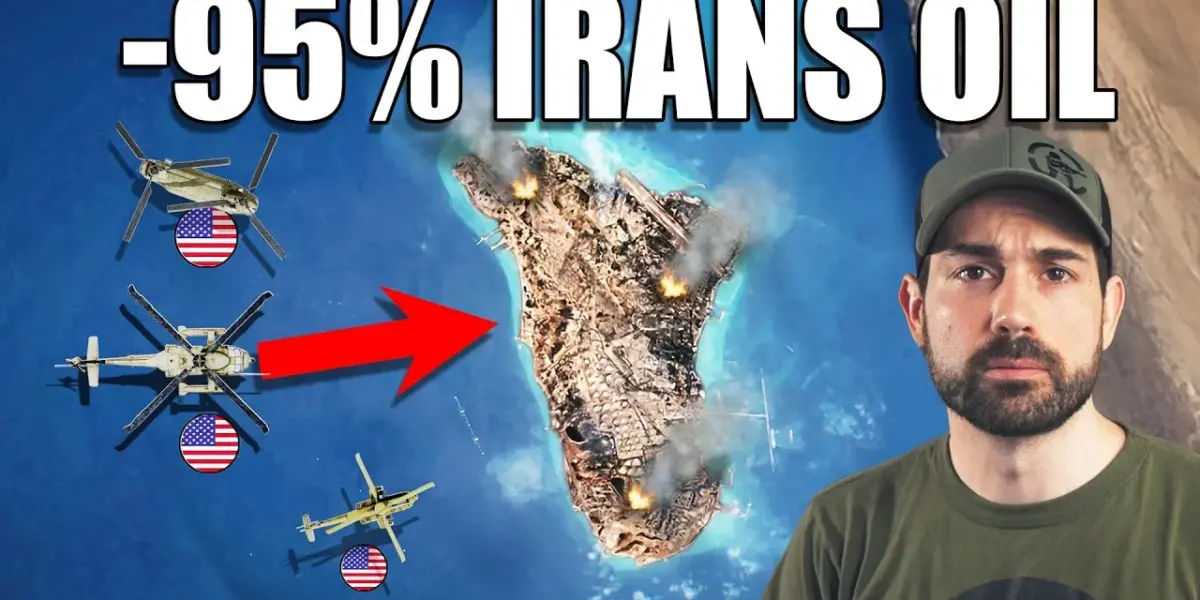
Whispers from the White House, amplified by reports from Axios and Bloomberg, suggest a significant shift in U.S. military strategy: the serious consideration of a special forces operation to seize Iran’s Kharg Island. This tiny, 21 km island, often dubbed “Iran’s Car Island,” holds a disproportionate strategic weight, serving as the loading point for 95% of the nation’s oil exports. The potential deployment of American troops on Iranian soil, even under the guise of a “loophole” operation, marks a critical escalation, raising profound questions about geopolitical implications, economic ramifications, and the very nature of modern warfare.
The Strategic Heart of Iran’s Economy
Kharg Island is far more than just an oil terminal; it is the linchpin of the Islamic Republic’s entire economy. The revenue generated here funds the IRGC’s military expenditures, its controversial nuclear and missile programs, and even the salaries of government officials. Its strategic vulnerability is immense. To put its significance into perspective, the island is roughly half the size of Disney World, yet it controls the economic lifeblood of a nation. Its importance has even permeated popular culture, featuring in the 1989 Sega Genesis game *F-15 Strike Eagle 2* and the video game *Battlefield 3*, reflecting a long-standing fascination with its strategic value.
The proposed operation, framed as a special forces mission rather than a conventional ground invasion, aims to exploit this vulnerability. The logic, as articulated by analysts, is stark: “Take it out.” This implies not only cutting off Iran’s military budget but also crippling the basic services that sustain its society. Muhammad Solomon, a senior fellow at the Middle East Institute, succinctly captured this sentiment, suggesting that such an action would “pull the plug on the basic services that keep Iranian society functioning.”
A Calculated Assault: The Military Calculus
The logistical and tactical considerations for such an operation are formidable. Kharg Island is approximately 130 miles from American bases in Kuwait, well within the range of Blackhawk helicopters. Planners reportedly favor a low-altitude helicopter assault, potentially involving U.S. Ranger infantry, to allow for precise landings near key objectives. Advanced tactics like High Altitude Low Opening (HALO) jumps from 30,000 feet are also being considered to evade short-range air defense systems. The Delta Force squadron reportedly responsible for the capture of Maduro has been repositioned to Kuwait, signaling preparedness.
The primary objective in securing Kharg Island would be to gain control of the oil terminal and prevent its destruction. However, each step in such a plan carries inherent risks and potential points of failure. Security on the island is reportedly handled by the Islamic Revolutionary Guard Corps (IRGC), with satellite imagery suggesting a heavily fortified environment. Reports indicate a garrison of around 250 IRGC soldiers, supplemented by 250 air defense personnel and up to 500 additional military personnel, all within steel perimeter fences and guard towers. The island also hosts a civilian population of approximately 8,000, many of whom are employed at the facility.
Historical Echoes and Evolving Threats
The strategic importance of Kharg Island is not a new revelation. Declassified CIA assessments from the 1980s detail defenses including Hawk anti-air batteries, twin 35mm cannons, and light aircraft positions. While current capabilities are unknown, Iran is believed to have deployed its most advanced air defense systems to the island. The island’s isolation and separation from reinforcements make it a difficult location to defend, yet its vulnerability is compounded by its proximity to the Iranian mainland, making it susceptible to long-range artillery and rocket fire.
The island’s infrastructure itself has a history of being targeted. In the 1970s, President Carter considered bombing it to pressure Iran into releasing American hostages, a plan ultimately deemed too risky. During the Iran-Iraq War, Saddam Hussein’s air force bombed Kharg Island facilities in 1986, crippling its operations. This historical context suggests that while an attack is not unprecedented, the scale and nature of a potential U.S. operation would represent a significant escalation.
Furthermore, the island’s very design presents a strategic paradox. Most of Iran’s oil fields are located on land or offshore, yet all exports are funneled through this single, vulnerable choke point. This concentration is due to the shallow coastlines elsewhere, which cannot accommodate the massive supertankers required for global export. Kharg Island, with its deep-water ports, is one of the few locations capable of handling these vessels, particularly those destined for China, which imports the vast majority of Iran’s oil.
The Economic and Geopolitical Stakes
The financial implications of a successful operation are profound. The Financial Times analysis highlights that military action to control or destroy the island’s infrastructure would be “hugely damaging to Iran” but carries risks of deepening the conflict, further shocking energy markets, and destabilizing any future Iranian government. Experts predict that an attack on Kharg Island could send oil prices soaring, with some forecasting a rise to $120-$150 per barrel. This would have a ripple effect on global economies, impacting everything from transportation costs to inflation.
The political calculus for the U.S. is equally complex. Public support for prolonged military engagement in the region remains divided, with polls indicating a significant portion of the American populace is wary of ground troop deployments in Iran. The White House appears to be seeking a swift, decisive action, perhaps mirroring the Venezuela raid, though analysts caution that the conditions and the element of surprise are vastly different.
Beyond Kharg: The Nuclear Dimension
The discussion around special forces operations extends beyond Kharg Island. Axios reports that the U.S. and Israel have been discussing the possibility of deep-penetration special operator missions into Iran to secure the nation’s stockpile of highly enriched uranium. This potential operation, involving Delta Force’s Counter-WMD mission team, targets Iran’s alleged 450 kg of 60% enriched uranium, a material only a short step away from weapons-grade. The options being considered include removing the material, a logistical challenge given its weight, or diluting it on-site with the help of a nuclear scientist.
This aspect of the potential conflict presents an even more perilous scenario. Strikes in June reportedly buried Iran’s uranium stockpiles under concrete, complicating any access. Intelligence suggests Iran may have moved some material to a different site, adding further complexity. While similar missions have been undertaken, such as Israeli special forces operations in Syria, the potential consequences of failure in Iran, particularly concerning nuclear material, are catastrophic.
A Tightrope Walk: Deterrence and Escalation
The strategic landscape is further complicated by Iran’s demonstrated capabilities. Despite significant losses to its navy and air force, and the destruction of numerous ballistic missile launchers, Iran has managed to damage U.S. air defense systems, including THAAD radar. The redeployment of THAAD interceptors from South Korea to the Middle East underscores U.S. concerns about its defensive posture. Moreover, Iran’s Shahed drones have proven adept at evading air defenses, resulting in American casualties.
The potential seizure or destruction of Kharg Island is seen by proponents like Michael Rubin, a former Pentagon adviser, as a crucial step to fracturing the Revolutionary Guard and achieving regime change without necessarily resorting to widespread bombing. However, critics, like J.P. Morgan, warn that a direct strike would “immediately halt the bulk of Iran’s crude exports, likely triggering severe retaliation.” The scenario also raises concerns about the potential for mutually assured destruction, a concept that has historically deterred administrations from directly targeting such critical infrastructure.
Why This Matters
The potential U.S. operation targeting Kharg Island represents a critical juncture in Middle East geopolitics. It highlights the escalating tensions between the U.S. and Iran and the complex interplay of economic warfare, military strategy, and political risk. The decision to consider such a high-stakes operation underscores a potential shift towards more aggressive, unconventional tactics aimed at crippling Iran’s economy and its capacity for regional influence. The implications extend far beyond the immediate conflict, with the potential to reshape global energy markets, destabilize regional security, and test the limits of international diplomacy in an era of heightened geopolitical competition.
Implications, Trends, and Future Outlook
The consideration of a Kharg Island operation signals a trend towards utilizing asymmetric warfare and economic pressure points as primary tools of foreign policy. The emphasis on special forces suggests a desire to achieve strategic objectives with a minimized footprint, yet the inherent risks of such missions remain substantial. The future outlook is one of continued volatility, with the potential for miscalculation and unintended escalation remaining high. Should such an operation proceed, it could set a precedent for future interventions, further blurring the lines between conventional and unconventional warfare.
Source: Delta Force Prepares to Capture Iran’s Kharg Island (YouTube)

Related Articles

Iran Island Gambit: A War Trap or Winning Move?
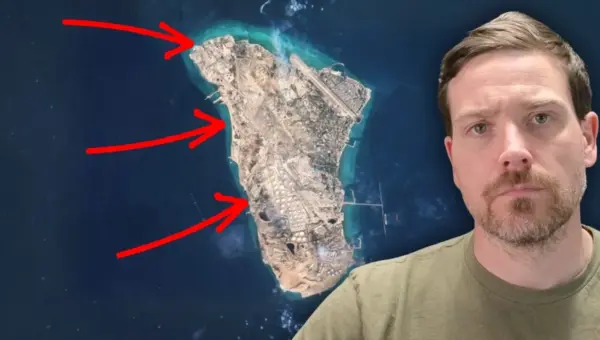
The U.S. may be considering a ground operation on Iran's Kharg Island, a key oil export hub. While some see it as a way to force Iran's surrender, experts warn it could be a costly trap, echoing concerns from past conflicts. Diplomatic talks continue, but distrust remains high.

US Marines May Seize Iran’s Kharg Island in Escalation
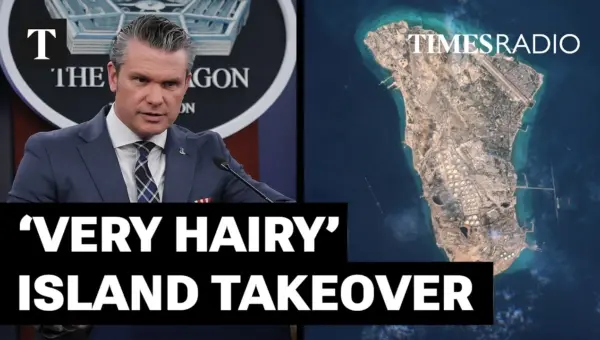
Conflicting reports surround the Iran conflict as the U.S. weighs a potential ground operation on Kharg Island, Iran's oil hub. While President Trump claims the war is nearing its end, military deployments suggest a possible escalation. Experts highlight the strategic importance and risks of seizing Kharg Island.

Iran Rejects Ceasefire: US Escalates Strikes
Talks between the U.S. and Iran have stalled, with the U.S. seeking to dismantle Iran's nuclear program and ballistic missile capabilities. Meanwhile, the U.S. military has intensified strikes on Iranian facilities, aiming to cripple its military infrastructure. John Bolton argues that only regime change can truly address the threat posed by Iran.