Deion Sanders’ Colorado Era Ends: Chaos, Hype, and a Program Transformed
Deion Sanders' three-year tenure as head coach of the Colorado Buffaloes concluded, leaving behind a legacy of chaos, record-breaking hype, and a transformed university profile. Despite significant off-field gains and moments of brilliance, on-field results were ultimately mixed.

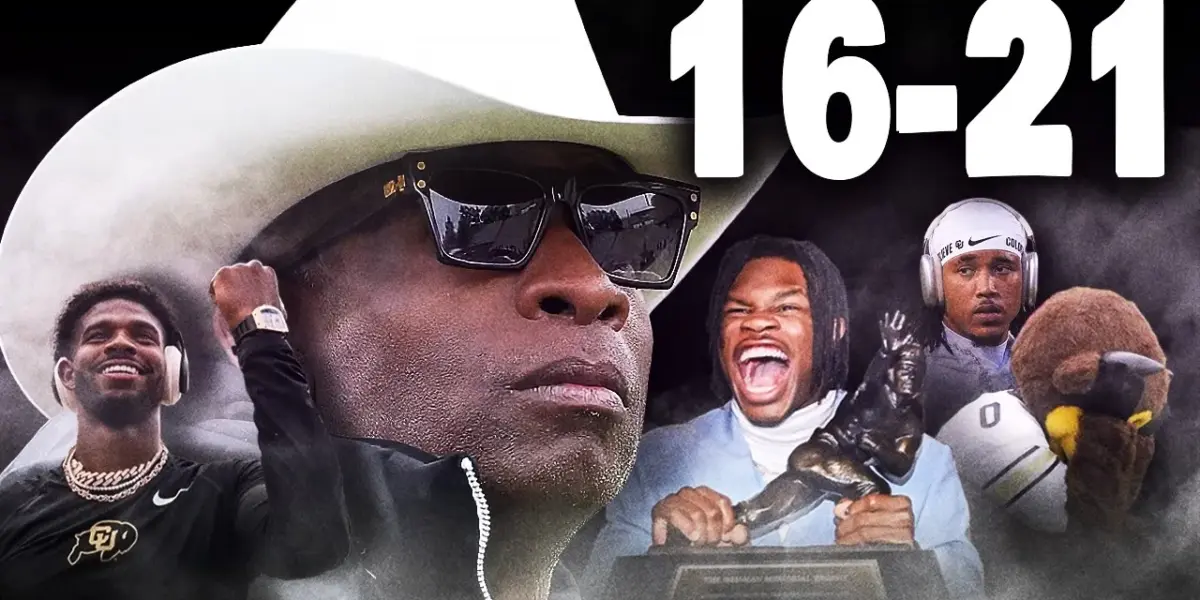
Deion Sanders’ Colorado Experiment Concludes: A Chaotic Three-Year Saga
The era of “Coach Prime” at the University of Colorado has officially drawn to a close, marking the end of a three-year period defined by unprecedented hype, record-breaking viewership, Heisman-caliber performances, and a level of locker room drama rarely seen in college football. When Deion Sanders arrived in Boulder, he inherited a program that was, by most accounts, in dire straits. The Buffaloes had struggled mightily since 2003, enduring multiple seasons with five or fewer wins, culminating in a dismal 1-11 record in 2022. Sanders’ arrival, however, was anything but quiet. He promised a cultural shift and a return to glory, a vision that captivated the nation and even led to Colorado being the fourth most bet-on team to win the national title in 2024, despite their recent struggles.
The “Prime Effect”: A Whirlwind of Transfers and Hype
Sanders immediately set about revolutionizing the roster, bringing in over 50 transfers – a new NCAA record – and ushering out more than 50 existing scholarship players. This unprecedented roster churn was fueled by his “40-40-20 plan,” aiming for a mix of graduate transfers, undergraduate transfers, and high school recruits. The strategy was ambitious, aiming to rebuild the program almost overnight. Colorado quickly became the most compelling story in college football, with fans and analysts alike tuning in to see if Sanders could indeed work his magic and create a video-game-like turnaround.
The 2023 season kicked off with a bang. As 21-point underdogs against No. 17 TCU, the Buffaloes, led by quarterback Shedeur Sanders, pulled off a stunning upset. Shedeur threw for over 500 yards and four touchdowns in a thrilling 45-42 victory that instantly elevated the hype surrounding the team. The momentum continued the following week with a dominant performance against Nebraska. The rivalry game against Colorado State became an ESPN streaming record-breaker, drawing over 11 million viewers, and marked the program’s first-ever sellout. The game itself was a dramatic overtime affair, with Colorado emerging victorious, further fueling the national fascination.
From Cinderella to Sobering Reality
The peak of the hype train arrived with a matchup against No. 10 Oregon. This game set a regular-season viewership record with 12.6 million peak viewers, underscoring the massive national interest. However, it also served as a harsh reality check. Colorado was dismantled by Oregon, trailing 35-0 at halftime and ultimately suffering a significant loss. This marked a turning point in the season. Despite a near-comeback against USC the following week, the Buffaloes began to falter. A particularly brutal blow came in a game against Stanford, where Colorado squandered a 29-0 halftime lead, eventually losing in double overtime.
The wheels truly came off as Colorado lost their next several games, including matchups against UCLA, Oregon State, Arizona, and Washington State, before a final loss to Utah capped off a disappointing 4-8 season. Key issues emerged, particularly a porous offensive line that left Shedeur Sanders constantly under pressure, leading to him being the most sacked quarterback in the nation and ultimately suffering a season-ending back injury. Despite the on-field struggles, the “Prime Effect” was undeniable off the field, with athletic department revenue surging by over $30 million.
Year Two: Rebuilding and Realignment
The 2024 season saw another massive influx of over 40 transfers and more than 34 players departing. Colorado also navigated conference realignment, moving from the Pac-12 to the Big 12. Oddsmakers projected them to win around five to six games, ranking them 11th in the conference, yet outside faith remained strong, with the team again being a popular bet for the national title.
The season started with a narrow escape against North Dakota State and a subsequent loss to Nebraska. Shedeur Sanders voiced frustrations about the offensive line’s inability to establish a run game. However, the Buffaloes found their stride, securing victories against rival Colorado State, Baylor, and UCF. Travis Hunter emerged as a dual-threat sensation, excelling on both offense and defense, while Shedeur continued to put up impressive numbers. The team achieved an 8-2 record heading into a late November matchup against Kansas, reaching their highest ranking in eight seasons at No. 16. Despite a loss to Kansas, they bounced back with a dominant 52-0 win over Oklahoma State, showcasing the talents of Sanders and Hunter.
The regular season concluded with a 9-3 record, exceeding all expectations. Shedeur Sanders finished fourth in Heisman voting, and Travis Hunter earned the award, drawing comparisons to his coach’s playing days. The season culminated in a blowout loss to BYU in the Alamo Bowl, but the overall sentiment was one of significant progress and the emergence of two genuine stars.
Year Three: Uncertainty and Health Challenges
The 2025 season began with considerable uncertainty. Colorado once again saw over 30 players enter the transfer portal, alongside a large group of incoming transfers, reinforcing Sanders’ reliance on the portal. A persistent weakness remained: the offensive line struggled to attract talent, leaving Shedeur Sanders vulnerable. The team’s rushing attack was also abysmal, finishing last in the Big 12 in rushing yards and yards per carry.
During the spring of 2025, both Shedeur Sanders and Travis Hunter had their jerseys retired, a move that sparked debate about nepotism and player accolades. With his son and star receiver gone, Sanders faced the challenge of replacing their production. The summer was overshadowed by Sanders’ health battle, as he took a leave of absence to treat a cancerous tumor in his bladder, adding to a history of numerous surgeries and health issues.
Despite these challenges, Sanders returned, declaring “I’m back, baby.” The 2025 team, however, struggled significantly. Kaden Salter won the starting quarterback job but faced inconsistency. After a loss to Georgia Tech and a shaky performance against Delaware, Salter was benched in favor of third-stringer Ryan Stub to preserve Julian Lewis’s redshirt. Stub’s performance was poor, leading to another benching and a return to Salter, who showed flashes of potential against Wyoming. However, late-game struggles and turnovers plagued Colorado in close losses to BYU and TCU. A humiliating 58-7 defeat to Utah, where Salter was benched again after an abysmal performance, highlighted the team’s struggles. The season concluded with a 3-9 record, placing them near the bottom of the Big 12 in both offense and defense. By mid-season, national attention had waned, and the Buffaloes were largely an afterthought.
Analyzing the “Prime Experiment”
Several factors contributed to the team’s struggles outside of their standout 2024 season. A persistent lack of roster balance, particularly the weak offensive line, remained a critical issue. The heavy reliance on the transfer portal, while bringing in talent, often led to a lack of cohesive team building, with players being treated as “commodities.”
Coaching and management also faced scrutiny. Sanders’ health issues undoubtedly impacted his ability to lead effectively at times. Furthermore, issues with game management, including misuse of timeouts, and questions about player development and the effectiveness of coordinators were raised. The cultural aspect of the program also drew attention. Reports of a “real-life Grand Theft Auto” environment, with distractions and off-field incidents, contrasted with Sanders’ claims of falsehoods. Player frustrations over the focus on “clicks” versus development, and incidents involving alleged gambling debts and dismissals from the team, painted a complex picture of the program’s internal dynamics.
Despite the on-field results, the “Prime Effect” undeniably transformed the university’s profile. Colorado saw a significant increase in student applications and the athletic department’s revenue nearly doubled between 2022 and 2025, making it a valuable non-Power Five program. However, massive yearly deficits persisted due to increased spending on Sanders’ contract and portal acquisitions. In his three years at Colorado, Deion Sanders compiled a 16-21 record. While the on-field results were mixed, the experiment undeniably injected a jolt of energy and entertainment into college football, bringing a dormant program back to life and providing some of the most captivating moments, both on and off the field.
“What about me would make you think that I care about your opinion of me? Your opinion of me is not the opinion that I have of myself. You ain’t make me, so you can’t break me.” – Deion Sanders
Sanders’ resilience and his unwavering self-belief defined his tenure, leaving an indelible mark on college football.
Source: The Most Chaotic Team in College Football (YouTube)

Related Articles


Illinois Frosh Star Powers Past Colorado in Thriller
Freshman Siara Parchment led the charge with 19 points, including crucial three-pointers, as the young Illinois Fighting Illini edged out the Colorado Buffaloes 70-67 in a thrilling NCAA Tournament Round of 64 matchup. The back-and-forth contest saw clutch shots from both sides, but Illinois' poise and freshman talent ultimately secured their advancement to the second round.

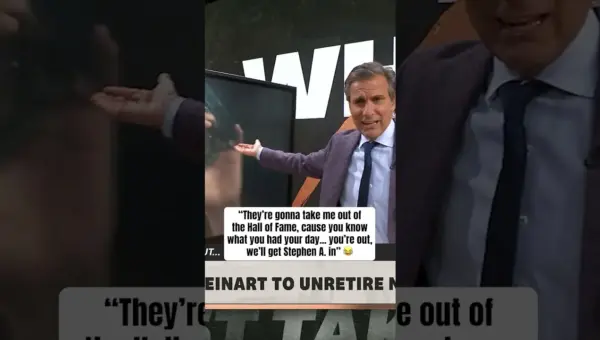
USC Stuns: Asks Leinart to Unretire No. 11!
USC has reportedly asked Heisman winner Matt Leinart to unretire his No. 11 jersey for a high school recruit. The move has sparked outrage, with many questioning USC's respect for tradition and legacy. Leinart is said to be annoyed by the surprising request.
Arizona Claims Historic Win Over Colorado!
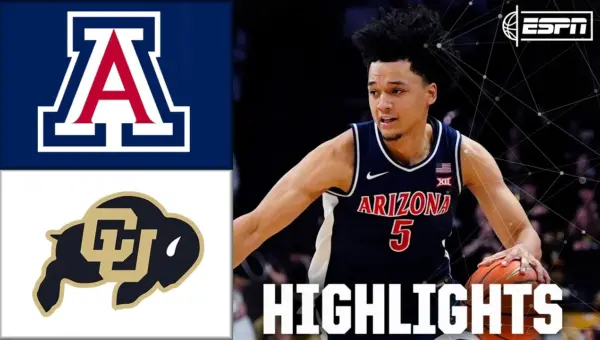
The Arizona Wildcats secured a historic 29th regular-season win, their most in program history, by defeating the Colorado Buffaloes in a thrilling conference finale. K.J. Dedmon led the charge with a career-high 30 points, overcoming a strong performance from Colorado's freshmen.