Deadly Martian Soil May Harbor Hidden Life
New research suggests that the toxic, radiation-blasted surface of Mars might not be entirely devoid of life. Scientists are exploring how subsurface conditions, including salty brines and ice-covered layers, could potentially harbor microbial ecosystems.

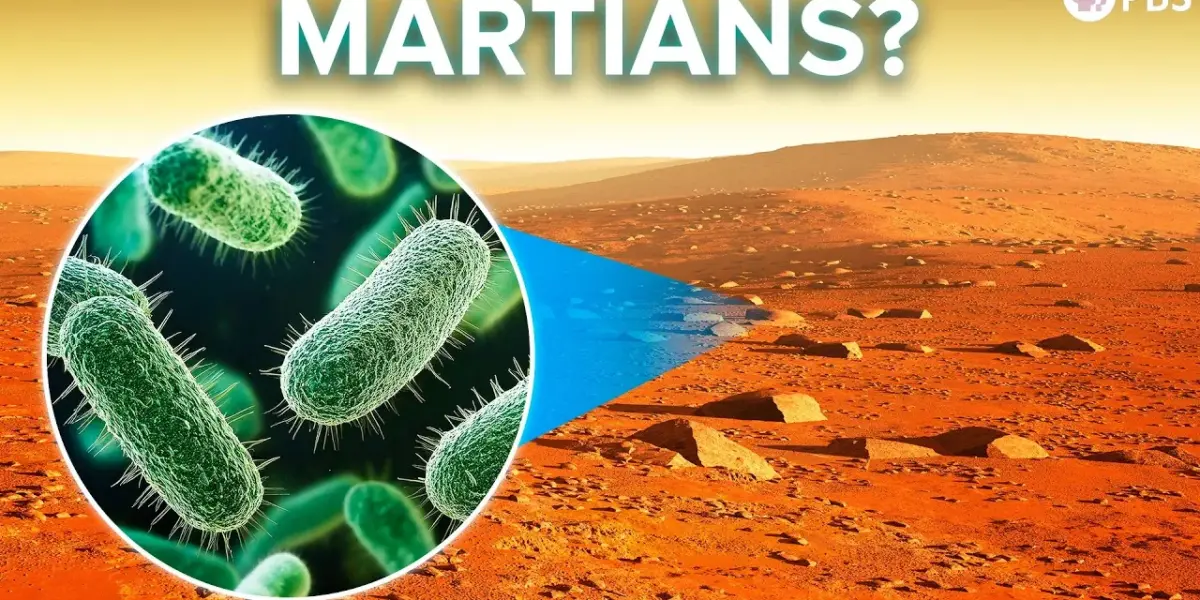
Deadly Martian Soil May Harbor Hidden Life
Mars, a planet once thought to be a potential haven for life, now presents a harsh, even deadly, surface. Yet, new research suggests that beneath this inhospitable exterior, life might still find a way. Scientists are exploring how the very conditions that make Mars so hostile could, paradoxically, create pockets where life could exist.
From Oasis to Wasteland
For billions of years, Mars was a very different world. Evidence from minerals that form in water and ancient dried-up riverbeds shows that liquid water was once abundant on its surface. Mars also had a thicker atmosphere and a magnetic field, similar to Earth’s, protecting it from harsh solar radiation. However, Mars is smaller than Earth. It lost its internal heat faster, causing its core to solidify and its magnetic field to vanish. Without this shield, the solar wind stripped away the atmosphere. As the atmosphere thinned, temperatures plummeted, and gases and water froze, leading to the dry, frigid planet we see today.
The Perils of the Martian Surface
The surface of Mars is now bone dry with a thin atmosphere that offers little protection. It is bombarded by intense solar ultraviolet (UV) radiation and cosmic rays. The ground itself, called regolith, is made of dust, sand, and rock fragments. Billions of years of meteorite impacts, combined with weathering and erosion, have amplified this. This regolith is chemically altered by UV radiation into toxic salts, such as perchlorates and sulfates. These compounds are highly oxidizing, meaning they aggressively react with organic molecules, making the surface deadly to most known life forms.
What Life Needs
If life exists on Mars today, it would need specific conditions to survive. Scientists look for three key requirements: liquid water, protection from harmful radiation and toxic chemicals, and a source of energy. Since the surface is so extreme, any potential habitats are likely to be underground.
Subsurface Havens
Going just a few centimeters below the surface dramatically reduces UV radiation and offers some buffer against temperature swings. However, even at these shallow depths, the temperature is still below freezing, and the toxic salts remain abundant. Surprisingly, these very salts might offer a solution to the freezing problem. Perchlorates, for example, can absorb water vapor from the atmosphere, acting like tiny moisture magnets. They also act as powerful antifreeze, allowing water to remain liquid at temperatures as low as -70 degrees Celsius (-94 degrees Fahrenheit). Under the right conditions, these salts can form thin films of salty liquid, called brines, within the regolith. These brines could appear at night and evaporate during the day.
Life’s Ingenuity on Earth and Mars
Life on Earth has shown incredible adaptability. Many salt-loving microbes, called halophiles, can survive in extreme environments. Some even use perchlorates as part of their metabolism. This gives scientists hope that similar organisms could exist on Mars. These microbes could potentially use the perchlorates for energy, while the sun’s UV radiation could replenish these chemicals during the day. Studies simulating Martian conditions have tested Earth’s hardiest microbes. While many, like tardigrades, struggle with perchlorates, some bacteria and fungi have shown resilience in Martian-like soil. The key might be that life evolved with these chemicals. Over billions of years, Martian microbes could have developed ways to tolerate or even utilize perchlorates, perhaps through DNA repair mechanisms.
Beyond the Regolith: Ice and Lava Tubes
Deeper exploration reveals other potential habitats. Widespread ground ice exists on Mars, especially at higher latitudes, and buried ice deposits are suspected at mid-latitudes. Water ice acts as an excellent shield against radiation and slows down the formation of toxic perchlorates. While solid ice isn’t liquid water, recent studies suggest that meltwater might form in thin layers beneath this ice. These layers could be warmed by faint geothermal energy from below and by filtered sunlight from above. The pressure from the overlying ice and dissolved salts could further help keep this water liquid. This sub-ice environment also presents an opportunity for ‘radiolysis’ – where radiation splits water molecules to create hydrogen and oxidants, which some deep-earth microbes use for energy.
Another intriguing possibility lies in Martian lava tubes. These are underground caverns formed by ancient volcanic activity. They could offer excellent protection from radiation and stable temperatures. The main challenge is the presence of water. If ice or brines are present, these tubes could be a refuge for life. Exploring them would likely require advanced drilling equipment or even human missions.
The Deepest Frontier: Aquifers
Going even deeper, recent seismic data from NASA’s Insight lander suggests the possibility of vast underground water reservoirs, or aquifers, in the Martian mid-crust, at depths of 10 to 20 kilometers (6 to 12 miles). If these aquifers exist, they could represent the largest potential habitat for life on Mars. These water-saturated, fractured rock regions would allow water to flow, maintaining chemical gradients necessary for life and replenishing nutrients.
Looking Ahead
Discovering life on Mars, past or present, would be one of the most profound scientific findings in human history. It would tell us if life can arise independently on other planets, suggesting that life might be common throughout the universe. Missions like the European Space Agency’s Rosalind Franklin rover, planned for launch in 2028, are designed to drill up to 2 meters (6.5 feet) below the surface to search for signs of past or present life. NASA’s Perseverance rover has also collected samples that could, if returned to Earth, provide crucial clues. The potential discovery of deep aquifers or life within lava tubes remains a long-term goal, likely requiring human explorers to investigate these challenging environments.
While the Martian surface remains a formidable challenge, the possibility of life persisting in subsurface niches—from salty brines to ice-covered layers and deep aquifers—keeps the search alive. The very elements that make Mars hostile might, in fact, be the keys to its hidden oases.
Source: Martian Soil Is Deadly. And That's Why It Might Support Life. (YouTube)

Related Articles


NASA Pivots: Mars Nuclear Probe, Moon Base Ahead
NASA is pivoting its exploration strategy, prioritizing a nuclear-powered Mars probe and accelerating plans for a moon base. The International Space Station's future is uncertain, with a shift towards commercial platforms. Meanwhile, new telescope data reveals overmassive black holes in dwarf galaxies and captures stunning images of Saturn and the Crab Nebula.


US Military Pursues Secret Tech, Lunar Base Plans Emerge
Reports indicate the US military and defense contractors are exploring advanced technologies, possibly reverse-engineering unknown craft. Concurrently, NASA plans a lunar base, while millions of UAP-related files are allegedly deleted, raising transparency concerns. These developments could reshape global power dynamics.


Dark Matter Defies Gravity, Forming Fuzzy Clouds Instead of Stars
Dark matter, which outweighs all visible matter, surprisingly does not collapse under gravity to form stars or black holes. Instead, it forms vast, diffuse clouds around galaxies, baffling scientists with its unique behavior. Understanding this cosmic enigma is key to comprehending the universe's structure and evolution.