Dark Matter Defies Gravity, Forming Fuzzy Clouds Instead of Stars
Dark matter, which outweighs all visible matter, surprisingly does not collapse under gravity to form stars or black holes. Instead, it forms vast, diffuse clouds around galaxies, baffling scientists with its unique behavior. Understanding this cosmic enigma is key to comprehending the universe's structure and evolution.


Dark Matter’s Cosmic Mystery: Why It Ignores Gravity’s Call
Scientists are baffled by dark matter’s behavior in the universe. While ordinary matter, the stuff we can see and touch, readily collapses under its own gravity to form stars, planets, and black holes, dark matter seems to defy this fundamental cosmic rule. Instead of clumping into dense objects, it forms vast, diffuse clouds that surround galaxies.
The Gravity Conundrum
Gravity is the universal architect, pulling matter together. We see this every day as it keeps us grounded and shapes celestial bodies. Our universe contains an immense amount of dark matter, far more than all the visible matter combined. Logically, this massive presence should lead to its collapse under its own gravitational pull. Yet, it doesn’t.
A Tale of Two Matters
This peculiar behavior was highlighted after a recent discussion about the Milky Way’s center. Some wondered if a dense dark matter cloud could be mistaken for the supermassive black hole at our galaxy’s core. If such a cloud possessed the same mass as a black hole, why wouldn’t it also collapse? The question points to a fundamental difference between dark matter and the ordinary matter that makes up everything we know.
What is Dark Matter Made Of?
The exact composition of dark matter remains one of the biggest puzzles in modern physics. We know it exists because of its gravitational effects on visible matter, such as the way galaxies rotate faster than they should based on their visible mass alone. It doesn’t interact with light or other electromagnetic forces, hence the name ‘dark.’ This lack of interaction is key to understanding its behavior.
Understanding Collapse
Ordinary matter, composed of atoms, can interact with itself through electromagnetic forces. When these particles get close enough, they can attract each other, lose energy through radiation, and eventually clump together. Think of dust bunnies forming under your bed; the tiny particles attract each other and stick together. Stars form when vast clouds of gas and dust, primarily hydrogen and helium, collapse under gravity. This collapse heats the core until nuclear fusion ignites, creating a star.
Dark Matter’s Different Path
Dark matter particles, however, appear to interact very weakly, if at all, with anything other than gravity. They don’t easily bump into each other or lose energy by emitting light. This means that as dark matter particles are pulled together by gravity, they can’t easily shed that energy to settle into a tighter configuration. Imagine trying to stack marbles where each marble bounces away from every other marble. They might get closer due to an external push, but they won’t naturally form a stable pile.
Fuzzy Clouds: The Result
Instead of collapsing into dense objects like stars or black holes, dark matter particles tend to spread out, forming vast, diffuse halos around galaxies. These halos are like enormous, fuzzy cocoons. While gravity pulls them inward, their inability to interact and lose energy prevents them from compacting into anything solid or dense. They simply exist as a pervasive gravitational influence.
Historical Context and Ongoing Research
The concept of dark matter dates back to the 1930s when astronomer Fritz Zwicky observed galaxies in the Coma Cluster moving too fast. He proposed the existence of unseen matter to provide the necessary gravity. Later, Vera Rubin’s work in the 1970s provided more compelling evidence by studying the rotation curves of spiral galaxies. Her research showed that stars on the outer edges of galaxies were orbiting just as fast as stars near the center, indicating the presence of a massive, invisible halo of dark matter.
Future Missions and What’s Next
Understanding dark matter is crucial for comprehending the evolution and structure of the universe. Missions like the Euclid space telescope, launched in 2023, are designed to map the distribution of dark matter and dark energy across billions of light-years. Scientists are also conducting experiments deep underground, like the LUX-ZEPLIN (LZ) experiment, hoping to directly detect dark matter particles as they pass through Earth. The ultimate goal is to identify the fundamental nature of dark matter particles.
Why It Matters
Unraveling the mystery of dark matter could revolutionize our understanding of physics and cosmology. It might lead to new theories about fundamental forces and particles. Its gravitational influence is essential for the formation of galaxies and large-scale structures in the universe. Without dark matter, galaxies as we know them likely wouldn’t exist. Learning what it is and how it behaves is key to understanding our place in the cosmos.
Source: Why doesn't dark matter make dark stars, dark planets, and dark black holes? #shorts (YouTube)

Related Articles


NASA Pivots: Mars Nuclear Probe, Moon Base Ahead
NASA is pivoting its exploration strategy, prioritizing a nuclear-powered Mars probe and accelerating plans for a moon base. The International Space Station's future is uncertain, with a shift towards commercial platforms. Meanwhile, new telescope data reveals overmassive black holes in dwarf galaxies and captures stunning images of Saturn and the Crab Nebula.


US Military Pursues Secret Tech, Lunar Base Plans Emerge
Reports indicate the US military and defense contractors are exploring advanced technologies, possibly reverse-engineering unknown craft. Concurrently, NASA plans a lunar base, while millions of UAP-related files are allegedly deleted, raising transparency concerns. These developments could reshape global power dynamics.

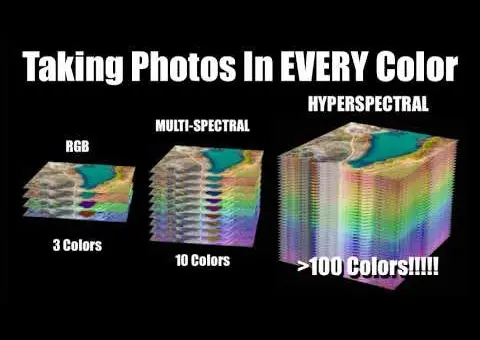
New Satellites Capture ‘Impossible’ Colors from Space
New hyperspectral satellites are capturing images with hundreds of color bands, revealing details invisible to the human eye and traditional cameras. This advanced technology builds on a 200-year legacy of spectral analysis, enabling unprecedented insights into Earth's resources and environment.