Czech Republic Fuels Ukraine’s Artillery Endurance
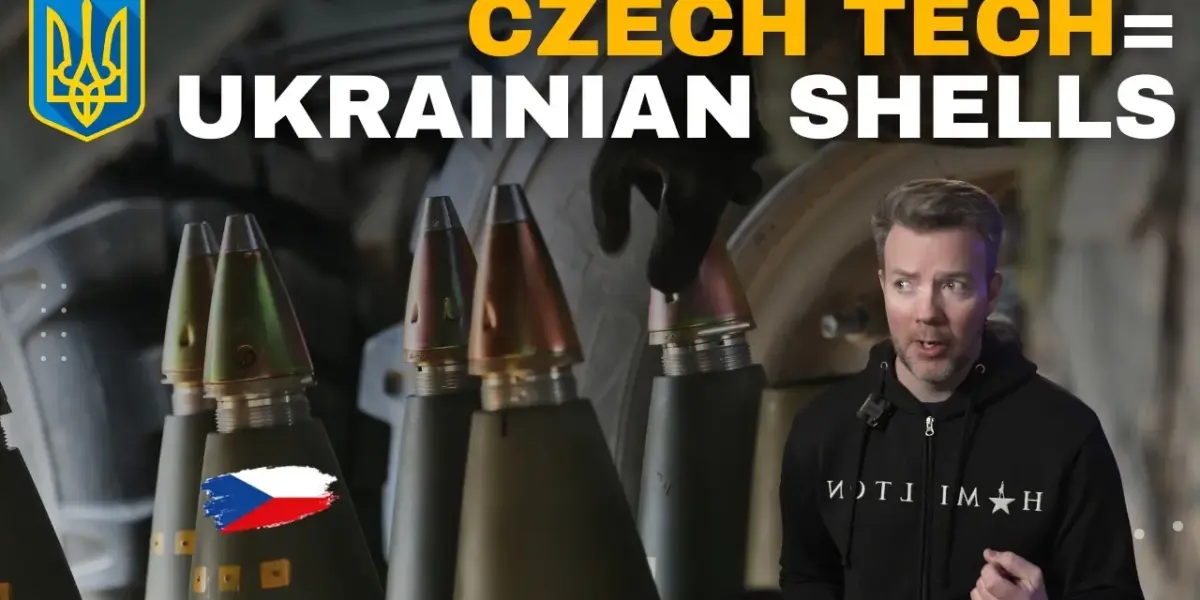
A landmark technology transfer from the Czech Republic empowers Ukraine to domestically produce 155mm artillery shells, breaking critical supply chain dependencies. This move signifies a strategic shift towards long-term endurance and self-sufficiency in a conflict defined by sustained firepower.

Czech Republic Fuels Ukraine’s Artillery Endurance
A pivotal technology transfer from the Czech Republic to Ukraine marks a significant shift in the latter’s ability to sustain its war effort, particularly in the crucial domain of artillery. This deal, involving the domestic production of 155mm artillery shells, moves beyond mere ammunition supply to encompass the intricate blueprint for long-term, self-sufficient manufacturing. It addresses not just the quantity of shells fired, but the underlying industrial capacity required to maintain a prolonged conflict.
The Blueprint for Endurance: Beyond the Shell Itself
The true value of this transfer lies in the comprehensive nature of the technology shared. It’s not simply about receiving finished drawings, but about acquiring the deep institutional knowledge and precise specifications necessary for mass production. This includes detailed blueprints, strict tolerances, metallurgical requirements, tooling specifications, calibration gauges, rigorous test protocols, standardized packaging, and essential storage guidelines. As one analyst notes, this knowledge separates the act of “we built a thing” from the capability of “we can build 10,000 identical things safely every month.” This holistic approach is fundamental to establishing a robust and reliable defense industrial base.
Breaking Free from Supply Chain Hostage
A primary driver behind this collaboration is Ukraine’s desire to escape the precarious position of being beholden to global supply chains for critical munitions. The war has placed immense strain on these chains, leading to scarcity even for wealthy NATO nations. By establishing domestic production, Ukraine aims to secure a consistent and predictable supply of 155mm artillery ammunition, a cornerstone of its battlefield strategy. This move is vital in a conflict where, as described, “every kilometer gained or lost is a function of who can sustain fires longer.”
Artillery’s Enduring Dominance
While drones play an increasingly vital role in spotting, striking, and psychological warfare, artillery remains the primary instrument for “suppressing, shaping, and breaking formations.” The ability to sustain artillery fire is thus a direct determinant of battlefield success. The Czech Republic’s defense holding company, CSG, and Ukrainian Armor, a Ukrainian defense manufacturer, have been at the forefront of this initiative. Their cooperation signifies a recognition that “Europe cannot outsource war production and then act surprise when the warehouse is empty.”
Scaling Up Under Fire: A Wartime Reality
The concept of “scaling up under fire” encapsulates the immense challenge faced by Ukrainian manufacturers. It means increasing production not only in quantity but also in quality and safety, all while under direct threat from Russian attacks aimed at disrupting infrastructure, targeting skilled workers, and destroying logistics. This necessitates building redundancy into every aspect of the production process, acknowledging that survival and output are intrinsically linked.
From M107 to Extended Range: A Staged Approach
The initial focus of the production is on the M107 round, a widely used, conventional high-explosive projectile that serves as a reliable workhorse. This choice reflects a pragmatic strategy: “The immediate goal is not to create an exquisite shell. It’s to create a dependable shell at scale under wartime constraints that fires safely and predictably from the guns Ukraine already has.” The M107 is the foundational round that allows Ukraine to “feed the guns” and maintain operational tempo while simultaneously developing its production discipline.
The collaboration also looks beyond the basic M107, with plans to produce more advanced variants, including extended-range munitions. This includes the L-15 round, noted for its more powerful propellant charge and improved performance, as well as longer-range boat tail and base variants capable of reaching 30-40 km and 40-43 km respectively. These advancements in range are not merely incremental; they offer significant strategic advantages. Longer range allows Ukraine to engage Russian logistics nodes and artillery positions from safer distances, reducing exposure to counter-battery fire and FPV drone attacks. It also enables terrain shaping and operational flexibility without requiring the direct movement of artillery pieces into more dangerous sectors.
The Science Behind the Range: Aerodynamics and Propellant
Achieving extended range involves sophisticated aerodynamic improvements such as boat tails (reducing base drag) and base bleed (generating gas to fill the low-pressure wake). However, projectile design is only one part of the equation. The ability to fire these rounds safely and consistently relies heavily on compatible propellant systems. The development of modular charge systems, designed for interoperability and consistent burn characteristics, is as critical as the shell itself. The scarcity of propellant charges globally, as highlighted by industry insiders, underscores the strategic importance of this aspect of the technology transfer.
The Ecosystem of Ammunition Production
The transfer of technology encompasses several key pillars essential for sustained, high-quality ammunition manufacturing:
- Design and Process Documentation: Comprehensive technical drawings, material specifications, machining steps, inspection points, and acceptance criteria that ensure traceability and consistency.
- Tooling and Production Equipment Integration: Sourcing or adapting specialized fixtures, gauges, and measuring equipment necessary for specific shell lines.
- Quality Assurance and Testing Procedures: Establishing robust protocols for testing dimensions, weight, metallurgy, and performing lot acceptance tests to guarantee reliability and safety.
- Supply Chain and Raw Materials: Securing access to critical inputs such as steel, explosives, fuses, and, crucially, propellant precursors.
- Operational Integration: Ensuring that manufactured ammunition is compatible with existing fuses, propellant charges, and ballistic tables used by Ukraine’s armed forces, integrating production into the broader military system.
The completion of the technology handover phase, implying preparation of production sites, training, validation, and certification, is a testament to the meticulous nature of establishing such capabilities.
Why This Matters: Implications for the War and Beyond
Shifting Battlefield Dynamics: Reliable, scaled production of 155mm ammunition directly impacts the tempo of operations. More shells mean more sustained fire, which is critical for suppressing enemy advances, shaping the battlefield, and preventing front lines from collapsing. This shift from relying on external aid to domestic production fundamentally alters Ukraine’s operational planning horizons, allowing for longer-term strategic planning rather than week-to-week contingency.
Enhanced Autonomy and Alliance Dynamics: As Ukraine becomes more self-sufficient in producing key war materiel, its reliance on foreign aid as “life support” diminishes. This grants Kyiv greater autonomy in its operational decisions and reshapes the nature of international support from direct supply to a more synergistic partnership that enhances Ukraine’s combat power. This quiet shift can make politicians nervous, as it signifies a more independent and capable partner.
Resilience of Industrial Bases: The initiative highlights a broader trend in European defense manufacturing. The war has exposed vulnerabilities in relying on just-in-time supply chains for defense production. Establishing and hardening domestic industrial capacity, even under duress, is becoming a strategic imperative for nations facing prolonged regional instability. Ukraine’s experience in “scaling up under fire” provides a stark, real-world case study in industrial resilience.
Future Outlook: The success of this Czech-Ukrainian collaboration hinges on Ukraine’s ability to ramp up output without becoming an easily targeted entity. The country has proven adept at distributed production, redundant systems, and alternative logistics. However, the constant threat of Russian attacks on industrial sites remains a significant challenge. The long-term implications will depend on Ukraine’s ability to secure its production facilities, maintain consistent access to raw materials, and continue to innovate in ammunition technology. If successful, this initiative not only bolsters Ukraine’s immediate warfighting capabilities but also lays the groundwork for a more robust and self-reliant defense industry, potentially influencing European defense production models for years to come.
Source: Czech Republic Just Changed Ukraine's War Strategy Forever (YouTube)

Related Articles


Kremlin Shakes: Elite Discontent Fuels Putin’s Paranoia
Internal turmoil and paranoia are reportedly gripping the Kremlin as President Putin faces growing elite discontent and the realities of the Ukraine war. Meanwhile, Russia's strategic involvement in the Iran conflict highlights complex calculations and potential risks, even as a wider global war remains unlikely.

Ukraine Hits Russian Oil, Pentagon Eyes Aid Shift
Ukraine's strikes are crippling Russian oil exports, with 40% of capacity offline. Meanwhile, the Pentagon may shift air defense aid to the Middle East. Ukraine is countering by deepening ties with Saudi Arabia and other Gulf nations, leveraging its combat experience.

Ukraine Strikes Russian Oil Refinery, Eyes Iran Threat
Ukrainian forces struck a key Russian oil refinery, disrupting Moscow's war capabilities. Meanwhile, Finland's president urged continued U.S. support for Ukraine, as Kyiv shares its air defense expertise globally amid growing geopolitical complexities involving Iran and potential sanctions against Hungary.