Cuba’s President Defends Nation Amid U.S. Pressure
Cuban President Miguel Diaz-Canel defended his nation against U.S. pressure in an exclusive interview, blaming American sanctions for economic hardship and vowing to resist any threats of military action. He emphasized his willingness to die for the Cuban Revolution and rejected U.S. demands for political change. Congressional reactions highlighted the deep divisions on how to approach Cuba.

Cuba’s President Defends Nation Amid U.S. Pressure
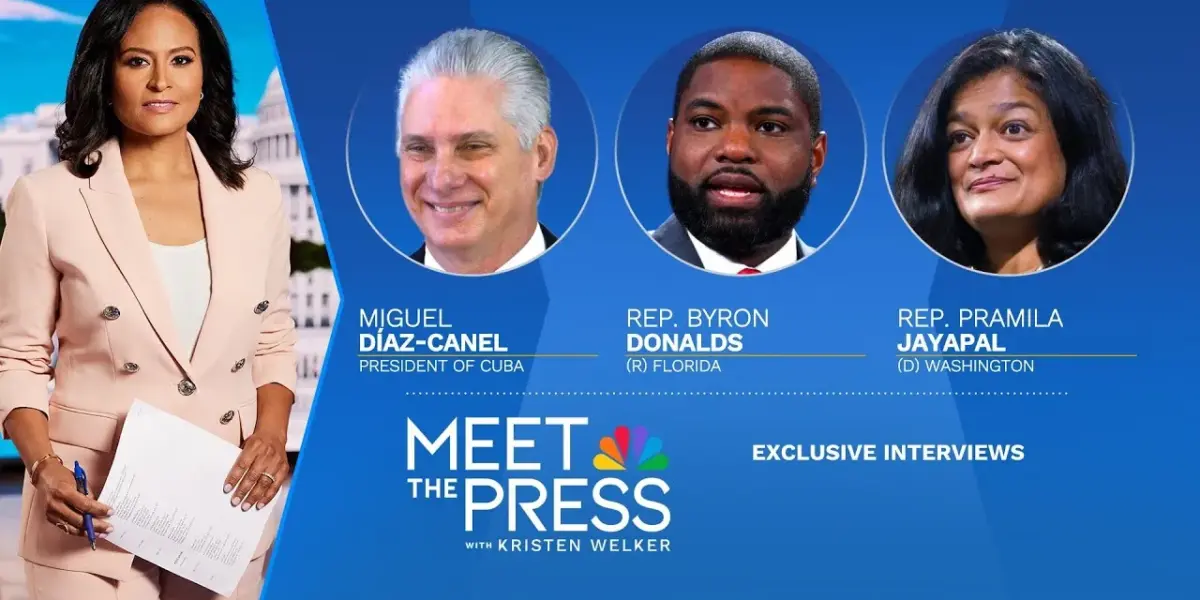
Cuban President Miguel Diaz-Canel spoke exclusively with Meet the Press host Kristen Welker, defending his country against intensified U.S. pressure and an ongoing economic crisis. The interview, conducted in Havana, comes as the Trump administration has increased its efforts to isolate the island nation. President Diaz-Canel addressed fears of U.S. military action, the economic hardship faced by Cubans, and the possibility of dialogue with the United States.
Defiance Against U.S. Threats
President Diaz-Canel expressed a strong commitment to defending the Cuban Revolution, stating he and other leaders are willing to give their lives for the cause. When asked about the possibility of U.S. military aggression, he dismissed it as unjustified, warning that any such action would lead to a struggle. “Dying for the homeland is to live,” he declared, quoting Cuba’s national anthem. He affirmed that Cuba is preparing for defense but emphasized a purely defensive doctrine, aiming to avoid war and preserve peace. He stated, “We are preparing ourselves for defense, but what is the concept of our preparation for defense? We have a doctrine which is entirely defensive. It is not aggressive. It doesn’t pose a threat.”
Economic Hardship and U.S. Sanctions
The interview also tackled the severe economic difficulties facing Cuba, including power outages and shortages of food and energy. While acknowledging the suffering of the Cuban people, President Diaz-Canel squarely blamed the U.S. embargo for the crisis. He argued that the restrictions prevent Cuba from obtaining essential goods, including food, medicine, and supplies for its energy system and factories. “The Cuban people are suffering and this can be seen in two areas, in the national aspect and the family level,” he said. “But what is the main cause of that suffering? Has it been the mistakes that I, myself, have made or like I said a collective leadership or the government or is that suffering is the result of the policy of intensified blockade that the United States has maintained?” He pointed to the intensification of U.S. measures in 2019, including Cuba’s inclusion on a list of state sponsors of terrorism, as exacerbating the situation.
Dialogue and Demands
Regarding potential negotiations with the United States, President Diaz-Canel stated that dialogue is possible but difficult. He noted that Cuba has upheld its commitments while the U.S. has not always fulfilled its part. He expressed distrust due to U.S. actions against other countries engaged in talks. When pressed on specific U.S. demands, such as releasing political prisoners and holding multi-party elections, he firmly rejected them. “Nobody has made those demands to us, and we have established that the respect to our political system, our constitutional order are issues that are not under negotiations with the United States,” he stated. He also pushed back against the notion of political prisoners, calling the narrative a “big lie” and part of an effort to vilify the Cuban Revolution.
Leadership and Sacrifice
When asked if he would be willing to step down to save Cuba, President Diaz-Canel questioned whether the same question had been posed to other world leaders. He emphasized that Cuban leaders are elected by the people and serve under a mandate from them, not from foreign governments. “The concept of revolutionaries giving up. Stepping down is not part of our vocabulary,” he asserted. He added that if the Cuban people felt he was unfit for office, he would respond to them, but stressed that leadership is a collective responsibility and not subject to U.S. imposition.
Congressional Reactions
Following the interview, Republican Congressman Byron Donalds of Florida reiterated his view that the Cuban regime needs a full-scale change. He described President Diaz-Canel as a dictator who wants to rule with an iron fist. He argued that communist dictatorships suppress free speech and prevent people from thriving, contrasting this with free and open societies. Democratic Congresswoman Pramila Jayapal, who recently visited Cuba, expressed a different perspective. She called for real negotiations and respect for Cuba’s sovereignty, criticizing the U.S. embargo as the longest-running in history and the fuel blockade as cruel. While she believes Cuba needs to release political prisoners, she stated that it is not for the U.S. to determine who leads another country, advocating for diplomacy over economic pressure and threats of military intervention.
Broader Geopolitical Context
The discussion about Cuba occurs amidst broader geopolitical tensions involving the U.S. and adversaries like Iran. The collapse of U.S.-Iran negotiations and President Trump’s threats regarding the Strait of Hormuz were also discussed. Congressman Donalds supported the U.S. Navy’s efforts to ensure freedom of navigation, framing it as a strategic decision to control the strait and remove Iranian mines. He criticized Iran’s use of the strait as “economic terrorism.” Congresswoman Jayapal, however, blamed the Trump administration for withdrawing from the Iran nuclear deal and for entering into an unauthorized war, highlighting the significant cost to the American people and the distraction from domestic issues.
Looking Ahead
The situation in Cuba remains tense, with the U.S. maintaining its pressure campaign and Cuba vowing to defend its sovereignty. Future diplomatic engagement, or lack thereof, will be closely watched. The effectiveness of U.S. sanctions versus the potential for negotiated solutions will continue to be a central debate. Meanwhile, the broader implications for regional stability and U.S. foreign policy in Latin America and the Middle East will unfold.
Source: Meet the Press Full Episode — April 12 (YouTube)

Related Articles


Iran Deal Fallout: Trump’s Claims Clash With Reality
President Trump claimed Iran had no leverage, but the difficulty in reaching a deal suggests otherwise. Critics argue this approach weakened the U.S., allowing Iran to gain influence via the Strait of Hormuz. This highlights the ongoing debate between military might and diplomatic strategy in foreign policy.
Castro Denies Communism, Defends Cuba’s Future
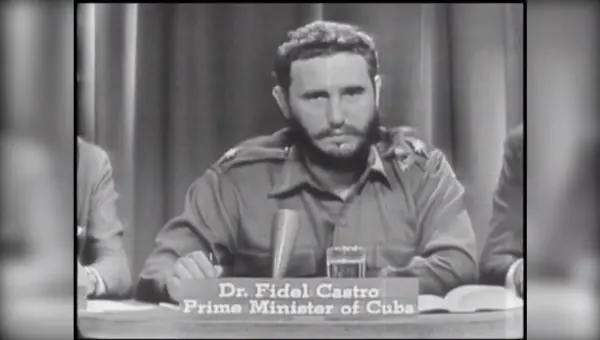
In a 1959 'Meet the Press' appearance, Cuban Prime Minister Fidel Castro denied being a communist, instead advocating for 'humanism' and social justice. He addressed concerns about his government's direction, affirmed his commitment to democracy, and promised free elections, while pushing back against accusations of communist influence and defending Cuba's role in Latin America.
Trump Escalates Iran Conflict, Threatens Blockade
Former President Donald Trump has escalated tensions with Iran by threatening to blockade the Strait of Hormuz following failed negotiations led by Senator JD Vance. This move is marked by significant contradictions and raises concerns about global economic stability and the risk of wider conflict.