Crypto Czar Resigns Amid CLARITY Bill Uncertainty
David Sacks, the U.S. "Crypto Czar," has resigned just before the CLARITY Bill's vote, creating uncertainty in the crypto market. The move raises questions about the future of digital asset regulation and investor confidence. Market volatility is expected as the industry awaits clarity on new rules.

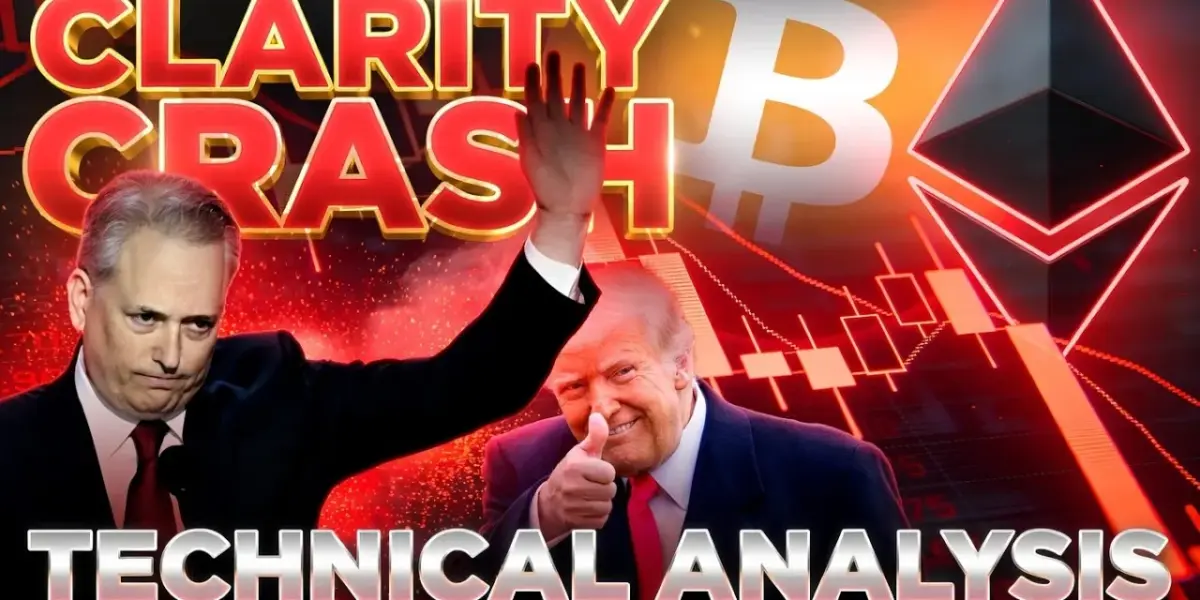
Crypto Czar Resigns Amid CLARITY Bill Uncertainty
David Sacks, often referred to as the U.S. “Crypto Czar,” has resigned from his position just before the controversial CLARITY Bill was set to be voted on. This sudden departure has sent ripples through the cryptocurrency market, raising questions about the future of crypto regulation and the confidence investors place in the sector.
Sacks’ Departure and Market Reaction
Sacks’ resignation, a significant development in the U.S. regulatory scene, occurred at a critical juncture for digital asset policy. The CLARITY Bill, a piece of legislation aimed at defining the regulatory framework for cryptocurrencies, now faces an uncertain path forward without his leadership. Market participants are closely watching to see how this will impact Bitcoin (BTC) and other major cryptocurrencies.
The timing of Sacks’ exit has fueled speculation. Some analysts suggest it could signal deeper disagreements or a lack of consensus regarding the CLARITY Bill’s provisions. This uncertainty can lead to increased volatility in the crypto market as traders and investors react to potential regulatory shifts. Bitcoin, the flagship cryptocurrency, often experiences price swings based on news related to regulation and government oversight.
Coinbase and Regulatory Scrutiny
The conversation around regulatory responsibility also touched upon major exchanges like Coinbase. While not directly blamed for Sacks’ resignation, the actions and lobbying efforts of large crypto platforms are often under the microscope during regulatory debates. These companies play a crucial role in the adoption and accessibility of cryptocurrencies, making their stance on proposed legislation a key factor.
The broader market has experienced significant downturns, with the S&P 500 (SPX) also seeing a notable wipeout. This wider market weakness can sometimes spill over into the crypto space, as investors reduce their exposure to riskier assets. The correlation between traditional markets and digital assets is a key theme for traders trying to predict price movements.
Market Sentiment and Future Outlook
Veteran trader Mark Cudmore shared his perspective, emphasizing caution. He suggested that in the current market environment, it’s not advisable to be overly bullish too early. This sentiment reflects a general feeling of uncertainty and a need for clearer regulatory guidance before significant capital can be confidently deployed.
The possibility of Bitcoin reaching $50,000 over the weekend was discussed, highlighting the speculative nature of the crypto market. However, the prevailing sentiment, influenced by regulatory news and broader economic factors like the Federal Reserve’s stance on interest rates, suggests a cautious approach. With zero rate cuts anticipated this year, the cost of borrowing remains high, potentially impacting investment in riskier assets like cryptocurrencies.
Ethereum vs. Hype
The discussion also contrasted Ethereum (ETH) with the general hype surrounding altcoins. Ethereum, as the second-largest cryptocurrency and a platform for decentralized applications (dApps) and smart contracts, holds significant fundamental value. However, the market can sometimes be driven by speculative hype around newer or less established tokens, leading to inflated valuations that are not sustainable.
Understanding the difference between fundamental value, as seen in established projects like Ethereum, and speculative hype is crucial for investors navigating the crypto market. The CLARITY Bill and Sacks’ resignation are key events that will shape this distinction and influence the long-term trajectory of digital assets.
What is a “Crypto Czar”?
The term “Crypto Czar” is an informal title used to describe a high-ranking government official tasked with coordinating and overseeing cryptocurrency policy within a country. This role typically involves working across different government agencies to develop a cohesive strategy for regulating digital assets, balancing innovation with consumer protection and financial stability. The “czar” often acts as a liaison between the government, the crypto industry, and international regulatory bodies.
What is the CLARITY Bill?
While the specific details of the “CLARITY Bill” were not provided in the transcript, it is presented as a significant piece of legislation aiming to establish clear rules for the cryptocurrency market in the United States. Such bills often address issues like defining which digital assets are considered securities, outlining requirements for crypto exchanges, and setting standards for consumer protection and anti-money laundering (AML) measures. The passage of such a bill is seen as critical for providing regulatory certainty to the industry.
What is Bitcoin (BTC)?
Bitcoin (BTC) is the first and most well-known cryptocurrency. It operates on a decentralized ledger technology called a blockchain, which records all transactions. Unlike traditional currencies issued by governments, Bitcoin is created and managed through a process called mining, and its supply is limited. Its decentralized nature means no single entity controls it, making it resistant to censorship and manipulation.
What is Ethereum (ETH)?
Ethereum (ETH) is a decentralized, open-source blockchain system that facilitates the creation of smart contracts and decentralized applications (dApps). Ether is the native cryptocurrency of the Ethereum platform, used to pay for transaction fees and computational services. Ethereum’s blockchain is programmable, allowing developers to build a wide range of applications beyond simple currency transactions, such as decentralized finance (DeFi) platforms and non-fungible tokens (NFTs).
What is a Blockchain?
A blockchain is a distributed, immutable digital ledger that records transactions across many computers. Each new block of transactions is cryptographically linked to the previous one, forming a chain. This structure makes it extremely difficult to alter or tamper with past records, ensuring transparency and security. Think of it like a shared digital notebook that everyone can see but no one can erase entries from once they are written.
What are Smart Contracts?
Smart contracts are self-executing contracts with the terms of the agreement directly written into code. They run on a blockchain and automatically execute actions when predefined conditions are met. For example, a smart contract could automatically release funds from an escrow account once a certain delivery is confirmed. This removes the need for intermediaries and speeds up processes.
What are Decentralized Applications (dApps)?
Decentralized Applications, or dApps, are applications that run on a peer-to-peer network rather than a single central server. They leverage blockchain technology and smart contracts to operate. This decentralization makes dApps more resistant to censorship, downtime, and single points of failure compared to traditional applications.
What is Market Cap?
Market capitalization, or market cap, is a metric used to measure the total value of a cryptocurrency. It is calculated by multiplying the current price of a coin by its total circulating supply. For example, if a cryptocurrency has a circulating supply of 1 million coins and each coin is trading at $10, its market cap would be $10 million. Market cap is often used to rank cryptocurrencies by size and assess their overall market influence.
What is Trading Volume?
Trading volume refers to the total amount of a cryptocurrency that has been bought and sold over a specific period, usually 24 hours. A high trading volume indicates strong interest and liquidity in the market, meaning it is easier to buy or sell the asset without significantly impacting its price. Conversely, low trading volume can suggest less interest and potentially higher price volatility.
Source: Crash Worsening After CLARITY Feud📉 @TimWarrenTrades Technical Analysis (YouTube)

Related Articles


Bitcoin Tanks on War Fears, Traders Hunt Liquidity
Bitcoin experienced a sharp price drop driven by geopolitical fears, leading to retail panic. Experienced traders view this volatility as an opportunity to hunt for liquidity. Live trading sessions are focusing on raw price action and strict risk management to find genuine entry points amidst the market noise.


Fannie Mae Embraces Crypto Mortgages, ETH Preps for Quantum Future
Fannie Mae is now accepting crypto-backed mortgages, allowing homeowners to use digital assets like Bitcoin for down payments. Meanwhile, Ethereum is enhancing its security against quantum computing threats, with significant on-chain data showing reduced exchange holdings. X (Twitter) is also expanding into financial services, signaling broader crypto adoption.


Bitcoin Surges Past Gold, S&P 500 Amid Shifting Markets
Bitcoin is outperforming gold and the S&P 500, with experts citing its role as a digital store of value. Major financial institutions like Morgan Stanley are increasing their involvement, and regulatory clarity is on the horizon. On-chain data and technical indicators suggest a potential market bottom, signaling a bullish outlook for cryptocurrency.