Court Rejects Trump’s Citizenship Claim, But Divides Court
The Supreme Court is expected to rule Trump's executive order on birthright citizenship unconstitutional, but a split decision could still raise concerns about the court's credibility. Legal experts discuss the arguments, Trump's unusual appearance, and potential future actions by Congress.

Court Rejects Trump’s Citizenship Claim, But Divides Court
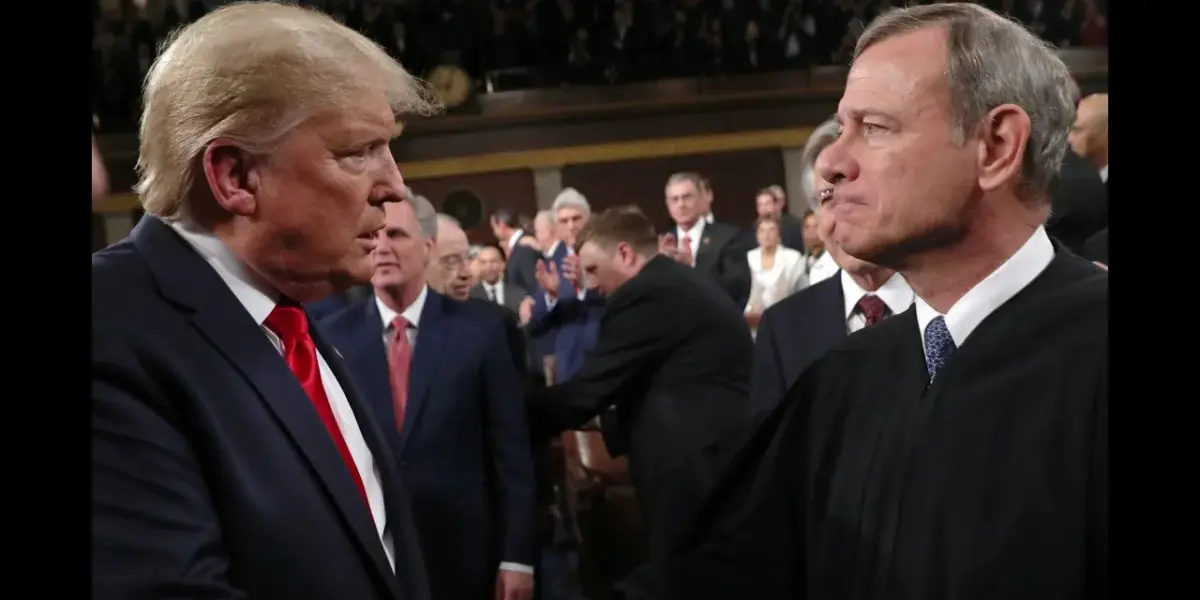
The Supreme Court recently heard arguments in a major case about birthright citizenship, stemming from an executive order by former President Donald Trump. This order aimed to deny birthright citizenship to children born in the U.S. to parents who were not citizens and were in the country illegally. After the hearing, legal experts believe the court will likely rule that Trump’s executive order was unconstitutional. However, the possibility of a divided court, rather than a unanimous decision, is seen as a significant concern by some.
The core of the case revolves around the 14th Amendment of the U.S. Constitution. This amendment, ratified after the Civil War, clearly states that all persons born or naturalized in the United States are citizens. Legal scholars argue that the text and historical context of this amendment are straightforward. Despite this clarity, the case has become a point of contention, and Trump’s challenge has managed to stir up public debate and create uncertainty around an issue that many thought was settled law.
Trump’s Presence and the Court’s Reaction
Donald Trump’s decision to attend the oral arguments in person was unusual. His presence seemed to turn the legal proceeding into more of a spectacle. Some observers suggested it was an attempt to intimidate the justices, reminding them of his influence and the support he has from certain segments of the population. However, legal experts like Professor Leah Litman of the University of Michigan suggest that the justices are well-protected and not easily swayed by such tactics. They believe that Trump’s online statements and rallies are far more concerning than his physical presence in a courtroom.
Trump also left the hearing before the arguments concluded, which raised questions. Some speculate he may have grown bored with the highly technical legal discussions. Others think he might have sensed that the arguments were not going well for the government’s side. The complex legal jargon used in Supreme Court arguments can be difficult to follow, even for those familiar with the law. This technical nature might have made the experience uncomfortable for someone like Trump, who has previously boasted about his performance on simple cognitive tests.
Key Arguments and Weaknesses
During the arguments, the justices explored various angles of the case. Justice Neil Gorsuch pointed to historical legal decisions that supported birthright citizenship. Justice Amy Coney Barrett focused on the history of the 14th Amendment, emphasizing its role in overturning the Dred Scott decision and ensuring citizenship for formerly enslaved people. Justice Brett Kavanaugh, meanwhile, highlighted a federal law that codifies birthright citizenship.
The arguments revealed significant weaknesses in the federal government’s position. It appeared that multiple justices, including those appointed by Republican presidents, found reasons to question the executive order. The existence of the 14th Amendment itself seems to be a major obstacle for the government’s argument. The fact that the court agreed to hear this case, despite the seemingly clear constitutional text, has led to criticism that the court is taking time away from more pressing legal matters.
Concerns About Court Credibility
There are worries that if some justices, particularly Justices Clarence Thomas and Samuel Alito, side with Trump, it would further damage the court’s credibility. Critics point to past decisions where the court has seemed to bend to Trump’s political interests, such as rulings that have been interpreted as protecting him from accountability. The court’s willingness to even consider an argument that appears to contradict the plain meaning of the Constitution is seen by some as evidence of a court influenced by political ideology rather than legal principles.
The decision to hear this case at all, rather than dismissing it quickly, is also viewed with suspicion. Some believe the court is using the case to generate positive publicity and appear independent by rejecting Trump’s argument. This strategy, they argue, is meant to build goodwill before releasing potentially controversial decisions later in the term. These future decisions could impact voting rights, presidential power, and environmental regulations.
The Path Forward for Democrats
Looking ahead, the discussion turned to potential actions Democrats could take if they regain control of the White House and Congress. Ideas include expanding the size of the Supreme Court, imposing ethics rules on justices, and limiting the court’s power to strike down laws and regulations. Technically, expanding the court would require a majority in both the House and Senate, and a president willing to sign the legislation. If the Senate filibuster remains, a higher threshold of 60 votes would be needed.
Recent political analysis suggests that Democratic chances in the Senate might be stronger than previously thought, due to shifts in the electorate and the unpopularity of Donald Trump. However, the ability of Democrats to effectively use political power when they gain it remains a question. The urgency of the current political moment and the need for decisive action are emphasized by legal commentators.
Where to Find More Information
Professor Leah Litman co-hosts the podcast “Strict Scrutiny,” which releases regular episodes every Monday and bonus episodes when the Supreme Court makes significant rulings. She is also active on Blue Sky as Leah Litman. Her book, “Lawless: How the Supreme Court Runs on Conservative Grievance, French Theories, and Bad Vibes,” is available at independent bookstores.
Source: Trump gets BAD NEWS amid DISASTER Supreme Court hearing (YouTube)

Related Articles

Trump’s Impossible Demands Reshape Justice Department
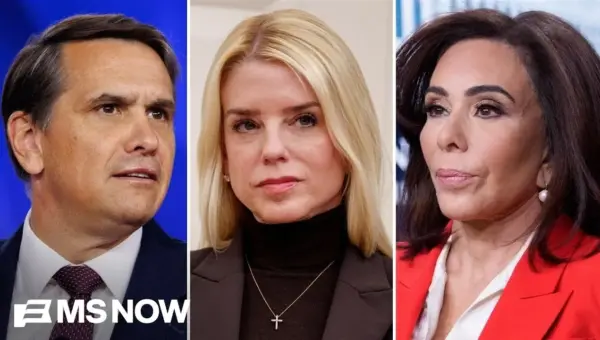
President Trump's demand for loyalty and action outside legal norms has reshaped the Justice Department. Recent departures, like Pam Bondi's, highlight the difficulty of fulfilling the President's "impossible tasks." The search for a new Attorney General continues amidst concerns about the DOJ's independence.

Trump’s Leadership: A Moral Vacuum for Young Learners?
Young people seek moral guidance from leaders, but what lessons does Donald Trump offer? Some argue his approach teaches negative behaviors like bullying and isolation, contrasting with traits like patience and gratitude seen in others. This raises questions about leadership character and its impact on societal values.

Trump’s Transparency: A Press Secretary’s Bold Claim
President Trump's press secretary, Sarah Huckabee Sanders, claims his public persona is identical to his private one. She states his directness eliminates guesswork, making her job easier by providing clear, unspun messages.