Cotton Echoes Iraq War Rhetoric on Iran Threat
Senator Tom Cotton's framing of Iran as an "imminent threat" for 47 years echoes the justifications used for the Iraq War, stretching the definition of immediacy. This rhetoric raises concerns about the potential for mischaracterization and poorly considered policy decisions.


Cotton Echoes Iraq War Rhetoric on Iran Threat
Senator Tom Cotton’s recent rhetoric regarding Iran has drawn striking parallels to the justifications used for the Iraq War, raising questions about the nature of perceived threats and the language employed by policymakers. While acknowledging Iran’s long-standing problematic behavior, Cotton’s framing of the nation as an “imminent threat” for nearly five decades appears to stretch the very definition of immediacy, echoing the urgency invoked by the Bush administration in the lead-up to the 2003 invasion of Iraq.
The Evolving Definition of Imminent Threat
The core of Cotton’s argument, as presented in recent commentary, hinges on the concept of an “imminent threat.” He posits that an imminent threat is akin to “a car coming right at you” – an immediate, undeniable danger. However, he then applies this definition to Iran’s actions over the past 47 years, during which the regime has allegedly “maimed and killed thousands of Americans.” The inherent contradiction lies in labeling a threat that has persisted for nearly half a century as “imminent.” By its very nature, a threat loses its immediacy when it is protracted over such an extended period. The continuous, albeit reprehensible, actions of a state actor over decades do not align with the definition of an immediate, pressing danger.
Historical Parallels and the Iraq War Playbook
This framing immediately brings to mind the discourse surrounding the Iraq War. During the Bush era, a narrative of an urgent and imminent threat posed by Saddam Hussein’s Iraq was propagated by government officials and military leaders. Generals and officials appeared on television, emphasizing the supposed urgency and the necessity of immediate action. Documentaries examining this period often highlight how this perceived urgency was manufactured or exaggerated to build public and political support for military intervention. Cotton’s invocation of this historical context, even to critique it, inadvertently draws attention to the similarities in the rhetorical strategies being employed. The pattern of highlighting a hostile foreign entity’s long-term malevolence and then characterizing it as an immediate danger is a familiar one in foreign policy discourse.
Iran’s Illiberal Nature and Human Rights Concerns
Cotton correctly identifies the Iranian regime’s “fundamentally illiberal” nature and its history of repressing its own citizens for over 40 years. The stripping away of human rights within Iran is a grave concern, and the regime’s actions have undoubtedly caused suffering both domestically and internationally. These are valid points of criticism that are not contingent on the notion of an “imminent” threat. The international community has long condemned Iran’s human rights record and its support for proxy groups that have destabilized regions and harmed American interests. However, these long-standing issues, while serious, do not inherently transform into an “imminent” danger in the way Cotton’s rhetoric suggests.
The Role of Retaliation and Deterrence
Cotton suggests that Iran has “never faced an imminent response until President Trump.” This implies that a lack of decisive, immediate retaliation has allowed Iran to persist in its actions. The Trump administration did indeed adopt a more confrontational stance towards Iran, including withdrawing from the Joint Comprehensive Plan of Action (JCPOA) and imposing significant sanctions. This shift in policy was aimed at altering Iran’s behavior through maximum pressure. Whether these actions constituted an “imminent response” or a more generalized policy of deterrence is a matter of interpretation. However, the focus on the absence of a specific type of response as the enabler of Iran’s actions further underscores the argument that the threat, while persistent, has not been consistently defined or addressed as truly imminent until perhaps more recent policy shifts.
Why This Matters
The way policymakers frame threats has profound implications for public perception, foreign policy decisions, and ultimately, the potential for conflict. By employing language that equates a long-standing, albeit dangerous, adversary with an immediate, existential threat, there is a risk of creating a sense of panic or urgency that may not be warranted by the actual circumstances. This can lead to poorly considered policy choices, including the potential for military escalation. The lessons from the Iraq War serve as a critical reminder of the dangers of rhetoric that prioritizes urgency over careful analysis and evidence-based decision-making.
Implications, Trends, and Future Outlook
The trend of using heightened, urgent language to describe foreign policy challenges is not new, but it remains a potent tool. In an era of rapid information dissemination, such rhetoric can quickly shape public opinion and political discourse. The debate around Iran highlights a broader tension in foreign policy: how to address persistent, systemic threats from states that engage in hostile actions without resorting to hyperbole that could lead to unintended consequences. The future outlook suggests that policymakers will continue to grapple with this challenge. The effectiveness of “maximum pressure” campaigns, the potential for de-escalation, and the role of international diplomacy will all be shaped by the language used to describe the threat posed by Iran and other similar actors. A more nuanced approach, one that distinguishes between long-term strategic challenges and immediate dangers, is crucial for sound policy development.
Conclusion
Senator Cotton’s commentary on Iran, while highlighting legitimate concerns about the regime’s behavior and its impact on American lives, risks falling into a rhetorical trap that echoes the flawed logic of the Iraq War. By stretching the definition of “imminent threat” to encompass nearly five decades of adversarial actions, he inadvertently mirrors the urgency-driven justifications of the past. Acknowledging Iran’s problematic history and its role in regional instability is essential, but such acknowledgment should not be conflated with an immediate, existential danger. The critical task for policymakers and analysts is to maintain clarity in language, distinguishing between persistent threats and immediate perils, to ensure that foreign policy decisions are grounded in careful analysis rather than reactive urgency.
Source: Tom Cotton Recycle Iraq-War Logic on Iran #politics #fyp #new (YouTube)

Related Articles

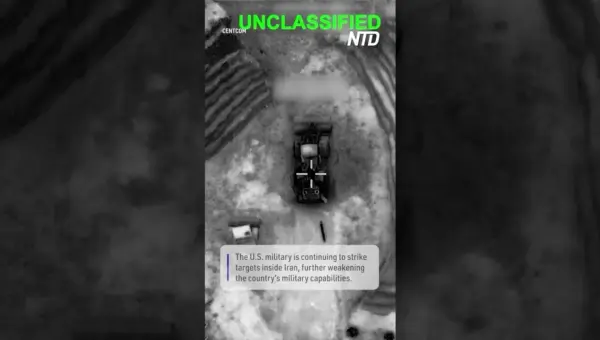
US Strikes Cripple Iran’s Military Might, CENTCOM Reports
U.S. Central Command reports ongoing strikes inside Iran are significantly weakening its military power. This direct action aims to reshape regional security dynamics, but carries risks of escalation. The long-term impact depends on Iran's response and ability to adapt.


Iran Targets US With Cyberattacks, Escalating Digital Warfare
Iran is increasingly using cyberattacks to challenge the U.S., as seen in a recent hack of the FBI director's account. Experts say this is a strategic shift due to Iran's limitations in conventional warfare. The U.S. needs to strengthen its digital defenses, focusing on encryption and cloud computing, rather than solely relying on traditional security measures.

Iran Hacks FBI Chief, Exposing U.S. Cyber Vulnerabilities
A recent hack of FBI Director Kash Patel's personal email by an Iran-linked group highlights Iran's growing cyber threat to the U.S. Experts explain how simple security oversights are exploited, emphasizing the need for basic defenses like two-factor authentication to protect against propaganda and potential infrastructure attacks.