Cosmic Ray Mystery: Amaterasu Particle Stuns Scientists
Scientists are investigating the origins of the incredibly energetic Amaterasu cosmic ray and re-evaluating the timeline of the Late Heavy Bombardment. Meanwhile, new theories suggest Titan may have shaped Saturn's rings, and a distant brown dwarf reveals a colossal ring system.


Cosmic Ray Mystery: Amaterasu Particle Stuns Scientists
Astronomers are grappling with the enigma of the universe’s most energetic particles, following the detection of the second most powerful cosmic ray ever recorded. Dubbed the ‘Amaterasu particle’ after the Japanese sun goddess, this subatomic projectile slammed into Earth’s atmosphere with an almost incomprehensible amount of energy, challenging our understanding of astrophysical accelerators.
The Amaterasu Particle: A Cosmic Powerhouse
Cosmic rays are high-energy particles, primarily protons and atomic nuclei, that travel through space at speeds approaching the speed of light. While most are relatively low-energy, some possess extraordinary power. The ‘Oh My God’ particle, detected in 1991, held the record for the highest energy cosmic ray. Recently, the Amaterasu particle was detected, boasting an energy level approximately 40 million times greater than that achieved in the Large Hadron Collider. Specifically, its energy was measured at an astounding 2.4 x 10^20 electron volts.
The detection of such a potent particle was made possible by the International Array Project, a global collaboration utilizing vast arrays of detectors on Earth’s surface. When a cosmic ray strikes the atmosphere, it triggers a cascade of secondary particles. By analyzing the composition and distribution of these secondary particles, scientists can infer the energy and origin of the primary cosmic ray.
Unraveling the Source: A Galactic Puzzle
The most pressing question surrounding the Amaterasu particle is its origin. While a ‘laundry list’ of potential sources exists – including supermassive black holes, supernovae, hypernovae, gamma-ray bursts, active galactic nuclei, pulsars, and magnetars – no definitive ‘smoking gun’ has been identified. These celestial phenomena are all capable of accelerating particles to extreme energies, but pinpointing the specific accelerator for Amaterasu has proven elusive.
However, initial analysis has provided a tantalizing clue: the particle appears to have originated from the vicinity of Messier 82 (M82), also known as the Cigar Galaxy. This galaxy, located approximately 12 million light-years away, is a region of intense star formation. This suggests that the Amaterasu particle could have been accelerated within the turbulent environment of M82 before embarking on its 12-million-year journey to Earth.
Revisiting the Late Heavy Bombardment
In other astronomical news, new findings from China’s Chang’e 4 mission are casting doubt on the long-held theory of the Late Heavy Bombardment (LHB). This period, estimated to have occurred around 3.9 billion years ago, posits a significant increase in asteroid and comet impacts across the inner solar system, including the Moon and Earth. Evidence for the LHB is largely derived from the cratering record on the Moon and Mercury, which shows a peak in impact events roughly 600-700 million years after the solar system’s formation.
The Chang’e 4 mission returned samples from the South Pole-Aitken Basin on the far side of the Moon. Analysis of these samples, using radioisotope dating techniques similar to carbon dating but applied to lead isotopes from uranium decay, revealed that the basin was formed by a colossal impact approximately 4.25 billion years ago. This date predates the traditionally accepted timeline for the LHB by about 350 million years.
This discovery leads to an intriguing possibility: perhaps the LHB, as currently understood, did not occur. Instead, there might have been a much earlier period of intense bombardment. The apparent ‘peak’ of the LHB could, in fact, be the result of a later, large impact on the Moon that ejected debris, obscuring evidence of earlier, more widespread impacts. This suggests a potential ‘Early Heavy Bombardment’ phase, with impacts occurring much earlier in the solar system’s history than previously thought.
Titan’s Ring-Making Influence?
Shifting focus to our own solar system, the moon Titan, Saturn’s largest satellite, is being eyed as a potential architect of Saturn’s iconic rings. Titan is a unique world, boasting a dense nitrogen atmosphere, methane rain, and seas of liquid methane. Its gravitational influence may extend beyond its immediate vicinity.
Astronomers theorize that Titan may have played a role in the formation of Saturn’s rings by disrupting a larger, ancient moon. Models suggest that approximately 400 million years ago, a moon named ‘proto-Hyperion’ ventured too close to Titan. The immense tidal forces exerted by Titan would have torn proto-Hyperion apart. A portion of the debris may have coalesced to form the current, irregularly shaped moon Hyperion, while the rest was either consumed by other moons or formed the rings we observe today. If true, this would imply that Saturn’s rings are relatively young, rather than ancient remnants of the solar system’s formation.
A Brown Dwarf’s Gigantic Ring System
In a remarkable discovery, astronomers have identified a brown dwarf star obscured by what appears to be an enormous ring system. This object, previously observed to dim significantly for about 200 days, is now believed to have been viewed edge-on through a vast disk of dust and debris.
The ring system is estimated to be approximately 0.17 astronomical units in radius, roughly half the distance from the Sun to Mercury. Such a massive ring system around a brown dwarf or a ‘super-Jupiter’ is unprecedented. The leading hypothesis is that this structure is the result of a cataclysmic collision between planets that once orbited the brown dwarf, creating a debris field so opaque it could temporarily hide the star from view.
Organic Molecules in Deep Space: A New Pathway
The detection of complex organic molecules, such as glycine (an amino acid), in space and in samples returned from asteroids like Bennu has long puzzled scientists. The prevailing theory suggested that liquid water was a necessary solvent for these molecules to form. However, this explanation is challenged by the presence of such molecules in comets and icy asteroids, which may never have experienced liquid water.
New laboratory experiments are offering an alternative pathway. Researchers have demonstrated that exposing ice to radiation can effectively catalyze the formation of organic molecules like glycine, without the need for liquid water. This suggests that the harsh radiation environment of space, even in the frigid outer solar system, is sufficient to drive complex astrochemistry, potentially explaining the widespread presence of organic building blocks throughout the cosmos.
Ganymede’s Auroral Display
Ganymede, the largest moon in our solar system and the only one with its own intrinsic magnetic field, has been observed to possess auroras. NASA’s Juno spacecraft, during a flyby in 2021, detected patterned emissions in ultraviolet light that resemble the ‘beaded’ structures seen in the auroras of Earth and Jupiter. This suggests that Ganymede, despite its thin atmosphere, experiences auroral displays during periods of high solar activity, further highlighting its unique planetary characteristics.
The Future of Our Sun: A Glimpse Through Mira
The red giant star Mira, located about 400 light-years away, is providing astronomers with a unique preview of our Sun’s distant future. Mira is a binary system where one star, similar in mass to our Sun, is in its red giant phase, shedding its outer layers into space. Observations have tracked two significant blobs of gas ejected by Mira approximately 50 and 200 years ago, respectively. This shedding process, driven by the star running out of hydrogen fuel and beginning helium fusion, will eventually leave behind a white dwarf. Mira’s interaction with the interstellar medium has given it a distinctive, comet-like tail, offering a vivid illustration of stellar evolution.
Artemis II Mission Update
The Artemis II mission, which aims to send four astronauts on a lunar flyby, is progressing after a successful second wet dress rehearsal. Following the detection of hydrogen leaks during a previous test, NASA has implemented fixes and confirmed the integrity of the Space Launch System (SLS) rocket. The crew is scheduled to enter quarantine on February 20th, with the launch window now expected to open in early March, marking a significant step towards returning humans to lunar orbit for the first time in over 50 years.
Source: AMATERASU Rays // Late Heavy Bombardment Doubts // Titan Bully (YouTube)

Related Articles

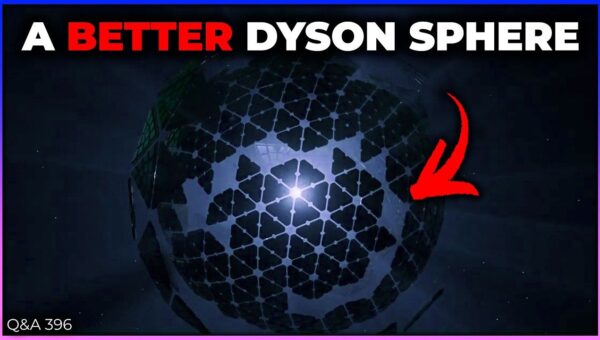
White Dwarf Dyson Spheres: A Tiny Star’s Big Energy Solution
Astronomers are exploring the possibility of building Dyson spheres around compact white dwarf stars, which offer a long-lasting and stable energy source. Meanwhile, the Vera Rubin Observatory promises near real-time astronomical discovery, and new data challenges models of supermassive black hole formation in the early universe.

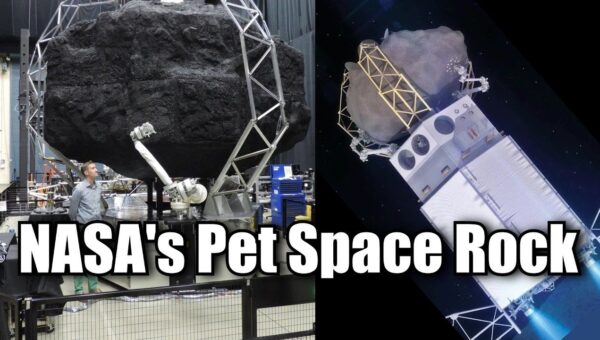
NASA’s Asteroid Mission: From Mars Dream to Lunar Gateway
NASA's ambitious Asteroid Redirect Mission (ARM), designed as a stepping stone to Mars, aimed to capture a small asteroid boulder and tow it to lunar orbit for astronaut testing. Though cancelled, its advanced propulsion and robotic technologies live on in NASA's Lunar Gateway and future deep space exploration plans.
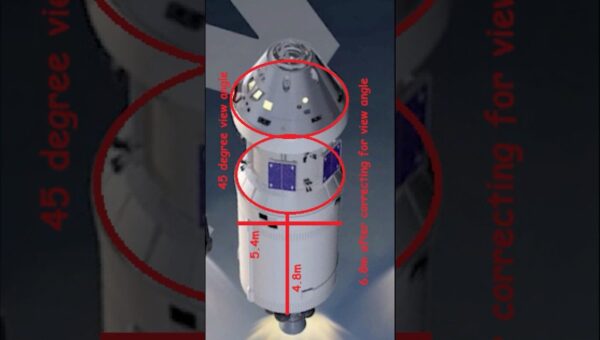
NASA’s Evolving SLS Rocket Hints at New Upper Stage
NASA's Artemis program may be adopting a new upper stage for its Space Launch System (SLS) rocket, potentially utilizing the commercially available Centaur V. An updated infographic reveals design changes and hints at evolving mission strategies, including advanced lunar lander operations.