Cosmic Questions Answered: A Universe Today Deep Dive
Fraser Cain of Universe Today hosted a live Q&A session on March 1st, 2026, delving into exoplanets, orbital mechanics, and the search for extraterrestrial life. The event highlighted Universe Today's commitment to making space science accessible.


Universe Today Hosts Live Q&A on Space and Astronomy
In a recent engaging session, Fraser Cain, the driving force behind Universe Today, opened the floor to a live question and answer event, offering insights into the vast and wondrous realms of space and astronomy. This interactive format, a staple for the publication known for its accessible yet scientifically rigorous approach, allowed enthusiasts and curious minds alike to probe the frontiers of our understanding of the cosmos.
Exploring the Universe, One Question at a Time
The session, held on March 1st, 2026, underscored Universe Today’s commitment to demystifying complex astronomical concepts and current space exploration news for a broad audience. Fraser Cain, with his extensive experience in science journalism, guided the conversation through a diverse array of topics, ranging from the latest discoveries in exoplanet research to the intricate mechanics of orbital trajectories and the enduring quest for extraterrestrial life.
The Exoplanet Frontier: New Worlds Abound
A significant portion of the discussion likely revolved around the ever-expanding catalog of exoplanets – planets orbiting stars beyond our Sun. With missions like NASA’s Transiting Exoplanet Survey Satellite (TESS) and the now-retired Kepler Space Telescope, astronomers have identified thousands of these distant worlds. Cain would have elaborated on the methods used to detect these planets, such as the transit method, where a planet’s passage in front of its star causes a slight dip in the star’s brightness. He might also have touched upon the atmospheric characterization of exoplanets using powerful observatories like the James Webb Space Telescope (JWST), which can analyze the chemical composition of their atmospheres, searching for biosignatures – indicators of life.
The sheer diversity of exoplanets discovered is staggering. From scorching hot ‘hot Jupiters’ to potentially habitable ‘super-Earths’ located within their star’s habitable zone – the region where liquid water could exist on a planet’s surface – each new find pushes the boundaries of our understanding of planetary formation and evolution. Discussions would have likely included specific recent discoveries, perhaps detailing planets orbiting red dwarf stars, the most common type of star in our galaxy, and the challenges and opportunities associated with searching for life on worlds around these smaller, dimmer suns.
Orbital Mechanics: The Dance of Celestial Bodies
Beyond exoplanets, the principles of orbital mechanics, the physics governing the motion of objects in space, are fundamental to understanding everything from satellite orbits to the paths of spacecraft on interplanetary journeys. Cain may have explained concepts like gravitational influence, orbital velocity, and the delicate balance required to maintain a stable orbit. He might have discussed the complexities of launching rockets, achieving escape velocity, and navigating the vast distances of the solar system, referencing iconic missions like the Voyager probes, which have journeyed beyond the heliosphere, or the Perseverance rover’s ongoing exploration of Mars.
The physics of orbits is not merely theoretical; it has direct implications for space exploration. Understanding orbital transfers, gravitational assists (where spacecraft use the gravity of planets to alter their speed and trajectory), and the precise timing needed for rendezvous missions are critical for mission success. For instance, launching a probe to Jupiter requires careful calculation of its trajectory to intersect with the giant planet at the right time, a journey that can take several years.
The Search for Extraterrestrial Life: Are We Alone?
The question of whether life exists beyond Earth is perhaps one of the most profound inquiries humanity can make. The Q&A session would likely have delved into the scientific approaches to this search. This includes not only the study of exoplanet atmospheres for biosignatures but also the exploration of potentially habitable environments within our own solar system, such as the subsurface oceans of Jupiter’s moon Europa or Saturn’s moon Enceladus. These icy moons are thought to harbor vast quantities of liquid water beneath their frozen shells, making them prime candidates for harboring microbial life.
Cain might have discussed the Fermi Paradox – the apparent contradiction between the high probability of extraterrestrial civilizations and the lack of evidence for, or contact with, such civilizations. Theories attempting to resolve this paradox, ranging from the ‘great filter’ hypothesis to the vastness of space and time, could have been part of the conversation. The SETI (Search for Extraterrestrial Intelligence) program, which uses radio telescopes to listen for signals from alien civilizations, would also be a relevant topic.
Universe Today’s Role in Science Communication
Universe Today has carved a niche for itself by making complex scientific topics accessible and exciting. Through its website, email newsletter, and podcasts like “Universe Today” and “Astronomy Cast,” it reaches a global audience eager to learn about the latest space news and discoveries. The “Weekly Space Hangout” further amplifies this engagement, providing a platform for in-depth discussions with scientists and experts.
The Creative Commons Attribution 4.0 International (CC BY 4.0) license under which Fraser Cain’s work is shared exemplifies a spirit of open access and collaborative learning. This allows for the free use and distribution of his content, provided attribution is given, fostering a wider dissemination of scientific knowledge.
Looking Ahead: The Future of Space Exploration and Discovery
The future of space exploration promises even more groundbreaking discoveries. Upcoming missions, such as the Nancy Grace Roman Space Telescope, designed to investigate dark energy and search for exoplanets, and the continued development of private spaceflight by companies like SpaceX and Blue Origin, are set to revolutionize our access to and understanding of space. The Artemis program’s goal of returning humans to the Moon and establishing a sustainable presence there, as a stepping stone to Mars, represents a monumental leap in human endeavor.
These advancements are not just about scientific curiosity; they hold the potential for technological innovation, resource utilization, and perhaps even the long-term survival of humanity. By engaging with the public through events like this Q&A, Universe Today plays a crucial role in inspiring the next generation of scientists, engineers, and explorers, ensuring that the wonder of the cosmos remains accessible to all.
Source: Open Space March 1st 2026: Live QA with Fraser (YouTube)

Related Articles
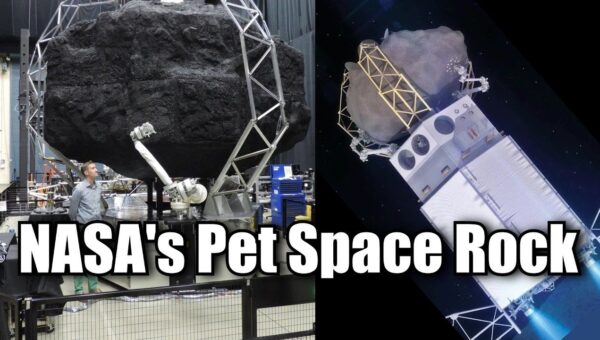
NASA’s Asteroid Mission: From Mars Dream to Lunar Gateway
NASA's ambitious Asteroid Redirect Mission (ARM), designed as a stepping stone to Mars, aimed to capture a small asteroid boulder and tow it to lunar orbit for astronaut testing. Though cancelled, its advanced propulsion and robotic technologies live on in NASA's Lunar Gateway and future deep space exploration plans.

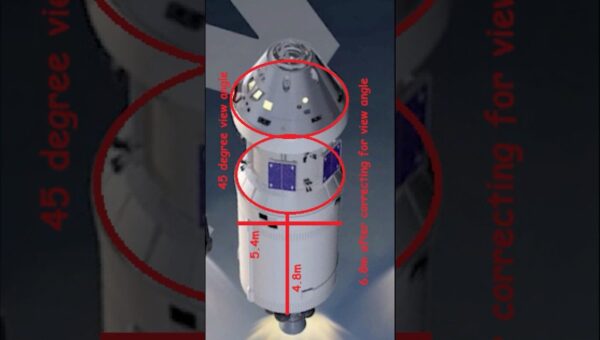
NASA’s Evolving SLS Rocket Hints at New Upper Stage
NASA's Artemis program may be adopting a new upper stage for its Space Launch System (SLS) rocket, potentially utilizing the commercially available Centaur V. An updated infographic reveals design changes and hints at evolving mission strategies, including advanced lunar lander operations.


SpaceX Starship V3 Nears First Flight Amidst Major Artemis Shakeup
SpaceX eyes March for Starship V3's maiden flight as new testing reveals design improvements. Meanwhile, NASA's Artemis program faces delays and strategic shifts, with Artemis III repurposed as a LEO test mission.