Cosmic Oddities: Exploring the Galaxy’s Most Bizarre Worlds
Explore the galaxy's most bizarre exoplanets, from worlds with incredibly short years to planets orbiting multiple suns and the mysterious rogue planets drifting through interstellar space. Discover the science behind these cosmic oddities and what they reveal about the universe.

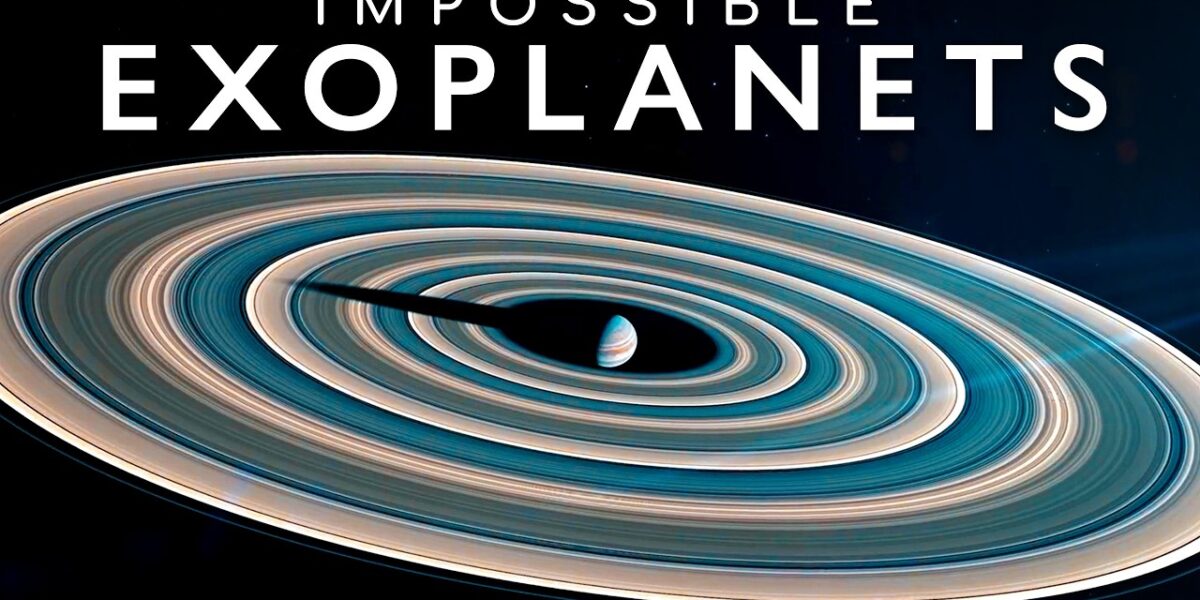
Cosmic Oddities: Exploring the Galaxy’s Most Bizarre Worlds
Our galaxy, the Milky Way, is a vast and wondrous place, teeming with celestial bodies that defy imagination. While our own solar system presents a diverse array of planets—from the scorching surface of Mercury to the icy realms of the outer planets—the universe beyond our cosmic neighborhood holds wonders that truly stretch the boundaries of our understanding. To date, NASA has confirmed the existence of over 6,000 exoplanets, and among these distant worlds, a fascinating collection of truly bizarre planets stands out, challenging our preconceptions of what a planet can be.
Worlds on the Brink: Extreme Orbital Speeds
The strangeness of a planet isn’t always about its composition or atmosphere; sometimes, it’s defined by its celestial dance. We’re accustomed to Earth’s 365-day orbit, but exoplanets can drastically alter our perception of a ‘year.’ Many exoplanets discovered thus far have incredibly short years, often due to the limitations of our detection methods. The transit method, which observes the slight dimming of a star as a planet passes in front of it, is most effective for planets with short orbital periods, as these transits occur frequently, allowing for quicker confirmation. Systems like TRAPPIST-1, where all seven planets orbit their star within a single month, exemplify this. The innermost planet completes its orbit in a mere 1.5 Earth days.
However, the undisputed champion of rapid orbits resides not around a typical star, but a pulsar. A pulsar is the rapidly spinning remnant of a collapsed star, incredibly dense and possessing immense gravity. One such object, orbiting a pulsar, completes a full revolution in a staggering 48 minutes and 58.5 seconds. This extreme proximity and the pulsar’s intense gravitational pull allow the orbiting body—potentially a planet or a stellar core—to maintain its orbit at incredible speeds.
For planets orbiting main-sequence stars, the shortest known year belongs to K2-137b, a planet that completes its orbit in just 4.31 hours. This Earth-sized exoplanet is so close to its star that it likely orbits within the star’s atmosphere, facing a grim future of either being torn apart by tidal forces or spiraling into the star due to atmospheric drag.
On the opposite end of the spectrum, the longest known orbital period for a planetary-mass object belongs to a Jupiter-like gas giant whose ‘year’ spans approximately one million Earth years. Even this pales in comparison to a ‘galactic year’—the time it takes for our entire solar system to orbit the center of the Milky Way, a journey that takes roughly 250 million Earth years. By this measure, Earth, at 4.5 billion years old, is a mere galactic teenager, having completed only about 18 galactic orbits.
Celestial Choreography: Planets in Multi-Star Systems
While our solar system is graced by a single sun, the universe hosts a significant number of multi-star systems. These systems, where two or more stars orbit each other, present complex gravitational environments that can still host planets. These systems often organize into hierarchical structures to maintain stability. In a binary system, two stars orbit a common center of mass. In systems with three stars, two might form a binary pair, with the third star orbiting the barycenter of the pair. This tiered approach prevents chaotic interactions and ejections.
Planets can exist in these intricate systems in various ways. Some may orbit a single star within the system, experiencing only one sun. Others might orbit the barycenter of a binary pair, seeing two suns in their sky. In more complex systems, planets can orbit multiple stars simultaneously, potentially experiencing the light and heat of three, four, or even seven stars. The planet Kepler-16b, discovered in 2011 by NASA’s Kepler space telescope, famously orbits two stars, earning it the nickname ‘Tatooine planet’ after the fictional world from Star Wars.
The experience of living on a planet with multiple suns would depend heavily on the types and distances of the stars. A close orbit around a red dwarf, for instance, could lead to significantly increased temperatures, powerful stellar flares that could disrupt electronics and potentially endanger life, and complex day-night cycles. A system with a blue supergiant would likely be uninhabitable due to extreme heat, radiation, and stellar winds capable of stripping away an atmosphere. However, if the stars in a binary system are very far apart—separated by light-years—a planet could orbit one star and experience the other as a distant, though visible, celestial companion, potentially maintaining a stable, habitable environment.
Nomadic Worlds: The Enigma of Rogue Planets
Perhaps the most enigmatic class of celestial bodies are rogue planets. These are planetary-mass objects that are not gravitationally bound to any star, drifting through interstellar space alone. Their origins are debated: they may have formed within planetary systems and been ejected during chaotic early stages, or they might be failed stars that never accumulated enough mass to ignite fusion. Estimates suggest billions, if not trillions, of rogue planets could exist in our galaxy alone, though their elusive nature makes accurate counts challenging.
Detecting these lightless wanderers relies on a clever technique called gravitational microlensing. This phenomenon, predicted by Einstein, occurs when a massive object passes between an observer and a distant light source. The gravity of the foreground object bends the light from the background source, causing it to appear brighter. By observing these subtle brightening events, astronomers can infer the presence and mass of intervening objects, including rogue planets. The upcoming Nancy Grace Roman Space Telescope, with its wide field of view and advanced camera, is expected to significantly advance our ability to detect these free-floating worlds.
While rogue planets are inherently dark and cold, they might not be entirely devoid of potential for life. A thick, hydrogen-rich atmosphere could trap internal heat, potentially allowing for liquid water oceans. Any life that emerged would likely be chemosynthetic, drawing energy from the planet’s internal heat and chemical processes, similar to life found near hydrothermal vents on Earth, rather than relying on photosynthesis.
A Universe of Wonders
The ongoing exploration of exoplanets continues to reveal a universe far stranger and more diverse than we could have ever imagined. From planets with impossibly short years to worlds illuminated by multiple suns, and the mysterious, solitary rogue planets drifting in the cosmic dark, each discovery pushes the boundaries of our scientific understanding and fuels our innate curiosity about our place in the cosmos. As our observational capabilities improve, we can anticipate many more bizarre and wonderful exoplanets waiting to be found, each offering new insights into the formation, evolution, and sheer diversity of planetary systems across the galaxy.
Source: The Most Bizarre Exoplanets We've Ever Found (YouTube)

Related Articles


NASA’s Asteroid Mission: From Mars Dream to Lunar Gateway
NASA's ambitious Asteroid Redirect Mission (ARM), designed as a stepping stone to Mars, aimed to capture a small asteroid boulder and tow it to lunar orbit for astronaut testing. Though cancelled, its advanced propulsion and robotic technologies live on in NASA's Lunar Gateway and future deep space exploration plans.
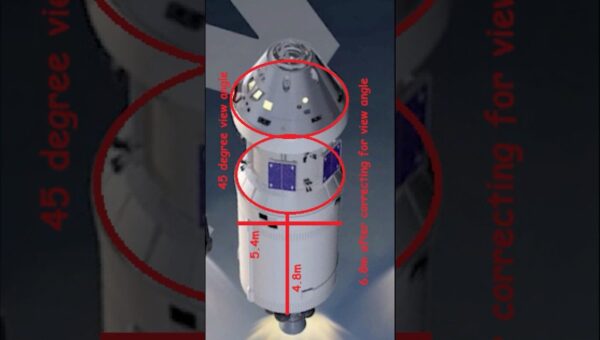
NASA’s Evolving SLS Rocket Hints at New Upper Stage
NASA's Artemis program may be adopting a new upper stage for its Space Launch System (SLS) rocket, potentially utilizing the commercially available Centaur V. An updated infographic reveals design changes and hints at evolving mission strategies, including advanced lunar lander operations.


SpaceX Starship V3 Nears First Flight Amidst Major Artemis Shakeup
SpaceX eyes March for Starship V3's maiden flight as new testing reveals design improvements. Meanwhile, NASA's Artemis program faces delays and strategic shifts, with Artemis III repurposed as a LEO test mission.