Cosmic Blueprint: Science Meets Faith in Universe’s Origins
Astrophysicist Michio Kaku draws parallels between the Big Bang theory and biblical creation accounts. He also discusses the potential for future technology to preserve human consciousness and shares his personal belief in a "God of creation."

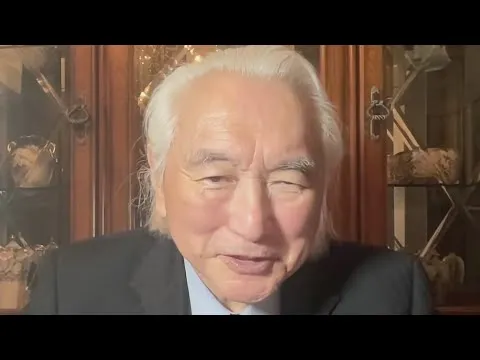
Science and Spirituality Converge on Universe’s Beginning
Renowned physicist Michio Kaku recently explored the profound connections between scientific discovery and ancient spiritual narratives. His discussions, particularly surrounding the Big Bang theory and the concept of a “God Equation,” highlight a fascinating intersection of physics and faith. Kaku suggests that the sequence of events described in the biblical creation story mirrors the scientific understanding of the universe’s evolution. This perspective offers a unique way to think about our place in the cosmos.
The Big Bang and the Genesis Timeline
The Big Bang theory describes the universe’s explosive start, a moment of immense energy and expansion. Kaku draws a parallel between this event and the biblical “Day One.” He explains that the initial fireball of the Big Bang could be seen as the universe’s first light. Following this, the cooling and condensation of matter into the “heavens and earth” aligns with “Day Two.” This is where the Higgs boson plays a crucial role in physics, giving mass to particles and thus forming the fundamental structures of the universe.
The formation of land and oceans, marking distinct geographical features, corresponds to “Day Three” in the creation account. Kaku notes that life and animals appearing on Earth align with “Day Five.” Finally, human life emerges on “Day Six,” leading to a period of rest on “Day Seven.” This comparison, while not a scientific proof of religious texts, shows how scientific observations can sometimes echo ancient descriptions of creation.
The Question of Consciousness and the Afterlife
When asked about the afterlife, Kaku acknowledges that current science offers no definitive answers. The Bible itself does not provide detailed scientific explanations for what happens after death. However, Kaku proposes a forward-looking perspective on human consciousness. He believes that while consciousness tied to our physical body may not survive death, future scientific advancements could allow us to mimic and replicate human thought processes.
This could involve capturing consciousness and transferring it into artificial forms, like robots. The idea is that consciousness might not simply vanish but could potentially be preserved or continued in a different form. While this technology is not yet available, Kaku suggests it’s a possibility for the future, offering a scientific angle on the enduring question of what happens after we die.
A Physicist’s View on God
Kaku’s personal journey reflects a lifelong contemplation of faith. Raised in a household with Buddhist and Christian influences, he has grappled with the existence of God. He describes his current view as believing in a “God of creation itself” rather than a personal deity who intervenes in human affairs. For Kaku, this God is the underlying intelligence or order of the universe, not necessarily the God depicted in religious scriptures.
As a physicist, Kaku emphasizes that science requires proof. He states that while he believes in a universal order, there is no definitive scientific evidence, or “smoking gun,” to prove or disprove the existence of God. Therefore, his belief remains a matter of faith, a personal conviction until such proof is found.
The Artemis Program and Future Exploration
Shifting to space exploration, Kaku expressed enthusiasm for NASA’s Artemis program. The program aims to establish a base on the Moon and eventually send humans to Mars. He views Artemis 2 as entering a new phase of space travel. Initially, it was about observation, with astronauts taking stunning photos of the lunar surface. Now, the program is moving towards more active exploration and tourism around the Moon.
Kaku likens this era to an “age of discovery.” He anticipates that returning to Earth after such voyages will be a significant undertaking. However, he sees the current phase as an exciting “joy ride,” marking a bold step in humanity’s expansion beyond our home planet.
Source: Genesis dovetails with ‘Big Bang’: Astrophysicist Michio Kaku | NewsNation Prime (YouTube)

Related Articles

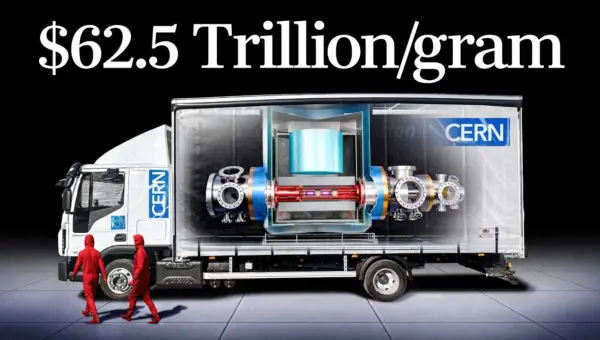
Matter-Antimatter Mystery: CERN Unlocks Secrets of Universe’s Imbalance
Scientists at CERN are producing and studying antimatter to solve the cosmic mystery of why the universe is dominated by matter. This elusive substance, created in a specialized factory, could reveal the fundamental imbalance that allowed matter to prevail over antimatter in the early universe.
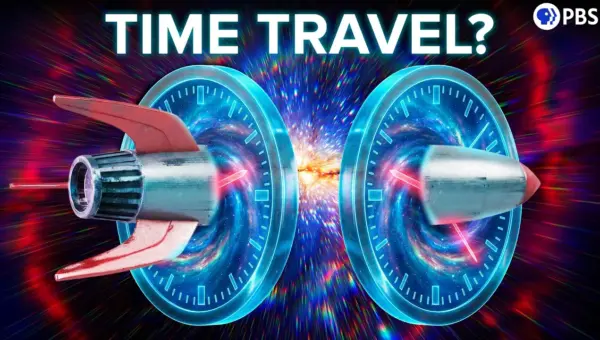
Einstein’s Relativity Crumbles: Time Travel Found in New Universe
Mathematician Kurt Gödel discovered a universe within Einstein's relativity where time travel is inevitable, challenging our understanding of cause and effect. This groundbreaking solution revealed potential paradoxes in the fabric of spacetime.
Astronaut Spots Cosmic Flip: The Tennis Racket Mystery
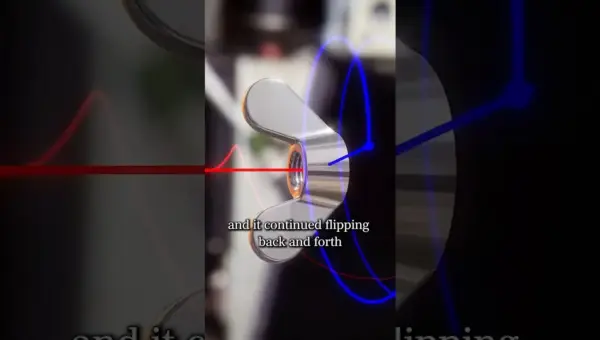
A Soviet cosmonaut's accidental discovery of a spinning wing nut revealed the bizarre Janabbeckov effect. This phenomenon, also known as the tennis racket theorem, explains why some spinning objects inexplicably flip, a quirk now understood through physics.