Cooper, Whatley Set for NC Senate Showdown
NBC News projects Roy Cooper and Michael Whatley as the winners of their respective North Carolina Senate primaries, setting up a critical general election contest. The race is expected to focus heavily on economic issues and affordability, with both parties vying to convince voters of their proposed solutions.

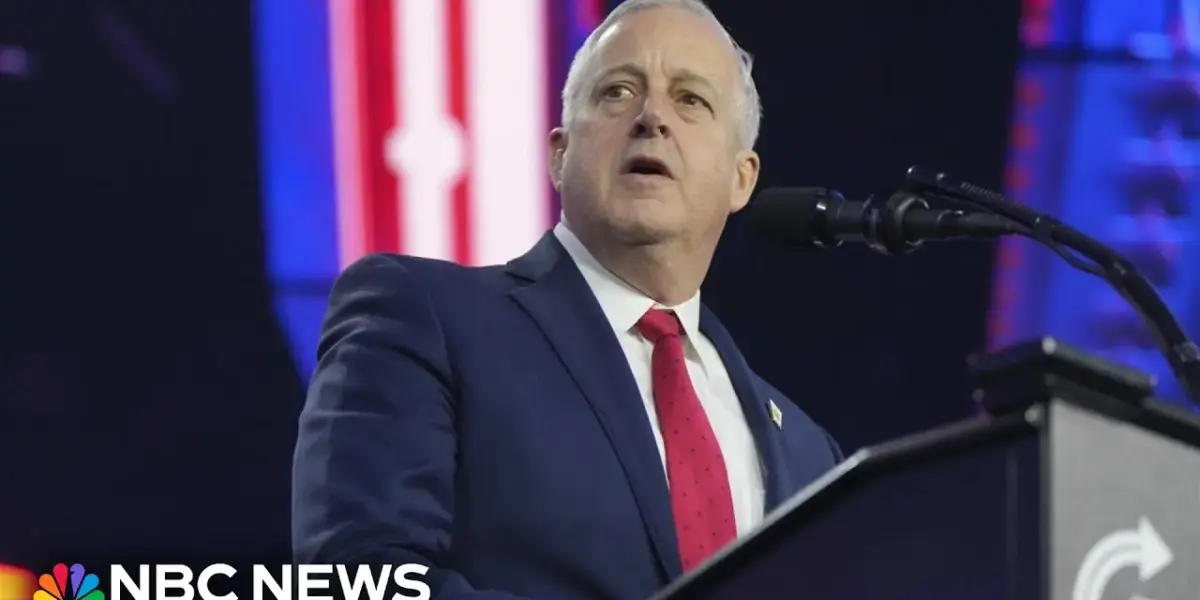
Roy Cooper, Michael Whatley Emerge Victorious in North Carolina Senate Primaries
NBC News has projected Roy Cooper, the former Governor of North Carolina, as the winner of the Democratic Senate primary. On the Republican side, former RNC Chairman Michael Whatley, endorsed by President Trump, has also secured a projected victory in his primary contest. These projections set the stage for a high-profile and critical U.S. Senate race in North Carolina, a state widely anticipated to be a key battleground in the upcoming elections.
A Formidable Matchup: Cooper vs. Whatley
The anticipated general election contest between Roy Cooper and Michael Whatley is poised to be a closely watched race. Cooper, a seasoned politician who has not lost an election during his tenure as governor, brings a strong track record of electoral success to the table. However, Republicans argue that his past victories have not been in the face of truly challenging electoral conditions.
“I’m a big fan of Michael Whatley,” stated one political commentator, acknowledging Cooper’s advantage as a former governor who has won twice in a competitive state. “This is going to be a competitive race. Everybody knows it has known it from the beginning. What I see is a really good work ethic in Michael Whatley. I’ve watched it from time before and we’re going to have our work cut out for us.”
Key Issues: Economy and Affordability
The upcoming Senate race is expected to heavily feature discussions around the economy and affordability, issues that resonate deeply with voters. While President Trump and many Republicans express optimism about the economy, citing growth and falling interest rates, a segment of voters report not feeling these positive effects in their daily lives and budgets.
“Messaging on affordability. This is going to be the issue in November, as you well know,” noted a political analyst. “President Trump continues to and reiterated this just what, days ago, I think at the State of the Union, if my timeline is right, it feels like a century that you know that he thinks the economy is roaring. He feels like it’s a massive success. I will tell you, I’ve talked to a number of Trump voters who say, yeah, I don’t feel it. I don’t feel it in my life. I don’t feel it in my budget.”
Responding to this sentiment, a commentator highlighted the challenge of voter perception versus economic indicators: “This is always a challenge when you look at the numbers of the economy and how you feel it, feeling always lags behind. So remember, the election is not today.” The strategy for Republicans, it was suggested, will involve contrasting their platform with the Democratic agenda, particularly as represented by President Biden. “What the Democrats are going to have to do is show us what would they do if they won the majority. Roy Cooper is going to have to run on an agenda. What is his agenda? Is his agenda. Biden We’re going to have to contrast that. And that’s what we have to play in the next coming months.”
Republican Strategy and Resource Allocation
The Republican party faces the challenge of not only securing the North Carolina seat but also strategically allocating resources across various competitive states. Some strategists believe that investing in North Carolina is not a diversion of funds but a necessary step to maintain their Senate majority.
“I don’t see spending money on North Carolina diverting it. I see spending money in Texas as diverting money from North Carolina, Alaska, Maine,” one analyst argued. “Georgia should be more competitive for us. That’s where Democrats have a little advantage here. And I do give Schumer some credit on his recruiting. He put in play Alaska and others. We will win those. But it’s kind of what I did in 2010. To win the majority. You challenge the top people, make them spend their money at home and you go win other areas.”
This approach, characterized as challenging top candidates and forcing opponents to expend resources domestically, is seen as a viable path to victory. The focus will be on highlighting the accomplishments of the current Republican majority, such as securing the border and lowering interest rates, while contrasting these with the Democratic platform.
Looking Ahead: A Crucial Election
The North Carolina Senate race is shaping up to be a pivotal contest with national implications. Both Cooper and Whatley will need to mobilize their base and persuade undecided voters by effectively communicating their vision and addressing key concerns. The outcome in North Carolina could very well determine which party controls the U.S. Senate, making this a race that all eyes will be on in the coming months.
Source: Michael Whatley to face Roy Cooper in North Carolina Senate race, NBC News projects (YouTube)

Related Articles

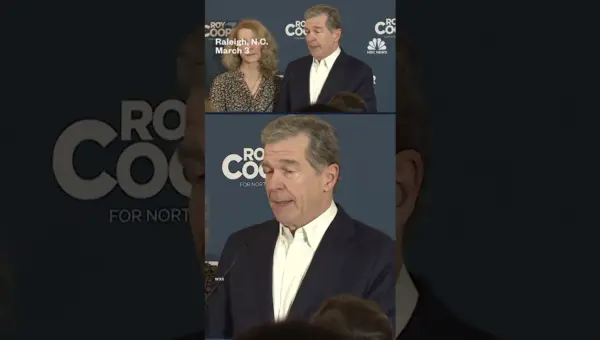
Cooper Claims NC Senate Nod, Vows to Fight for Change
Roy Cooper has won the Democratic nomination for the U.S. Senate in North Carolina, expressing humility and excitement to pursue change in Washington. He acknowledged fellow primary candidates and offered condolences to families of fallen service members, framing his campaign as a fight for those seeking a different direction in federal governance.
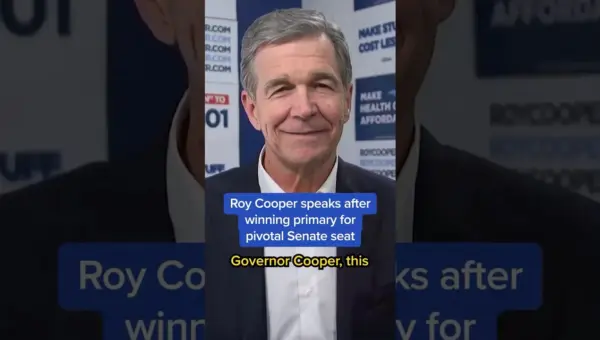
Roy Cooper Eyes Senate Seat After Dominating Primary
Former North Carolina Governor Roy Cooper has secured the Democratic nomination for the U.S. Senate, acknowledging the upcoming race as the toughest of his career. Speaking after his primary victory, Cooper expressed his readiness and excitement for the challenge ahead in this pivotal battleground state.
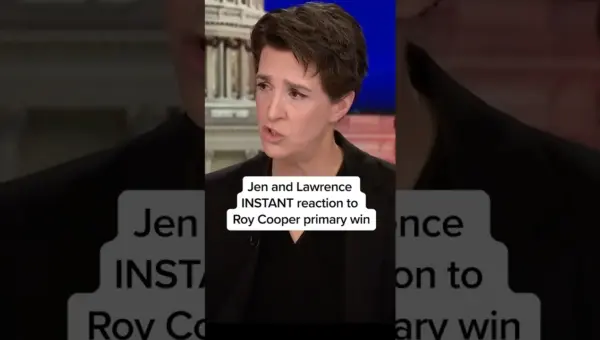
Psaki, O’Donnell Weigh In On Roy Cooper’s Primary Victory
Jen Psaki and Lawrence O'Donnell shared their immediate reactions to Roy Cooper's primary election victory in North Carolina. The win positions the former governor for the next stage of the electoral cycle, drawing analysis from political commentators on its broader implications.