Conway: Trump Demands Unethical Acts, Lacks Evidence
Legal experts George Conway and Mary McCord discuss Donald Trump's alleged demand for prosecutors willing to pursue political enemies. They highlight the critical lack of evidence for such actions and the ethical compromises required, suggesting Trump's pursuits are driven by personal vendettas rather than legal merit.

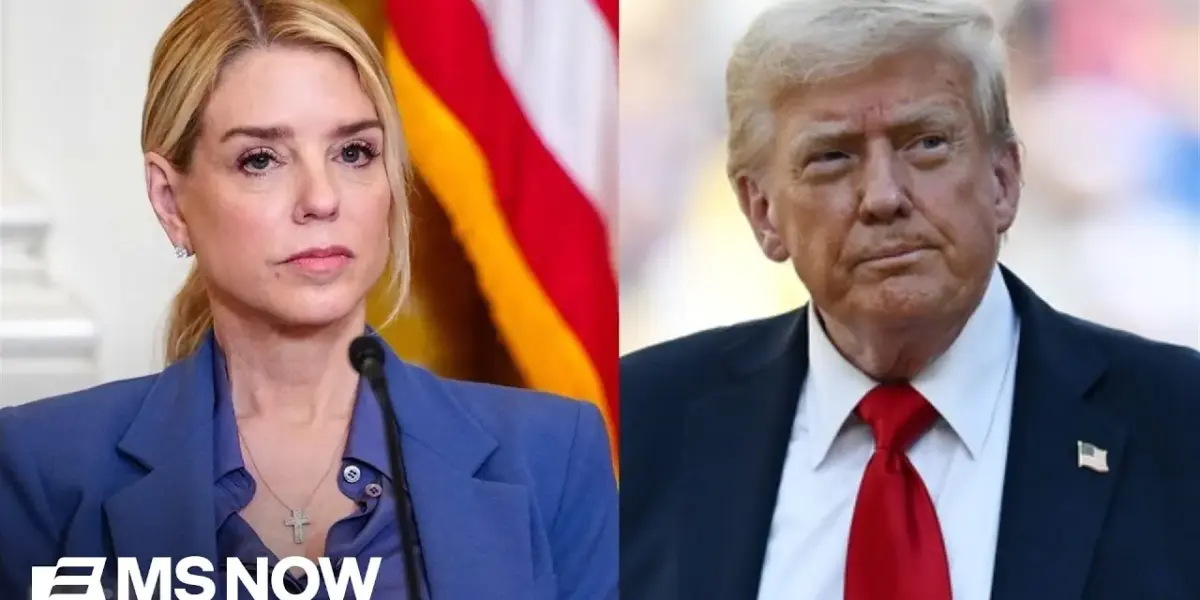
Trump Seeks Unethical Prosecutors, Lacks Evidence for Political Revenge
Donald Trump is reportedly seeking prosecutors willing to pursue political enemies, but lacks the necessary evidence for such actions, according to legal analyst Mary McCord and attorney George Conway. The discussion arose following the firing of an unnamed Attorney General, who some believe was dismissed for failing to deliver on Trump’s desire for politically motivated prosecutions. McCord explained that such actions require concrete evidence of legal violations, which has been repeatedly absent in attempts to indict figures like James Comey and Tish James. Grand juries have consistently refused to indict, and judges have questioned the evidence presented in cases where indictments were initially secured.
The Need for Evidence and Legal Violations
McCord emphasized that simply replacing an Attorney General does not create the evidence needed for prosecution. “You need evidence. You need facts that actually support a violation of law,” she stated. This evidence must be strong enough to convince a grand jury to issue an indictment. The failure of repeated attempts to indict high-profile individuals highlights a fundamental problem: the absence of legally actionable wrongdoing. McCord noted that even when indictments were obtained, judges later questioned the presentation of evidence, with one case being dismissed due to improper appointment of the prosecutor.
“If Donald Trump thinks he can fix it by putting a different position in that chair, he’s wrong about that.”
– Mary McCord
Conway: The Impossible Demand for ‘Evil Enough’ Officials
George Conway elaborated on the difficulty of finding individuals willing and able to meet Trump’s alleged demands. He described the challenge as being “very, very difficult for starters to be evil enough and depraved enough and corrupt enough and grifting enough for Donald Trump.” Beyond the ethical and moral hurdles, Conway echoed McCord’s point about the critical lack of evidence. “You can’t just make these cases up. You have to go into a court and you have to prove them,” he said.
Conway suggested that Trump’s actions stem from a detachment from reality, labeling him a “narcissistic sociopath” who is failing politically. As his poll numbers drop, Conway believes Trump is seeking to blame those around him, often targeting women first due to alleged misogyny. This creates a situation where competent and ethical individuals are unlikely to take on roles that require unethical or illegal actions.
Who Would Take These Jobs?
The conversation turned to the question of who would willingly accept such positions. Conway questioned why anyone would want to work for an administration that demands such compromised behavior. He noted that even individuals with prior experience, like Pam Bondi, might find their reputations tarnished. The potential damage to the Department of Justice, described as being “gutted” and requiring years to repair, further complicates the recruitment of qualified personnel.
The ‘Process is the Point’ Argument
The host posed a question about whether the pursuit of these cases, even without evidence, is the point for Trump. Mary McCord suggested that the goal might be to use the process itself as a weapon, to intimidate and harass perceived enemies. However, she doubted the long-term effectiveness, stating that even if an indictment were secured, it would likely fail in a trial. She also speculated that Trump’s dismissal of Pam Bondi might have been influenced by her public displays of loyalty, suggesting he might prefer a more direct and less ostentatious approach, even if it also lacks substance.
Trump’s Self-Destructive Tendencies
Both Conway and McCord touched upon Trump’s psychological makeup and its implications. Conway reiterated that Trump, as a “pathological narcissist,” cannot accept blame and will seek to destroy those around him if it serves his perceived interests. This desire to inflict harm, even at his own expense, is seen as a significant danger. Conway likened it to the events of January 6th, suggesting a willingness to “burn everything on the way out of town.” He urged Republicans to recognize this danger and help remove Trump before he causes further destruction.
Looking Ahead
The discussion highlights a critical juncture for the Department of Justice and the Republican party. As Trump continues to pursue politically motivated investigations without evidence, the integrity of the legal system is at stake. The question remains whether Republican leaders will finally confront the potential for self-destruction associated with Trump’s actions and prioritize the rule of law over political loyalty. The ability of the justice system to withstand such pressures and the willingness of political actors to uphold legal and ethical standards will be crucial in the coming months.
Source: Conway: It’s hard to be ‘evil enough & corrupt enough’ for Trump (YouTube)

Related Articles


Trump Threatens Iran, Shaking Global Stability
Former President Trump's aggressive Easter Sunday warning to Iran has ignited global concerns, highlighting a volatile intersection of politics, religion, and foreign policy. The analysis explores the motivations behind such rhetoric, the deep divisions within American society, and the potential for severe economic and geopolitical repercussions worldwide.


Trump’s Rhetoric Fuels Iran Tensions, Raises War Crime Alarms
Former President Donald Trump's aggressive Easter weekend social media posts directed at Iran have sparked international concern. His threats of military action and ultimatums, coupled with conflicting narratives about military engagements, have raised alarms about potential war crimes and a dangerous escalation of conflict. Critics accuse both Trump and segments of the media of downplaying the severity of his rhetoric.

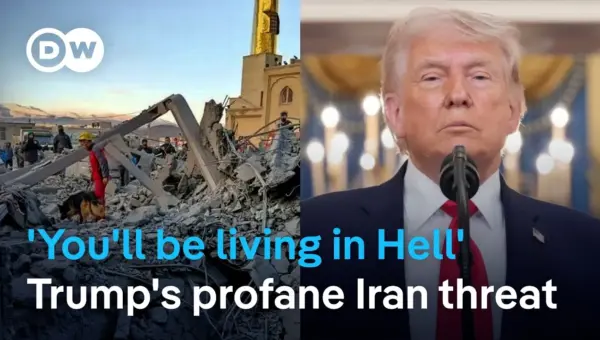
Trump’s Vulgar Iran Threat Sparks Global Outrage
President Donald Trump issued a highly profane threat against Iran via social media, warning of attacks on civilian infrastructure if the Strait of Hormuz was not opened. Experts suggest the outburst stems from frustration and desperation, while legal scholars warn of potential war crimes. The situation continues to escalate, with significant economic and political implications for the region.