Consumer Tech Powers Up Space Exploration
From early cameras to the latest smartphones, everyday consumer technology has a long and vital history in space exploration. NASA's increasing reliance on these devices simplifies operations, enhances astronaut experience, and brings the cosmos closer to home.

From Pocket Gadgets to Pioneering Tools: Everyday Electronics in Space
In a significant announcement for astronaut experience and public engagement, NASA has revealed plans to equip astronauts with the latest smartphones for use on the International Space Station (ISS), beginning with Crew 12 and the Artemis 2 mission. This move, spearheaded by NASA administrator Jared Isaacman, aims to provide crews with enhanced tools for capturing personal moments and sharing inspiring imagery and video with the world. While seemingly a straightforward upgrade, the integration of consumer electronics into the demanding environment of spaceflight carries a rich history, revealing a long-standing reliance on readily available technology.
A Legacy of Adaptation: Cameras in Orbit
The journey of consumer electronics in space didn’t begin with smartphones. Its roots trace back to the earliest days of human spaceflight. John Glenn, during his historic Mercury mission, recognized the value of photographic documentation. Lacking an official camera, he adapted a compact Ansco Auto-Set, modifying it with a pistol grip and ensuring it could function within his bulky spacesuit. This ad-hoc approach set a precedent for future missions.
Wally Schirra, another Mercury astronaut, sought advice from journalists on the best camera for space, leading to the adoption of a Hasselblad medium-format camera. These robust cameras, meticulously modified to reduce weight and eliminate off-gassing materials, became instrumental during the Gemini and Apollo programs, capturing the iconic, high-resolution images of the lunar surface. Some of these historic Hasselblads remain on the Moon, silent testaments to their durability.
Following the Apollo era, the transition to digital photography saw Nikon cameras become the standard. From the Nikon D5, which served as the primary lunar camera for astronauts, to the more recent upgrades to Z9 mirrorless cameras on the ISS, Nikon has maintained a significant presence. Video cameras aboard the ISS are predominantly Canon, further diversifying the photographic technology in orbit.
Melodies and Memories: Audio and Music in Space
The need for effective note-taking during early space missions led NASA to adopt compact Sony tape recorders, such as the TC-50 or TC-55. These devices, precursors to the modern Walkman, allowed astronauts to dictate observations instead of writing them down. Interestingly, these recorders also offered astronauts the option to load music, providing a morale boost during long missions. While many tapes were used for mission notes, some have survived, offering a glimpse into the audio landscape of early space exploration.
The 1980s saw the Sony Walkman officially fly on the Space Shuttle, and by 1997, the first CD player, a Discman, made its debut in space. Videos from the ISS demonstrate the fascinating gyroscopic stabilization effects these players exhibit in zero gravity, processing rather than spinning when nudged.
The Rise of Portable Devices: iPods and iPads
The dawn of space tourism brought a new wave of consumer electronics. In 2005, Gregory Olson, a space tourist, faced challenges flying his iPod due to concerns over its lithium-ion battery. Undeterred, the electronics engineer modified his device, replacing the original battery with a space-approved AA battery pack. This ingenious solution was later adopted by NASA, leading to space-rated iPods for astronauts.
The iPod’s reign eventually gave way to the ubiquitous iPad. Approved for flight in 2012, iPads have become indispensable tools on the ISS. Astronauts use them as digital kneeboards for checklists and documentation, akin to pilots. They are also employed for scientific experiments, utilizing their cameras for data capture, and for personal entertainment, with apps like iMovie, GarageBand, and Spotify being common. The SpaceX Crew Dragon capsules utilize iPad Minis, separate from those on the ISS due to distinct approval processes.
Computing Power in Orbit: From Apple II to ThinkPads
The first home computer to fly in space was an Apple II, adapted for the 1983 STS-9 Space Lab 1 mission. To meet NASA’s stipulation against socketed chips, engineers had to desolder and resolder each chip onto the board, a testament to the lengths taken to integrate even early consumer computing.
The subsequent decades saw the adoption of Grid Compass computers, recognizable by their orange displays, and later, IBM ThinkPads, which became the workhorses of the Space Shuttle and early ISS missions, running specialized Linux versions. In 1991, a Macintosh Portable flew on STS-43, famously sending the first email from space. This was part of research into user interface interactions in zero gravity, as Mac hardware offered better support for the necessary input devices at the time compared to PCs.
More recently, modern MacBooks have been spotted on the ISS, exemplified by a striking image of astronaut Kjell Lindgren using one in the Cupola module. The shift from ThinkPads to HP laptops for current ISS operations reflects the evolving landscape of personal computing.
The Humble Timer and Beyond: Essential Tools
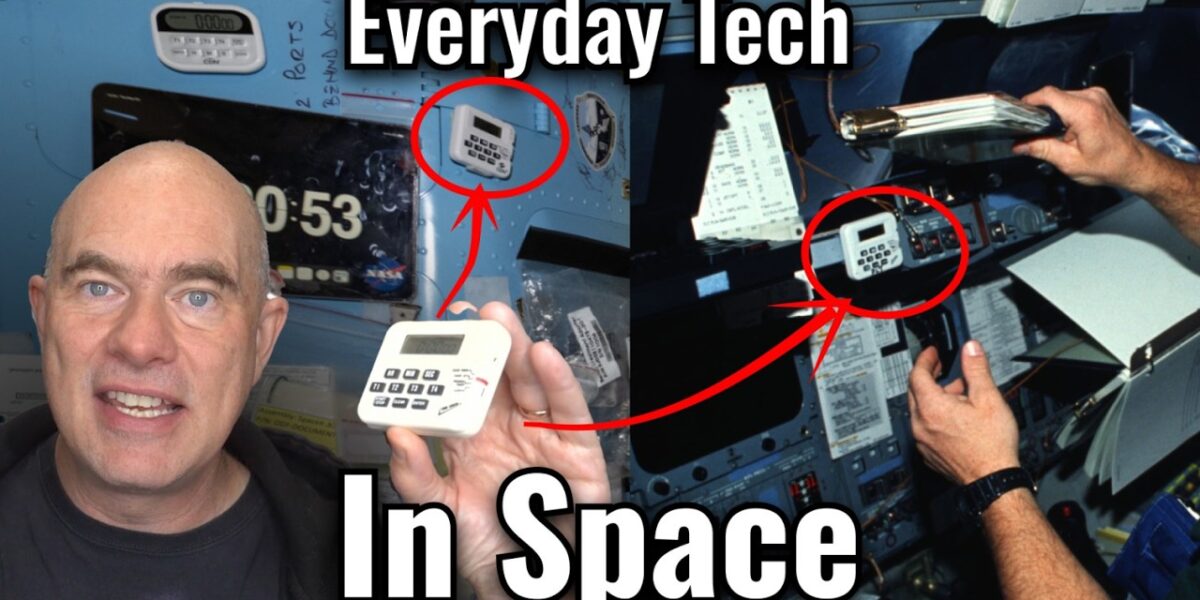
One of the most surprisingly common pieces of consumer electronics found in space is the programmable kitchen timer. These simple devices, with their multiple memory slots, have been used on the Space Shuttle and ISS for decades to manage critical mission timings. Their reliability and ease of use have made them a staple, even as newer versions are gradually replacing older models.
Smartphones and Wearables: The Latest Frontier
The first iPhones, specifically iPhone 4s, flew on STS-135 in 2011, serving experimental and entertainment purposes. While official use of iPhones on the ISS has been less publicized since then, private missions like Inspiration4 and Polaris Dawn have prominently featured the latest iPhone models, highlighting their utility for capturing high-quality imagery and video. Yuzaku Maezawa’s journey to the ISS also involved extensive use of his iPhone 12.
Wearable technology has also made its way into orbit. While early missions saw astronauts wearing fitness trackers like the Philips Actatch Spectrum, Crew 4 astronauts were seen using Apple AirPods Pro. Although their current status on the station is unclear, they represent the increasing integration of personal audio devices.
Even seemingly simple items like Apple USB-C power adapters have found a niche. Their broad compatibility and pre-approval for spaceflight have led to their use in powering a variety of non-Apple devices, a pragmatic approach to managing power infrastructure in space. The microcontrollers within these modern power bricks are more powerful than the computers that landed humans on the Moon, underscoring the technological leap even in everyday accessories.
What Lies Ahead?
The increasing reliance on consumer electronics signifies a shift towards more adaptable, user-friendly, and cost-effective solutions in space exploration. As technology on Earth rapidly advances, its integration into space missions becomes more seamless. The future will likely see even more sophisticated consumer devices playing crucial roles, from advanced communication and data analysis to enhanced astronaut comfort and unprecedented public outreach through shared experiences. This trend not only simplifies operations but also brings the wonder of space exploration closer to home, powered by the very devices we use every day.
Source: How Everyday Technology Is Used In Spaceflight (YouTube)

Related Articles
NASA’s Asteroid Mission: From Mars Dream to Lunar Gateway
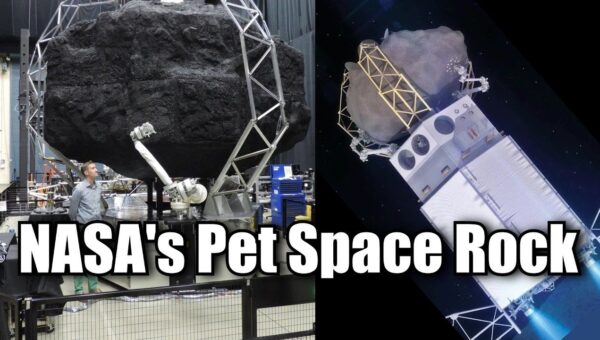
NASA's ambitious Asteroid Redirect Mission (ARM), designed as a stepping stone to Mars, aimed to capture a small asteroid boulder and tow it to lunar orbit for astronaut testing. Though cancelled, its advanced propulsion and robotic technologies live on in NASA's Lunar Gateway and future deep space exploration plans.


Childhood Gone: 20 Memories Generation Alpha Won’t Know
From passing notes in class to recording music off the radio, a new video highlights 20 childhood experiences Generation Alpha will likely never have. These analog joys and minor inconveniences are fading fast in our increasingly digital world.


AI’s Role in Shaping Future Generations
The discussion around affluent children lacking motivation takes on new relevance with the rise of AI. While AI tools can inadvertently foster complacency, they also offer powerful avenues for personalized education and skill development, presenting parents with both challenges and opportunities in shaping future generations.