Constitutional Clash: Supreme Court Curbs Trump’s Tariff Power, Administration Vows Escalation and Litigation
The Supreme Court's recent ruling striking down Trump's unilateral tariffs has ignited a fierce backlash from the administration, which has responded with threats of unprecedented embargos and promises of prolonged legal battles. Economists argue the decision reaffirms constitutional checks and balances, while exposing the economic failures of the tariff regime and the damaging long-term impact on America's global trade standing.

Constitutional Clash: Supreme Court Curbs Trump’s Tariff Power, Administration Vows Escalation and Litigation
In a landmark decision that has sent ripples through Washington and global capitals, the United States Supreme Court recently delivered a significant blow to the unilateral tariff policies championed by the Trump administration. The ruling, which effectively struck down the president’s ability to impose tariffs against various nations without Congressional approval, has ignited a fierce backlash from the White House, characterized by defiant rhetoric, threats of unprecedented embargos, and promises of prolonged legal battles.
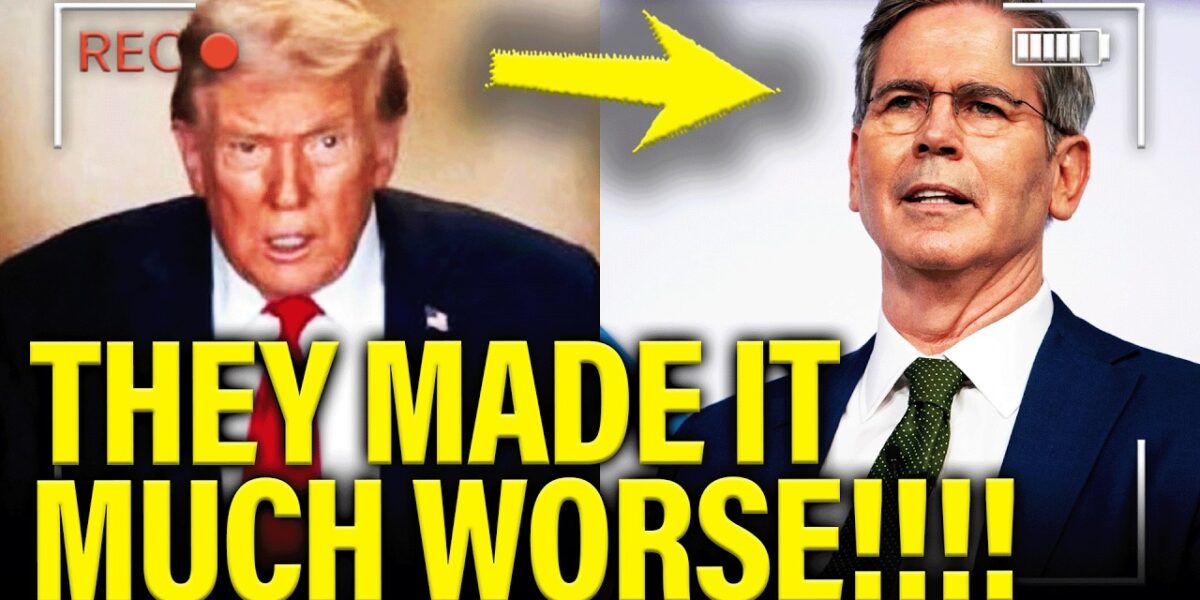
The immediate aftermath of the Supreme Court’s decision saw a visibly agitated Donald Trump holding a press conference described by observers as “bizarre.” During the event, the former president reportedly “whined and almost cried,” veering into unrelated anecdotes before defiantly proclaiming that his tariff regime would not only remain in place but would see tariffs become “higher.” He asserted that he did not need to consult Congress, setting an immediate confrontational tone. However, it was Treasury Secretary Scott Bessant who subsequently “upped the ante,” delivering a series of statements on “state regime media” that escalated the administration’s response from defiance to outright threats of economic warfare.
The Supreme Court’s Verdict: A Constitutional Recalibration
At the heart of the Supreme Court’s ruling lies a fundamental principle of American governance: the separation of powers. As constitutional scholars and economists like Justin Wolfers from the University of Michigan quickly pointed out, the United States is “not a monarchy.” The U.S. Constitution explicitly grants the power to levy taxes and tariffs – which are, by definition, a form of tax – to the legislative branch, specifically to Congress, under Article I, Section 8. This foundational allocation of authority ensures that significant economic policy decisions, impacting citizens and international relations, are subject to public debate and democratic accountability through elected representatives.
The Supreme Court’s decision did not declare tariffs themselves unconstitutional. Rather, it reaffirmed that the executive branch cannot unilaterally impose such measures without explicit legislative authorization. This means that if the president wishes to implement a tariff policy, he must present a compelling case to Congress and secure their approval. “The Congress never gave that to the president. The president just tried to take it,” Wolfers explained, emphasizing that the court merely “reminded him that in fact we have a people’s house.” Far from damaging the nation, the ruling reinforces the system of checks and balances designed to prevent any single branch from accumulating excessive power. The implication, as Wolfers noted, is that “if the president has a good case to make, all he’s got to do is convince a Republican Congress.” The court’s decision, therefore, places the onus back on the legislative process, where such significant policy changes are intended to originate.
A Defiant Administration: Tariffs, Threats, and “Fake Deals”
The administration’s response, however, painted a starkly different picture. Treasury Secretary Scott Bessant, in particular, articulated a strategy of aggressive counter-measures and legal resistance. He threatened to impose “embargos against any country that doesn’t honor the trade deals, which were non-existent to begin with,” a statement that immediately raised questions about the legitimacy and existence of these purported agreements. The suggestion that countries would be punished for not honoring “fake deals” or “social media posts” underscores a significant disconnect between the administration’s claims and the reality of international trade agreements, which typically require formal negotiation, signing, and ratification.
Bessant further asserted that the Supreme Court had “reaffirmed that the president has” a “draconian alternative” power to implement “a complete embargo” – to “cut countries off” or “cut whole product lines off.” While presidents do possess emergency powers under statutes like the International Emergency Economic Powers Act (IEEPA) to impose sanctions or embargos in response to unusual and extraordinary threats to national security, foreign policy, or the economy, the context of using such powers in direct retaliation for a tariff ruling – and against allies like the UK and EU – would represent an unprecedented and highly aggressive interpretation, potentially inviting severe international condemnation and legal challenges.
The administration also framed the ruling as “a big loss for the American people,” claiming it “took away President Trump’s instantaneous leverage” and represented “corporate welfare” for businesses. This narrative, however, directly contradicts economic analysis suggesting that the tariffs were detrimental to American consumers and businesses. Furthermore, Bessant indicated that the administration would resist refunding the estimated $175 billion (or his revised figure of $130 billion) in collected tariffs, stating they would “litigate and … get to the payouts” for “months,” or even “years.” This stance suggests a deliberate strategy to prolong the process and avoid returning funds collected under what the Supreme Court effectively deemed an overreach of executive power.
Economic Reality Check: The Data Speaks
Contrary to the administration’s claims that tariffs protect American interests, market reactions to the Supreme Court’s ruling told a different story. “When the Supreme Court said no, you can’t tariff, you can’t do that, it actually led the value of American stocks to rise,” observed Justin Wolfers. This market response suggests that investors and businesses perceive the absence of unilateral tariff power as beneficial for American enterprises, directly challenging the notion that these tariffs fostered a more profitable environment for domestic business. “That’s market celebrating saying this is good for America that the president no longer has this unilateral power,” Wolfers asserted.
Moreover, the administration’s core justification for tariffs – to reduce the trade deficit – has been widely debunked by economic data. Despite the “great trade war” waged by the Trump administration, the trade deficit for 2025 (referring to recent or projected data) remained “almost identical” to 2024. As Wolfers noted, “the one thing it was meant to fix, it did nothing about.” This outcome aligns with established economic theory, which posits that tariffs are generally ineffective in altering a nation’s overall trade balance, as it is primarily determined by macroeconomic factors like national savings and investment, rather than import taxes.
Perhaps one of the most significant pieces of misinformation propagated by the administration concerned the revenue generated by tariffs. Donald Trump repeatedly claimed that tariffs brought in “trillions” of dollars. However, the actual figure for collected tariffs was approximately $175 billion, or even lower at $130 billion as Bessant himself conceded. Wolfers highlighted this discrepancy, emphasizing the critical importance of understanding the vast difference between millions, billions, and trillions. “Every time the president said the word trillion, he was lying,” Wolfers stated, explaining that such inflated numbers are often used to “baffle” the public and obscure the true economic impact. Crucially, these tariffs were not paid by foreign countries, but were “a tax on the importing companies passed on to the American consumer,” making them a regressive tax that disproportionately affects lower-income households.
The Illusion of Leverage: Section 122 and Short-Term Tactics
In immediate defiance of the Supreme Court’s ruling, the president swiftly issued a 10% global, across-the-board tariff under Section 122 of trade law. While this might appear to reinstate his tariff regime, Wolfers quickly clarified its limitations. Section 122 tariffs can only last for a maximum of 150 days and are capped at 15%. This short duration fundamentally undermines any potential leverage the tariffs might offer in trade negotiations. As Wolfers put it, “Mark Carney [referring to the former Bank of Canada and Bank of England Governor] can count to 150.” Foreign leaders can simply wait out the temporary measure, rendering it ineffective as a bargaining chip.
Furthermore, the 150-day lifespan makes the tariff useless for achieving the stated goal of “onshoring manufacturing” and bringing jobs back to the U.S. Establishing new factories and supply chains requires long-term investment and stability, far beyond a five-month window. “I won’t have poured concrete on my factory till day 151,” Wolfers illustrated, emphasizing that such a short-term measure cannot induce meaningful industrial relocation. Therefore, the new 10% tariff effectively serves only one purpose: “It’s a tax. It’s a tax on Americans.” This makes the administration a “protax Republican president” in practice, imposing unpopular and regressive taxes at a time when affordability is a major public concern.
Beyond the Numbers: A Retreat from Global Leadership
The Trump administration’s confrontational trade policies, exemplified by the unilateral tariffs and withdrawal from multilateral agreements, have had profound and lasting consequences for America’s standing in the global economy. One of the most significant examples is the Trans-Pacific Partnership (TPP). The Obama administration had painstakingly negotiated this comprehensive trade agreement with 11 other Pacific Rim countries, aiming to establish the United States as the central player in Asian trade and to counterbalance China’s growing influence. “The first thing that Trump did was stepped out of it,” Wolfers recounted, effectively pulling the U.S. out of this crucial “friendship group.”
In the vacuum left by the U.S. withdrawal, the remaining TPP countries, led by nations like Canada, forged ahead to create the Comprehensive and Progressive Agreement for Trans-Pacific Partnership (CPTPP). This dynamic has seen other countries “playing connect the dots with each other” – forming new, robust trade blocs that increasingly exclude the United States. Prime Minister Carney, for instance, has been instrumental in fostering closer dialogue between CPTPP nations and the European Union, creating powerful trading alliances that “go around us and despite us.” This strategic realignment means that a “brilliant American innovation to centralize our role in global commerce” is now being implemented by others, with the U.S. on the outside looking in. The long-term damage, Wolfers argued, is generational, with the world viewing both China and the United States as “untrustworthy bad actors who we don’t feel comfortable to get in bed with.” This erosion of trust and influence could have lasting geopolitical and economic ramifications, diminishing America’s ability to shape global trade norms and standards.
The Peril of Undermining Expertise
Beyond the direct economic and geopolitical consequences, the administration’s approach has also highlighted a concerning disregard for objective economic analysis. The idea of disciplining economists at the New York Fed for accurately reporting that tariffs are passed on to consumers – a well-established economic fact – underscores a dangerous trend of prioritizing political narratives over evidence-based policymaking. “What goes through your mind when you have someone like a Jameson Greer saying that it’s not regressive and then someone like Kevin Hassett saying I’m going to discipline the economist people like who could be taking your class who have productive careers serious individuals you know colleagues of yours people like that I’m going to discipline them for putting together a report that accurately states facts,” the interviewer asked Wolfers, who described it as “a new low.”
This attempt to suppress inconvenient truths not only undermines the credibility of government institutions but also deprives policymakers of the accurate information necessary to make sound decisions. In an increasingly complex global economy, the ability to rely on independent, expert analysis is paramount for navigating challenges and formulating effective strategies. The willingness to silence or punish economists for their findings signals a broader contempt for empirical data and intellectual integrity, with potentially damaging consequences for future policy outcomes.
Conclusion: Towards a Coherent Trade Policy?
The Supreme Court’s ruling on tariffs marks a pivotal moment, reasserting the constitutional authority of Congress in matters of trade and taxation. While the Trump administration’s immediate reaction has been one of defiance and threats, the decision fundamentally shifts the landscape for future trade policy, demanding a return to legislative process rather than unilateral executive action. Economist Justin Wolfers expressed a sense of optimism, concluding that the ruling means “we don’t live in a monarchy.” He celebrated the fact that the U.S. is “one step closer, one small step closer to a saying in coherent trade policy.”
The saga underscores the deep divisions within American politics regarding trade, presidential power, and the nation’s role in the global economy. As the debate continues, the imperative for evidence-based policymaking, respect for constitutional boundaries, and a strategic vision for international engagement remains critical. The Supreme Court’s intervention, while met with an aggressive backlash, offers a potential pathway towards a more constitutionally sound and economically rational approach to trade, ultimately benefiting American consumers and restoring trust in the nation’s global commitments.
Source: UH OH! Trump makes FATAL ERROR after TARIFF RULING!! (YouTube)

Related Articles


US Launches Iran Operation Alone as Allies Distance Themselves
The United States has launched a major military operation in Iran, "Operation Epic Fury," without the backing of NATO allies, who have publicly distanced themselves. Critics argue this unilateral action highlights America's growing international isolation and economic instability, while ordinary citizens face increasing domestic hardship.

Supreme Court Strikes Down Trump Tariffs, New Levies Emerge
The U.S. Supreme Court has ruled former President Trump's AIPA tariffs illegal, but new temporary levies have been swiftly imposed. The decision impacts $175 billion in collected revenue and reshapes the future of U.S. trade policy, leaving investors to navigate a complex and evolving landscape.

UK Faces Economic Woes as Legal Migration Falls
The UK is facing potential economic repercussions as legal migration figures decline, with projections indicating a significant shortfall in government revenue. Experts debate the true economic impact of migration, with concerns raised about labor shortages in key sectors and the long-term consequences of educating foreign nationals in critical STEM fields.